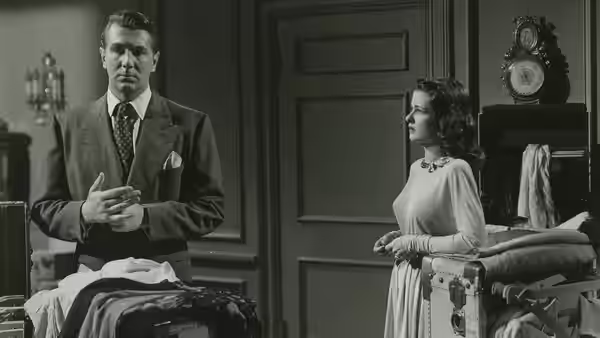
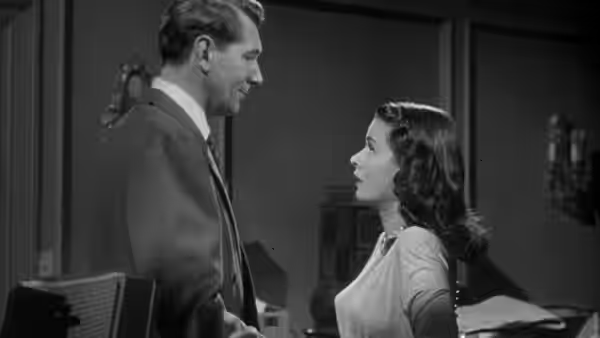
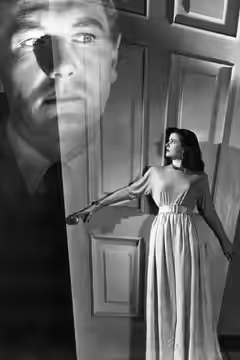
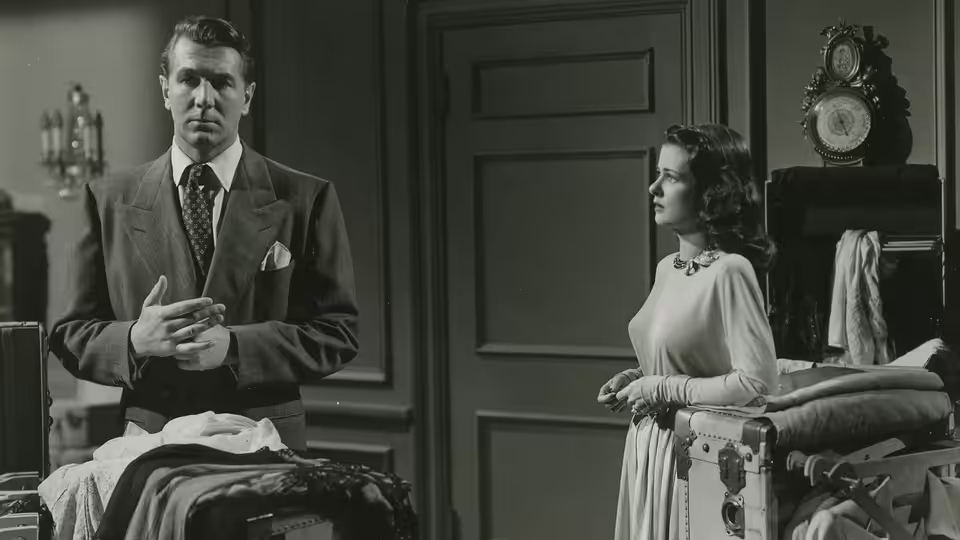
Mark Lamphere (Michael Redgrave) stands beside a bed as Celia Lamphere (Joan Bennett) watches
Film review

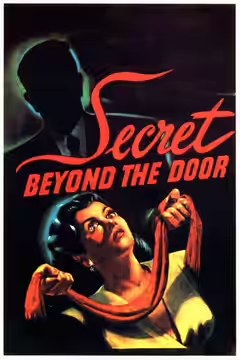
Secret Beyond the Door

1947 · Directed by Fritz Lang · 1h 39m

In a sentenceThe photography makes a persuasive case for leaving these people’s psychology unexplained

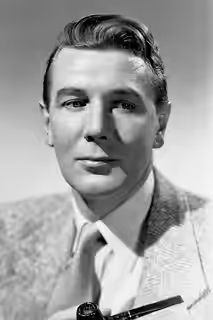
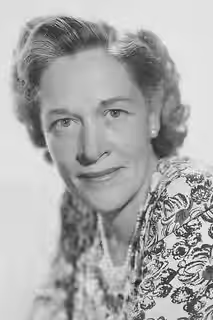
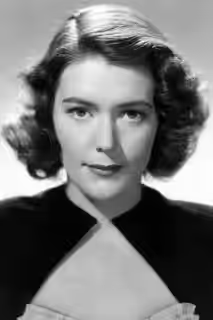
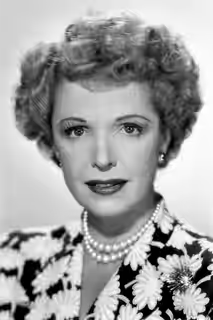
Joan Bennett plays Celia Lamphere and Michael Redgrave plays Mark Lamphere in this mystery, thriller and romance directed by Fritz Lang. Anne Revere appears as Caroline Lamphere, with Barbara O’Neil as Miss Robey and Mark Dennis as David Lamphere. The cast also includes Natalie Schafer as Edith Potter, Paul Cavanagh as Rick Barrett and Rosa Rey as Paquita. Silvia Richards writes the screenplay from a story by Rufus King. Released in 1947, the film runs 99 minutes, with photography by Stanley Cortez and music by Miklós Rózsa.

Fi1m review

Fritz Lang’s psychological melodrama is worth considering for Stanley Cortez’s photography and Joan Bennett’s performance. Its troubled minds become less convincing the more insistently the film tries to explain them, but the unease survives.

Secret Beyond the Door is an absorbing, uneven psychological melodrama whose photography gives us good reason to tolerate its explanations. Fritz Lang takes the business of troubled minds seriously, sometimes more seriously than the writing can support. There is pleasure in that seriousness, even when it becomes cumbersome: this is a film prepared to make romantic unease uncomfortable. We recommend it to viewers who enjoy a thriller enough to forgive some doubtful psychology.

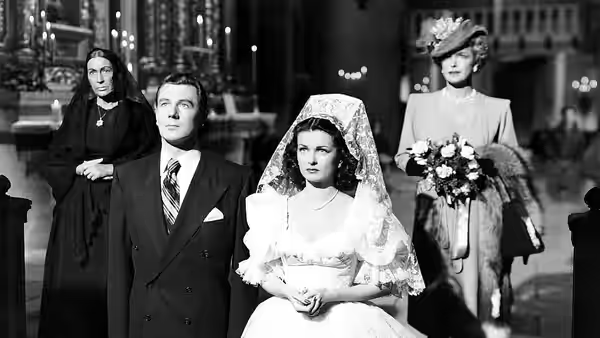
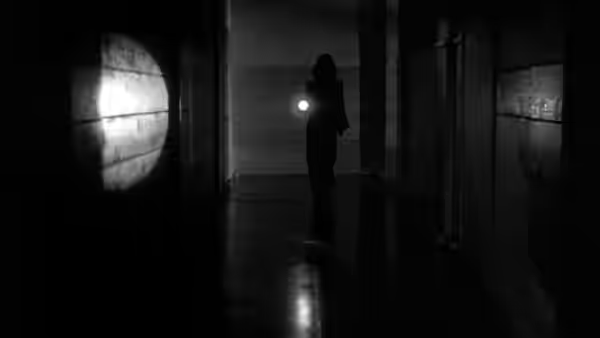
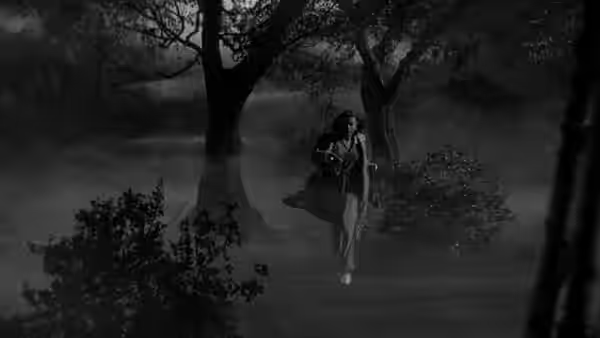
Stanley Cortez’s photography is the strongest reason to persist. The striking images give the film a force that its dialogue cannot reliably sustain, making its emotional extremes feel persuasive before anyone attempts to account for them. We felt uneasy looking at it, then impatient listening to it. That impatience comes from the gap between the conviction of the images and the strained explanations attached to the characters’ behaviour.

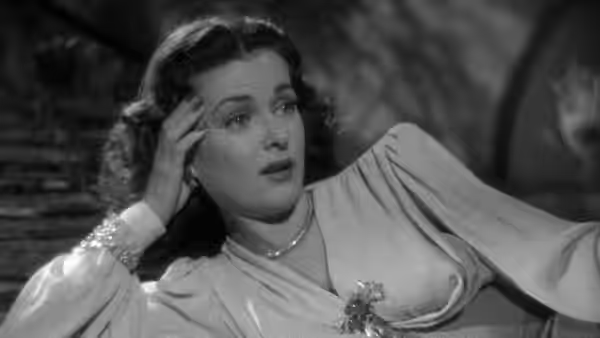
Joan Bennett, playing Celia Lamphere, gives us another reason to stay interested. Her performance makes the melodrama easier to accept without making it seem ordinary, an important distinction in a film that needs considerable indulgence. Michael Redgrave, as Mark Lamphere, is less persuasive; the performance does not consistently make difficult motivations feel like the workings of a recognisable person. Bennett does more to hold our attention than the psychological machinery surrounding her.

The screenplay by Silvia Richards, from a story by Rufus King, places considerable demands on that machinery. Mental complexity can enrich suspense, but here it too often makes the characters harder to follow without making them more interesting. We need not approve of what people do in a thriller, or even fully understand it, to feel apprehensive about their next decision. We do need the explanation, when it comes, to withstand a little thought, and the writing is weakest when it sounds most certain of itself.

Arthur Hilton’s editing deserves some of the credit for keeping this material compelling. There is enough control in the cutting to sustain interest even when the dialogue threatens to exhaust it, and Travis Banton’s costumes contribute to the film’s carefully composed appearance. Max Parker is responsible for the production design, with Miklós Rózsa providing the music. Yet Cortez’s photography remains the clearest achievement: the images command attention without requiring us to accept every psychological proposition accompanying them.

Judged as a mystery, the film asks for more patience than its reasoning earns. Judged as melodrama, it has a stronger claim on an evening, because heightened feeling permits a degree of excess that a tidy explanation cannot. Lang’s commitment helps, although it also leaves the weaker dialogue exposed: nothing here benefits from being taken lightly. The suspense works often enough to make the lapses frustrating rather than fatal.

The reservations matter, particularly for anyone who wants behaviour to remain plausible beneath the atmosphere. Bennett and Cortez provide substantial compensation, but they cannot make every explanation convincing. Choose it for an uneasy melodrama, and be prepared to argue with its psychology afterwards.

Critical consensus AI synthesised

56
Positive
1
Mixed
4
Negative
1

The reviews lean towards a mixed response to Secret Beyond the Door, with the clearest agreement on its visual craft. Even critics unconvinced by the drama find something to admire in the photography, while editing and wardrobe also attract praise. Suspense and an intriguing premise provide further points of interest. The Guardian is the strongest supporter, praising Stanley Cortez’s photography and embracing the film’s heightened melodrama; Variety singles out Joan Bennett’s performance as a strength.

The reservations concern the psychology, dialogue and performances, though the spread is wide rather than uniformly lukewarm. Some find the characters’ motivations difficult to follow or the psychological explanations unpersuasive. Variety finds Michael Redgrave disappointing, making its enthusiasm for the acting selective. Empire offers the sharpest dissent, judging the film a sloppy misfire despite admiring the camerawork. The divide is over how much the visual achievement compensates for weaknesses in the drama.

The Guardian
13 November 2011 · Philip French
90*

French presents the film as a sublime, delirious melodrama and argues Lang deserves to be ranked alongside Hitchcock. He particularly praises Stanley Cortez’s outstanding photography.

Read the full review →
The New York Times
16 January 1948
64*

The page does not expose the review text, so its verdict cannot be determined. No praise or complaint is available to identify.

Read the full review →
Variety
1 January 1947 · Variety Staff
60*

The review finds the film arty and suspenseful, though its characters’ mental complexities can make their motivations difficult to follow. It praises Joan Bennett’s performance but says Michael Redgrave disappoints.

Read the full review →
Slant Magazine
7 September 2012 · ★★½ · Jaime N. Christley
50

Christley finds the film an unusually distinctive and compelling entry in Lang’s 1940s work. He praises its striking shots, editing, and wardrobe, while noting that the quiet narration is nearly inaudible on the Blu-ray.

Read the full review →
Time Out
· TM
50*

The review finds the film’s Freudian resolution absurd, despite an intriguing premise. It singles out that premise for its fascination while criticizing the instant cure for psychopathy.

Read the full review →
Empire
1 January 2000 · Jake Hamilton
20*

The critic considers the film a sloppy misfire late in Lang’s career. He praises the beautiful camerawork but faults the dialogue and acting.

Read the full review →

Straight answers AI written, from our review

Is Secret Beyond the Door worth watching?
Secret Beyond the Door is worth considering for viewers who enjoy uneasy psychological melodrama and can forgive doubtful explanations; we score it 60 out of 100. Stanley Cortez’s photography and Joan Bennett’s performance sustain interest, but we find the writing less convincing whenever it insists on explaining the characters’ behaviour.
How long is Secret Beyond the Door, and what is it rated?
Secret Beyond the Door runs 1h 39m. It is a mystery and thriller film.
Where can I watch Secret Beyond the Door in France?
Secret Beyond the Door is available to buy from Apple TV from €7.99. Availability is checked daily; the links above go straight to each service.
How violent or frightening is Secret Beyond the Door, and is it suitable for children?
Secret Beyond the Door creates unease through romantic tension and troubled behaviour, but its absent UK certificate and US NR label offer no clear age guidance. We would not treat that lack of a rating as reassurance for children; the suspense warrants caution, and we cannot give a firm account of its violence.
How does Secret Beyond the Door compare to Rebecca?
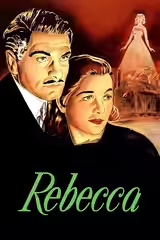
Secret Beyond the Door is the less convincing choice beside Rebecca: both concern a marriage made uneasy by a house and its history, but we recommend Rebecca more readily for its recognisable emotional distress. Rebecca loses some precision towards the close, while Secret Beyond the Door relies more heavily on its photography and Joan Bennett to compensate for strained psychology.
What should I watch after Secret Beyond the Door?
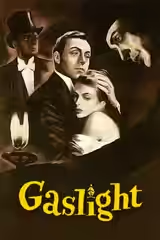
After Secret Beyond the Door, try Rebecca (1940, Fi1m 85): For another marriage made uneasy by a house and its history. Then Gaslight (1944, Fi1m 81): Domestic suspicion becomes sustained terror, with firmer control of its psychology.

Cast

If you liked this, try…

  1. Rebecca (1940, Fi1m 85)For another marriage made uneasy by a house and its history.

  2. Gaslight (1944, Fi1m 81)Domestic suspicion becomes sustained terror, with firmer control of its psychology.

  3. La Belle et la Bête (1946) · not on Fi1m yetFor romantic dread expressed through rooms, costumes and extraordinary images.

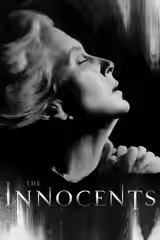
  4. The Innocents (1961) · not on Fi1m yetA more disciplined exercise in making beautiful surroundings difficult to trust.

  5. Cure (1997) · not on Fi1m yetPsychological uncertainty turns colder, stranger and considerably harder to shake off.

Secret Beyond the Door (1947) review: fine images, shaky psychology (France) | Fi1m