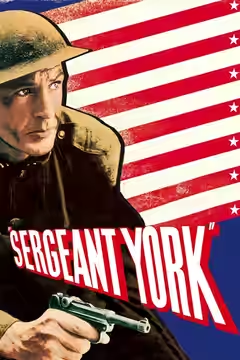
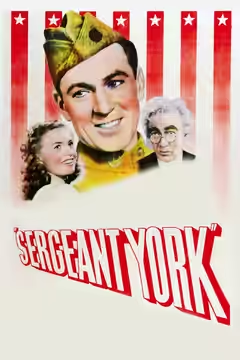
Howard Hawks’s biography of the Tennessee farm boy who became a hero of the Great War is warm, handsome and honest for its first hour, and a sermon for most of its second. Gary Cooper and Walter Brennan keep it watchable throughout.
Howard Hawks tells the story of Alvin C. York, the Tennessee mountaineer who asked to be excused from the Great War on religious grounds and came home from it the best-known American soldier of the war. York himself is among the credited writers, and the film treats his life the way a Sunday-school teacher treats a parable: here is a wild boy, here is how he was saved, here is what the saving was for. It opened in the summer of 1941, months before the United States entered the war, and it is not shy about which side of that argument it is on. For an hour it is a warm, funny, plainly acted film about a poor valley. Then it puts on a uniform.
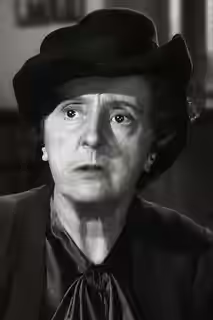
Cooper plays York as a long, slow, dangerous boy who drinks and brawls with Ike Botkin (Ward Bond) and Buck Lipscomb (Noah Beery Jr.) and rides home at dawn to a mother who has kept his supper warm. Margaret Wycherly plays Mother York with a handful of lines, a woman who says little and misses nothing. Walter Brennan’s Pastor Rosier Pile sells Alvin his goods by day and preaches at him by night, and Brennan does both with the same amused patience, as if he had read the last page already. Joan Leslie’s Gracie is the reason Alvin wants the bottomland, and Leslie is quick and bright enough to make a person out of a part written as a prize.
We were moved more than we expected, and it was the land that did it. Alvin arrives with the money he has worked himself to the bone for and is told it has gone to someone else. Cooper’s face does not change; he asks to have it said again. He does not shout and he does not look angry, he simply stands in the doorway being told that all of it was for nothing, and the stillness is worse than any speech would have been.
Sol Polito shoots the valley in soft greys, with lamplight in the cabins and a painted haze over the hills, so that nothing looks quite real and it hardly matters, because the people do. The church is where Hawks lets his crowd loose, and the congregation singing Alvin towards the front pew is the film’s best set piece. Max Steiner’s score works the hymn tunes hard. He has a way of arriving at the feeling a beat before Cooper does, and we would rather Cooper got there first.
Then the draft. Alvin will not kill, the Army will not excuse him, and Major Buxton (Stanley Ridges) sets out to argue him round with a history of the United States and some leave to think it over. Four men are credited with the screenplay, John Huston, Harry Chandlee, Abem Finkel and Howard Koch, and this is the stretch where you can count them. Every scene is an argument with two sides and a foregone winner. George Tobias’s “Pusher” Ross, a New Yorker who has never seen a tree that was not in a park, is the one piece of barracks comedy Hawks allows himself, and every scene he is in breathes.
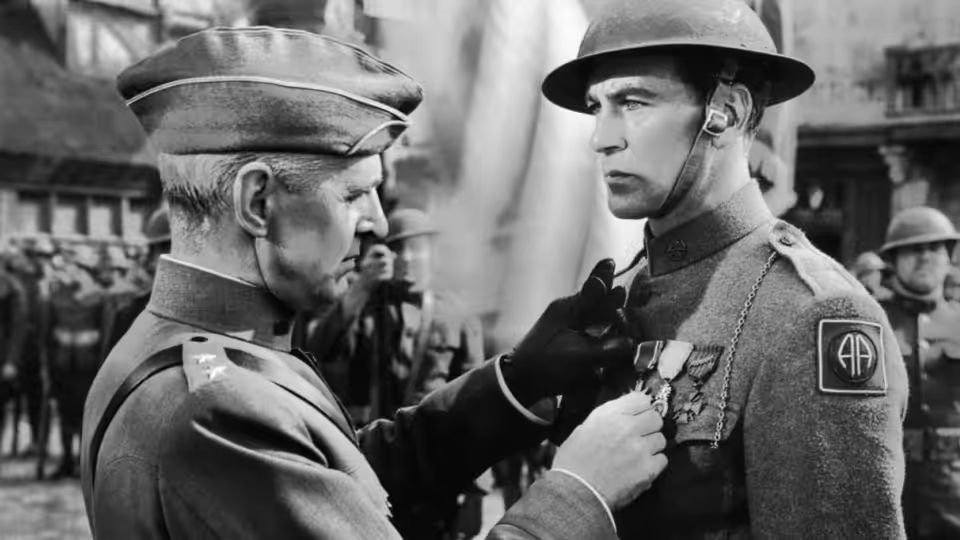
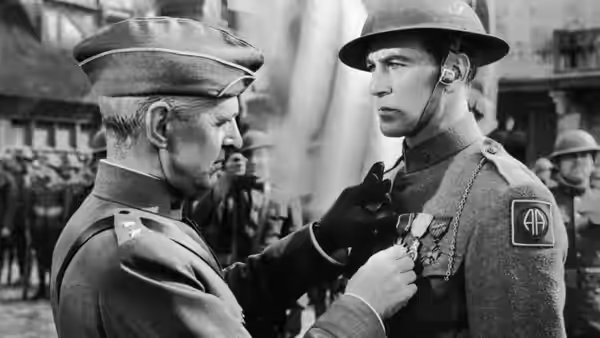
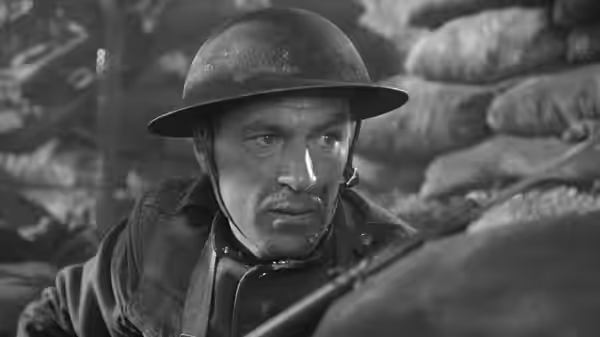
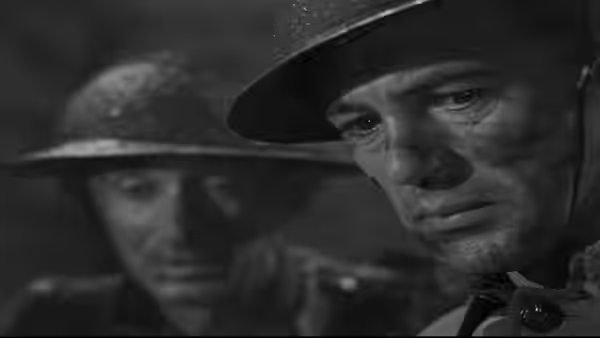
France is well made and oddly calm. Hawks and his editor William Holmes cut the attack cleanly, the mud is mud and the guns are loud, but the film never once lets us think York might die, and so the one sequence that ought to be frightening is not. His marksmanship, established at length in Tennessee, pays off in a way we will not describe. The last twenty minutes are ceremony, speeches and handshakes and men in good suits, and we watched them with the restlessness of people who have stopped expecting anything to happen.
Hawks had made His Girl Friday the year before, with everybody talking over everybody at speed and nobody making a speech. Here everyone finishes a sentence and then starts another. It is his most respectable film, and his stiffest. One tagline promised missiles, jets and tanks and assured us that it was still “the guy with guts and a gun” who wins the war; that is more or less the film’s case, and it makes it with more grace than the poster did. See it for the valley, for Brennan, and for Cooper in that doorway. It runs 134 minutes, and the ones that count are all in the first sixty.