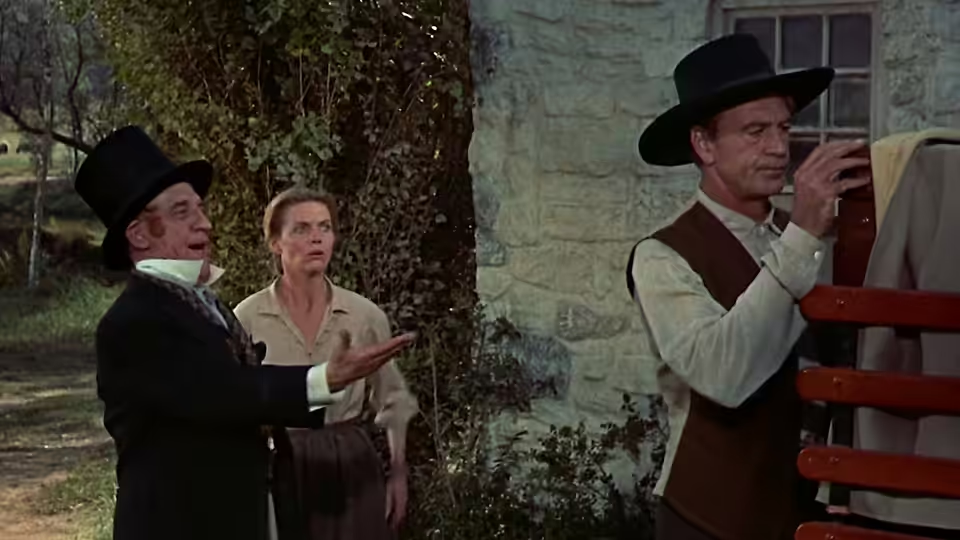
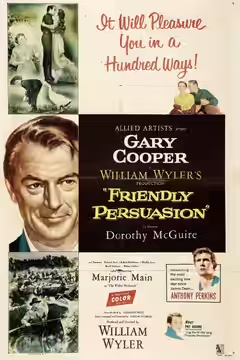
William Wyler’s Quaker family drama is cosier and broader than its subject deserves, but when it turns to whether a peaceable man may fight it is honest, and Anthony Perkins, as the son who has to decide, is the best thing in it. Worth an evening.
William Wyler takes Jessamyn West’s stories of a Quaker family in Indiana during the Civil War and spreads them across 137 minutes, most of them sunlit, many of them played for laughs, with one hard question waiting at the end of the lane. What does a man who has promised never to raise his hand do when the fighting comes up his road? Friendly Persuasion is warm, broad and occasionally silly, and on that question it is honest. We recommend it, with the caveat that you will have to sit through a certain amount of goose.
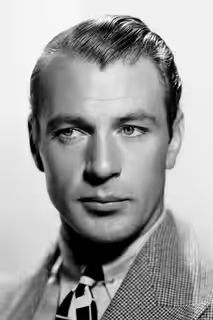
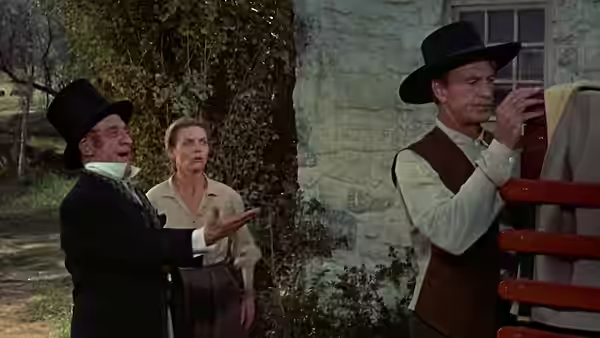
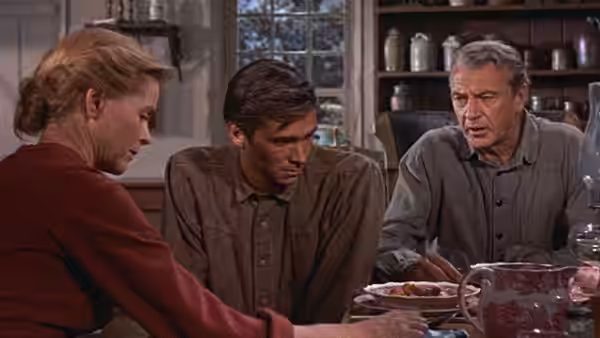
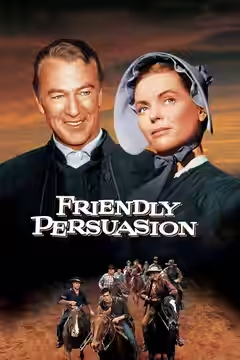
The comedy comes first. Jess Birdwell (Gary Cooper) races his Methodist neighbour Sam Jordan (Robert Middleton) to church every Sunday and loses, and the loss bothers him more than a Quaker should let it. A travelling salesman, Professor Quigley (Walter Catlett), sells him an organ, which he hides in the attic from his wife. His youngest, Little Jess (Richard Eyer), is in a running feud with the family goose, who bites. Cooper plays all of this at half speed, with a sly pleasure in his own weaknesses, and Michael Wilson’s screenplay gives him a way of saying thee that makes the plain speech sound like flirting.
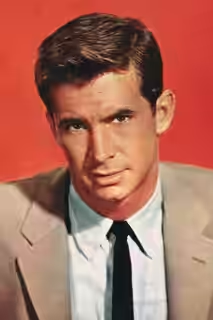
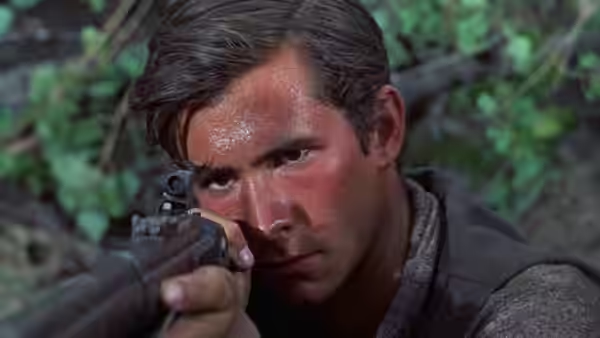
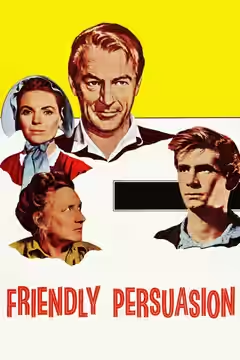
Dorothy McGuire’s Eliza is the meeting’s minister, and the film’s best idea is to give her the authority and give him the organ. When the instrument comes into the house she takes her bedding to the barn, and the scene in which Jess goes out to her, both of them stubborn and both of them fond, is as good a picture of a long marriage as Wyler ever shot. Anthony Perkins, as their son Josh, is something else again: long, awkward, the eyes always a little ahead of the mouth, a boy who cannot tell whether he is afraid to fight or afraid that he wants to. He is the only person in the film who seems to be thinking about the war before it thinks about him.
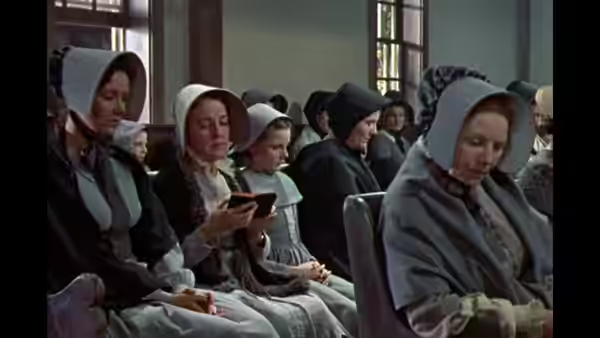
The scene we will not forget is in the meeting house, when Major Harvey (Theodore Newton), a Union officer, stands up in the silence and asks which of the Friends will come and fight. Nobody answers. Wyler holds on the benches, on the bonnets, on Perkins not looking at his mother, and lets the quiet do the arguing. It moved us more than we expected, because it is not staged as a debate. It is staged as a room full of people who have just worked out that a principle costs something.
Then the film goes back to being a farce. A selling trip in the middle, involving a widow and her three unmarried daughters, belongs to a different and worse picture, and Wyler plays it as broadly as a television comedy. We laughed, and then wished we had not, because the film had just been telling us it was serious. The three credited editors, Robert Belcher, Edward A. Biery and Robert Swink, cannot hide that this was stitched from a book of stories. Scenes end when the joke does, and the seams show.
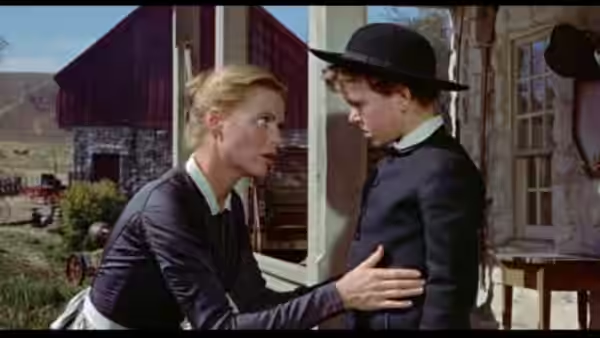
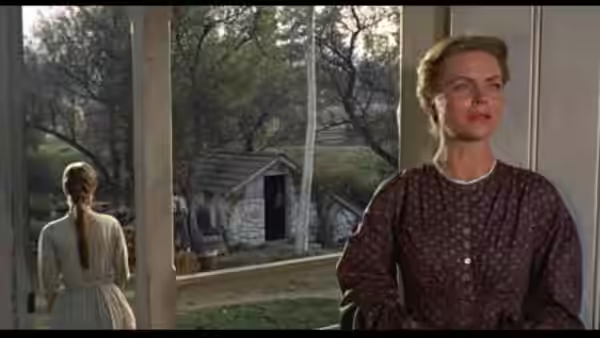
Ellsworth Fredericks shoots the farm in colour so rich the fields look like a seed catalogue, yellow-green under a blue sky, and the interiors are plainly built on a stage, with the country outside the windows sitting a little too flat behind the glass. Dorothy Jeakins dresses the Birdwells in grey and brown and bonnets, so that Gard Jordan (Peter Mark Richman), courting Mattie (Phyllis Love) in his blue Union coat, looks like temptation walking through the door. Dimitri Tiomkin’s score is built on the title song, Thee I Love, sung over the credits by Pat Boone, and he brings the tune back on strings, on the organ and on a whistle until we could have sung it ourselves and rather wished he would stop.
Against Wyler’s own record this is a small film. The Best Years of Our Lives (1946) brought men home from a war; this one asks whether to go at all, and asks it of a boy rather than a nation. What the family does when the raiders reach the county we will not describe, except to say that the comfortable first hour is what makes it land. Most critics have liked it and so do we, though the reviews that call it charming are letting that middle stretch off lightly.
It carries a U certificate and runs a little long. Children will enjoy the goose. Adults will get more out of the meeting house, and out of watching Perkins fail to answer the major’s question.