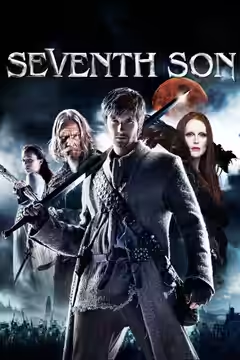
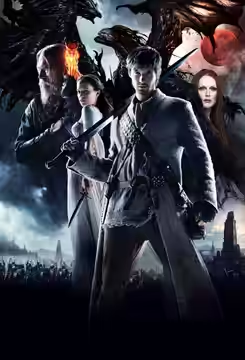
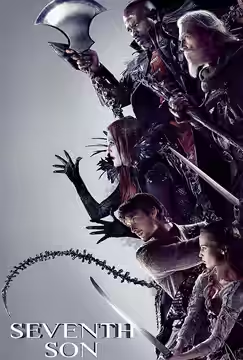
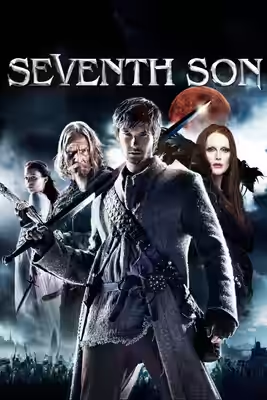
Sergei Bodrov’s chosen-one fantasy has Jeff Bridges mumbling the rules, Julianne Moore enjoying herself as the witch, and a great deal of expensive wildlife that weighs nothing. Poor, loud and seldom dull enough to be restful; Moore is the reason to stay.
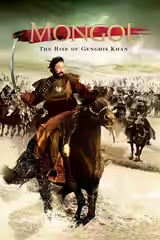
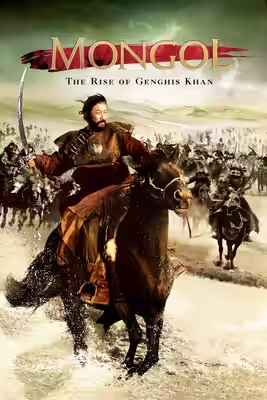
Sergei Bodrov made Mongol (2007), about a boy who becomes Genghis Khan, shot on real steppe with real horses and little talking. Seventh Son is the opposite in every way that counts. Adapted from Joseph Delaney’s The Spook’s Apprentice by Charles Leavitt and Steven Knight, from a story by Matt Greenberg, it is a chosen-one fantasy about a farm boy, a drinking master and a witch, much of it built in a computer and talked through from end to end. It reached British cinemas on 27 March 2015. It is poor, though not without a few things to watch.
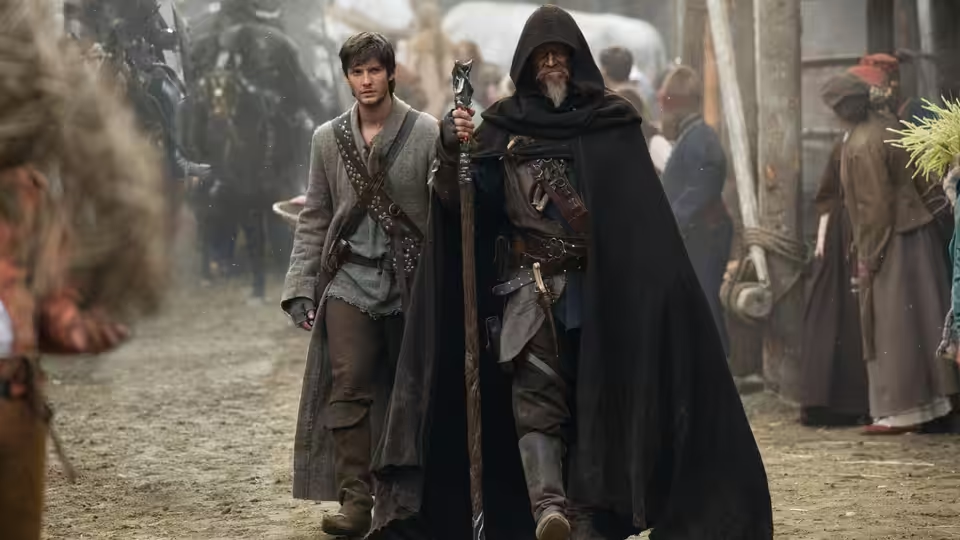
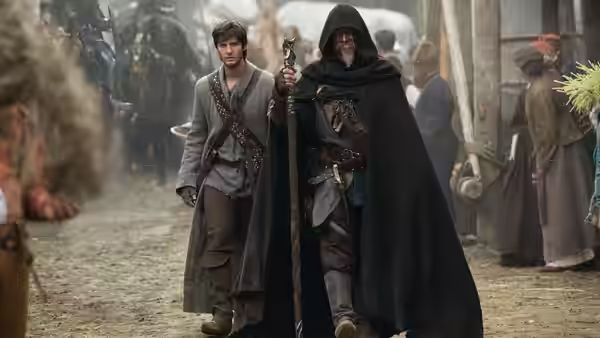
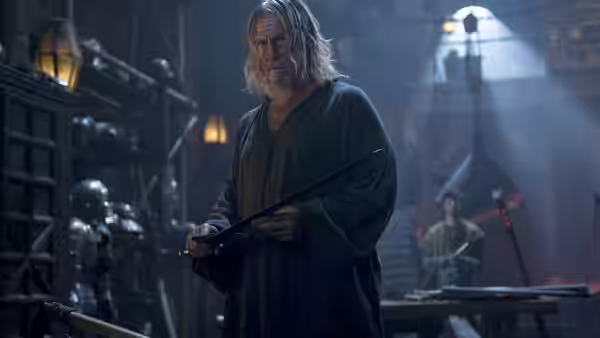
The master is John Gregory, played by Jeff Bridges with his lower jaw pushed forward and his words leaking out of the side of his mouth, as they did in True Grit (2010). It worked there because Rooster Cogburn was a drunk in a book written in that voice. Here Gregory has to explain the rules: what a Spook is, what a seventh son can do, why the blood moon matters. We lost perhaps one line in four and did not miss them. We laughed at the voice the first few times, as a joke Bridges seemed to share with us, and then it became the only thing he was doing.
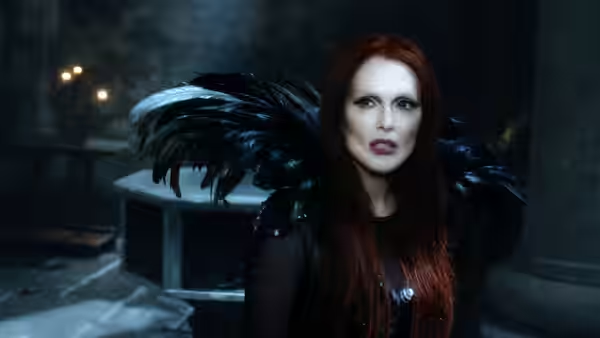
Julianne Moore’s Mother Malkin is the reason to stay. Jacqueline West has dressed her in gowns with shoulders like a beetle’s casing and trains that take a second to arrive, and Moore moves in them as though she has owned them for a century. She hisses, she stalks, and she turns into a dragon when an argument is going against her. Every time she left the screen the film sagged, and every time she came back we sat up. We wished it had been her story.
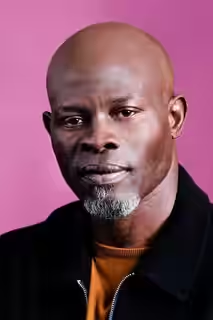
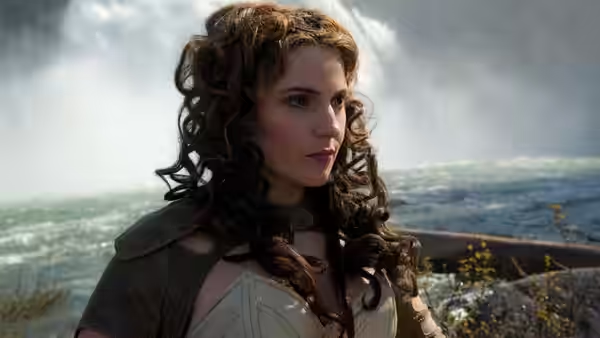
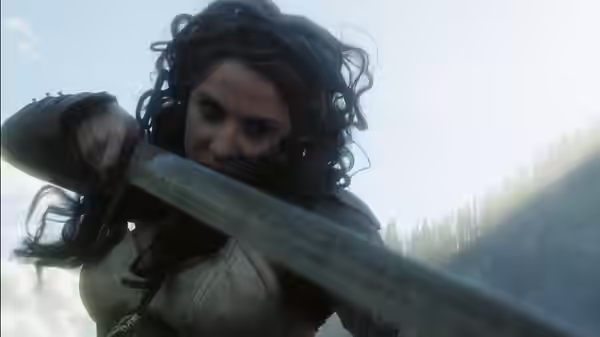
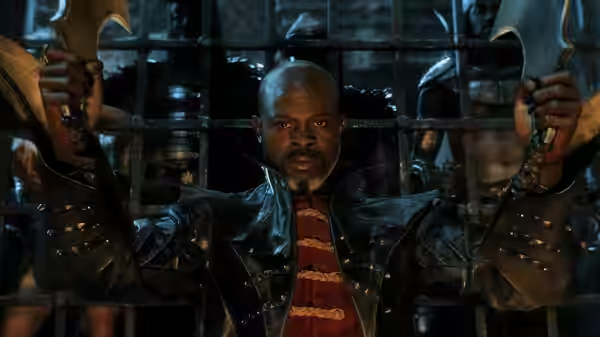
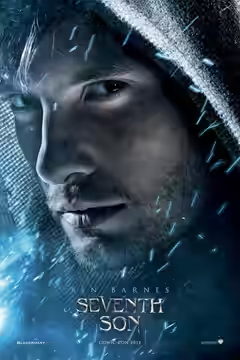
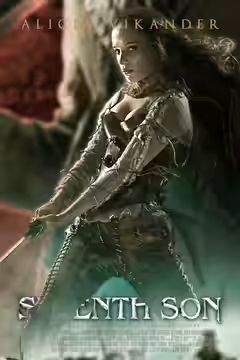
It is Tom Ward’s story instead. Ben Barnes is handsome and willing and has nothing to play but a man being told what he is, which the script does every ten minutes in case we have forgotten. Alicia Vikander, as the half-witch Alice, is given a cloak, a secret and a love affair with Tom that goes from first glance to devotion with no stops between. Djimon Hounsou and Jason Scott Lee, as two of Malkin’s lieutenants, each turn into something large with claws and are gone before they have said much.
The creatures are the film’s big spend. They are detailed and lit with care, and they weigh nothing; a beast the size of a cottage knocks a man flat and the ground does not notice. Newton Thomas Sigel shoots the mountains and pine forests in a cool grey light that suits the material, and then the film cuts to Dante Ferretti’s black stone fortress for Malkin, lit a dim orange where one tower looks like another. Ferretti’s best work is Gregory’s cluttered house, all jars and chains and hanging tools, which the film visits and leaves. Marco Beltrami’s score announces every entrance with brass and a choir, so that a man walking into a tavern sounds like the end of the world.
Three editors are credited, Jim Page, Michael Kahn and Paul Rubell, and the joins show. Scenes end a beat early or late, and a scuffle in a town where a crowd has decided Alice is a witch is over before we know who is hitting whom. The screenplay gives the witch a deadline, the blood moon in a week, then sends Gregory and Tom on a walking tour with no particular hurry, stopping to train, to fight whatever Malkin has sent, and to let Tom fall in love. By the hour mark we were bored, in the way of watching money spent on nothing: each set piece cost more than the last and mattered less.
The 12A certificate suggests who this was for, and a child of eleven might get something from the dragon and Moore’s teeth. Most critics have been harsher than this, and we understand why, but we have sat through duller fantasies with worse witches. Watch it, if you must, for Moore, and for the pleasure of hearing Jeff Bridges say the word Spook in a voice that has plainly never met the word before.