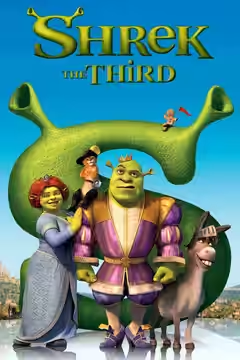
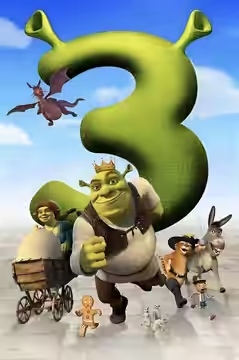
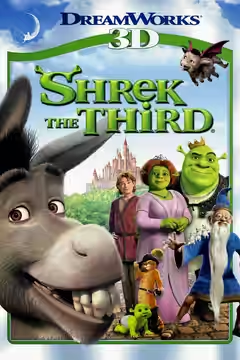
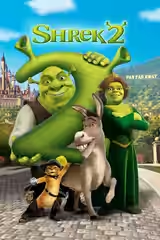
Chris Miller’s third outing is handsomely built and has about twenty minutes of jokes in it. Shrek’s reluctance to rule is stated in the first reel and then repeated for an hour, while Donkey and Puss wait in the wings.
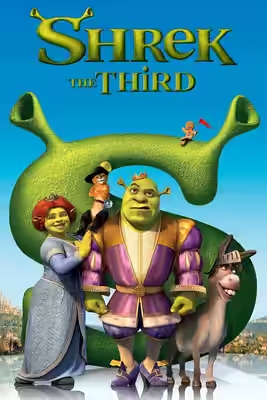
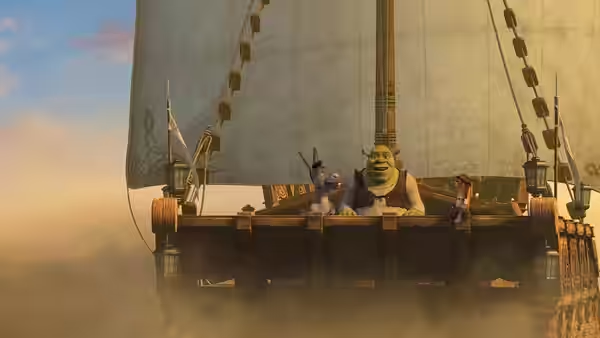
Chris Miller directs the third Shrek film from a script he wrote with Jeffrey Price, Peter S. Seaman and Aron Warner, and its question is whether an ogre who has spent two films refusing to be anybody’s hero can be made to run a kingdom. The answer is no, and the film gives it inside ten minutes. Standing in for his ailing father-in-law, Shrek (Mike Myers) knights a man badly, splits his tights in front of the court and sinks a ship with the bottle meant to christen it. Everything that follows, all 93 minutes of it, makes that point again.
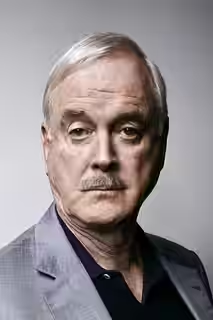
The best scene is the king’s death. John Cleese’s Harold, a frog since the last film, lies in state on a lily pad, gathers himself for his final words, croaks, and dies; then does not; then does again, while the mourners begin their lament too early each time and have to trail off. We laughed, properly and more than once, which we had not expected to, and the credit belongs to the editors, Joyce Arrastia and Michael Andrews, who hold on the frog a beat longer than is decent every time. The funeral that follows is sung by a chorus of frogs to a Wings song, and that is funny too.
Rupert Everett’s Prince Charming is the other thing the script gets right. Reduced to dinner theatre, performing his own life story to an audience that heckles him, he gathers the fairy-tale villains at the Poison Apple tavern and interrogates Pinocchio (Cody Cameron) about Shrek’s whereabouts, and the puppet’s long, grammatically perfect refusal to lie is the sharpest minute of writing in the film. Everett plays Charming as a man wounded in his vanity rather than his ambition, and he is the only character on screen who wants something badly. Doris the ugly stepsister (Larry King) tends the bar in a voice an octave below everyone else’s.
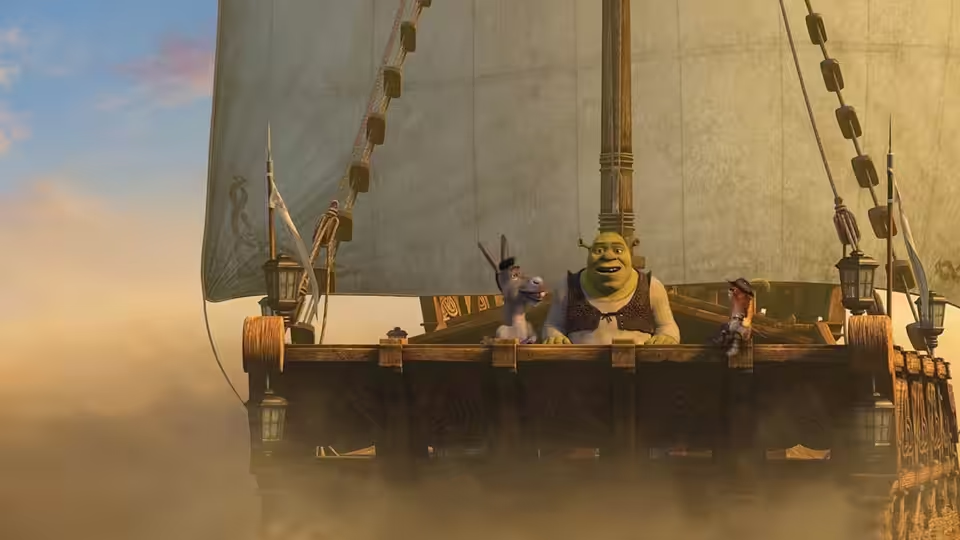
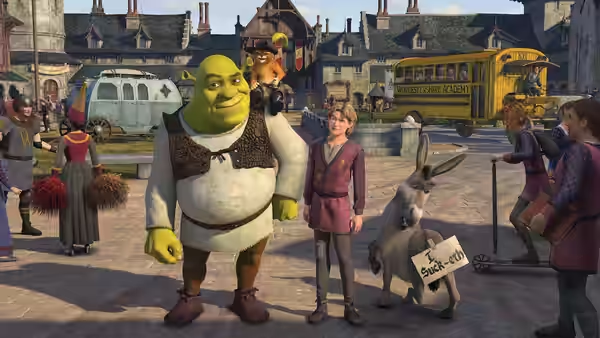
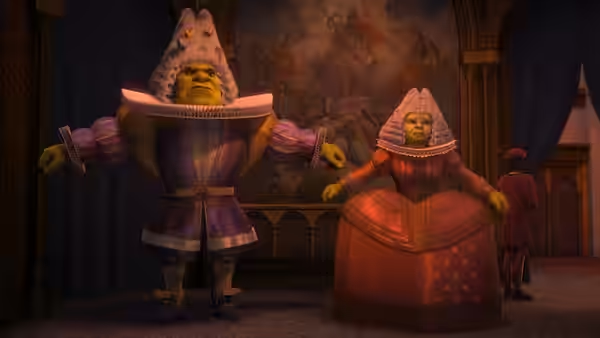
It is a handsome object. Guillaume Aretos’s Far Far Away is Beverly Hills with turrets, palm trees down the boulevards and boutiques under the castle walls, and Artie’s school is a prep school built inside a keep, with jousting on the playing field and cheerleaders in wimples. Shrek’s skin takes the light like wet clay, and the water in the harbour moves as water does. Israel Segal’s costumes give Fiona a wardrobe of gowns the plot never finds a use for. Harry Gregson-Williams’s score runs on fanfares and keeps the pop songs down to a few, which after two films of them we counted as a kindness.
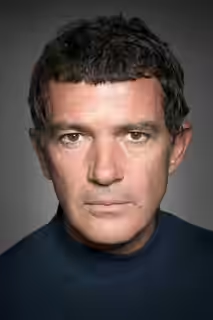
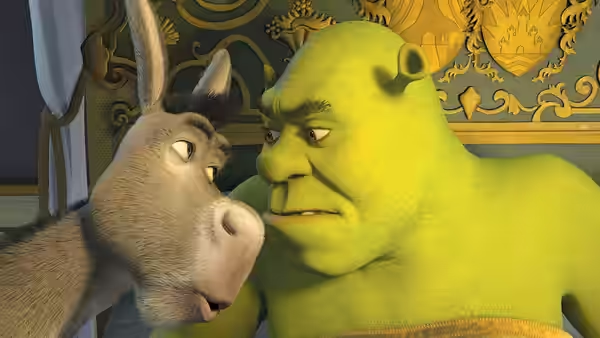
The trouble is Artie, and the trouble is the middle. Justin Timberlake voices him as a sarcastic American teenager, and the film’s one idea about him is that he thinks he is a loser and needs telling otherwise. Shrek tells him. Merlin (Eric Idle), a wizard who has retired to a clearing in his dressing gown after some sort of breakdown, tells him. Shrek tells him again. The sea voyage out and back takes up most of the running time, and it is where Donkey (Eddie Murphy) and Puss in Boots (Antonio Banderas), who between them carried the previous film, are reduced to the odd aside; they are handed one gag in the second half that ought to have run for a reel and is dropped after a scene. By the midpoint we were bored, and then faintly cross about being bored, because Andrew Adamson, who co-directed the first two films and has only a story credit here, knew how to keep an ogre, a donkey and a cat talking.
Fiona (Cameron Diaz) does better than her husband. Her news that she is pregnant, shouted from the quay as his ship pulls out, gives Shrek a nightmare in which the castle fills with ogre babies, and the sequence has the panic the rest of the film lacks. Back at the palace she and Queen Lillian (Julie Andrews) host a baby shower for a set of princesses, and the second half gives the women a strand we will not describe except to say it is livelier than the men’s.
Shrek began as a jab at the Disney fairy tale. By this third film it is an institution itself, and it behaves like one: agreeable, well made and nearly without malice, where the first two ran on cheek. It is a U, and children who like Donkey will be content for an hour and a half. Adults will laugh at the frog and the puppet and then check how long is left. Watch it at home, where you can go back to the frog.