Cameron Crowe’s Seattle romantic comedy is warm, funny and worth an evening for its cast. Paul Westerberg’s music supplies extra feeling, though the writing sometimes settles for an agreeable sketch when a fuller scene is needed.
Singles is a good romantic comedy with an excellent sense of who should be playing it. Cameron Crowe makes the everyday embarrassments of wanting a relationship funny without treating the people involved as fools. The writing can feel slight, and the music occasionally supplies emotion the drama has not earned, but we would happily spend these 99 minutes in this company. Its early-1990s Seattle setting gives it a particular atmosphere; the dating troubles need no period explanation.
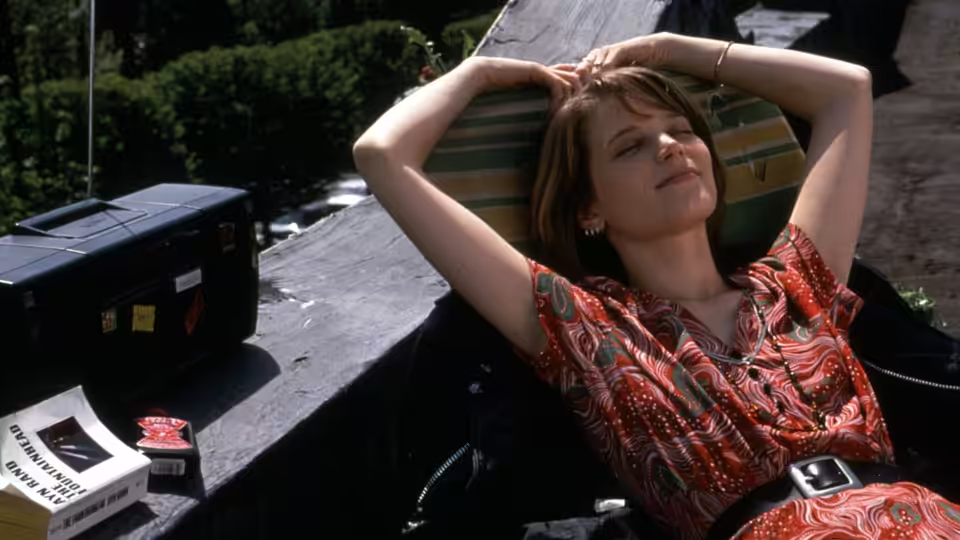
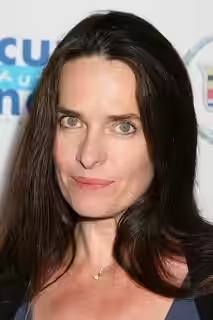
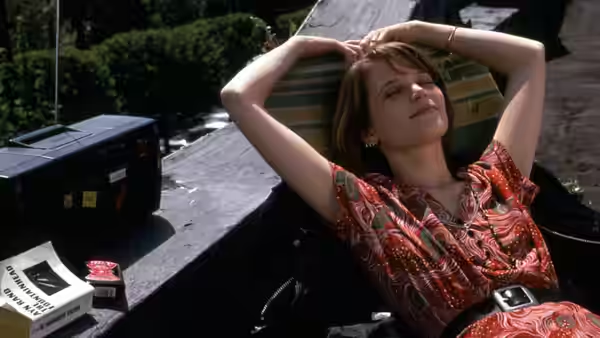
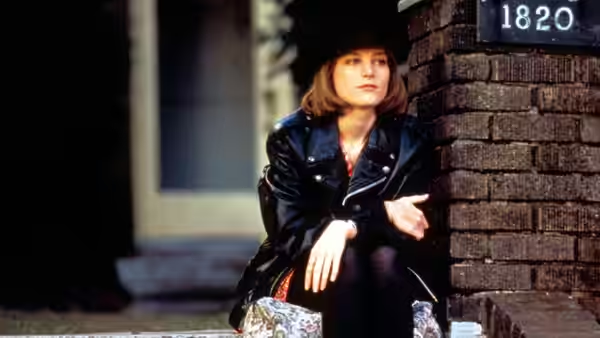
Bridget Fonda, Campbell Scott and Kyra Sedgwick do much of the work that makes Crowe’s screenplay feel perceptive. As Janet Livermore, Fonda makes uncertainty look like something a person is actively trying to overcome, which keeps the performance from becoming merely wistful. Scott’s Steve Dunne has an appealing earnestness, while Sedgwick gives Linda Powell enough reserve to make us pay attention when it shifts. All three understand the small effort involved in trying to appear easier company than we feel.
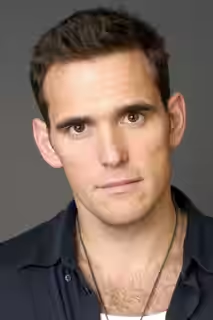
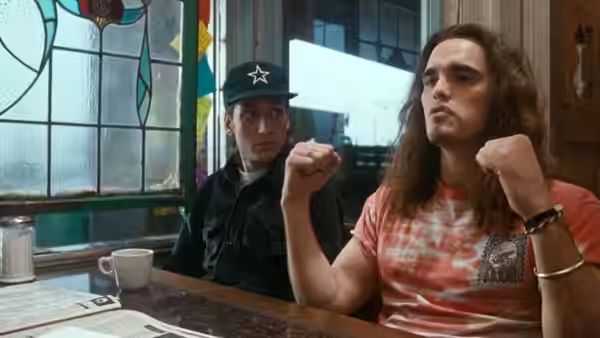
We laughed at Matt Dillon’s Cliff Poncier, particularly the confidence with which he seems to regard himself as a perfectly reasonable romantic prospect. Dillon makes that self-satisfaction funny without asking us to despise the man. His broader comic approach gives the ensemble a useful change of pace, though Crowe sometimes accepts an amusing personality where a more searching scene might have been useful. Fonda is especially good at making hesitation interesting enough to hold our attention alongside the louder comedy.
Ueli Steiger and Tak Fujimoto’s cinematography suits a film that wants us to enjoy being around its characters. The photography makes Seattle feel like somewhere people conduct ordinary lives, and gives the performances room without fussing over them. Stephen J. Lineweaver’s production design supports that ease: the surroundings never seem to be competing with the people for our attention. We would not choose the film for its visual daring, but its unforced appearance helps the actors make the romantic awkwardness believable.
Paul Westerberg’s music gives the film a less guarded warmth. It catches the eagerness and disappointment that Crowe’s jokes sometimes tidy away too quickly, allowing the characters’ feelings to linger. We were moved more by the music than by some of the romantic exchanges, because it gives those ordinary disappointments time to register. That is a pleasure with a drawback: occasionally we begin waiting for the soundtrack to supply what a conversation should have managed itself.
Richard Chew’s editing keeps the ensemble manageable and prevents the lighter material from becoming laborious. The unevenness comes chiefly from Crowe’s screenplay, which finds plenty of recognisable behaviour but does not always stay with it long enough. Some characters invite more curiosity than the writing satisfies, and an agreeable rhythm can become a reason to move on too readily. The cast repeatedly makes these brief encounters feel fuller, but we notice how much responsibility has been handed to them.
A romantic comedy earns considerable goodwill simply by making us care who finds happiness, and Singles clears that hurdle. Its musical setting gives it personality without requiring a particular attachment to the period or the scene. The modest scale suits Crowe’s interest in people trying to explain themselves and not quite succeeding. Choose it when an evening of awkward courtship sounds appealing, with some allowance for conversations that finish just as they become interesting.