Whoopi Goldberg and Maggie Smith make Sister Act a warm, enjoyable musical comedy, with songs that justify the familiar setup. The plotting is routine, but the ensemble gives us good reason to forgive it.
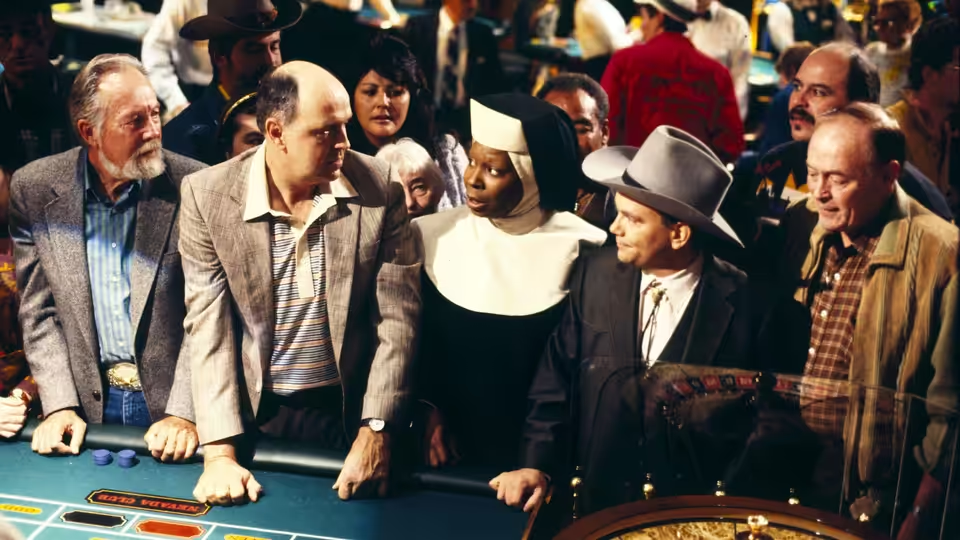
We recommend Sister Act for its performers and its music, with a modest allowance for predictable plotting. Emile Ardolino has a comic premise that needs little explanation: Whoopi Goldberg brings rock ’n’ roll to a nuns’ choir. The useful decision is to let the nuns share the pleasure instead of merely standing about looking scandalised. At 100 minutes, the film gives us enough time in their company to make the familiar story easy to forgive.
Whoopi Goldberg plays Deloris Van Cartier, also known as Sister Mary Clarence, with enough force to make the whole enterprise seem likely to tip towards her. She is funny, but her warmth matters just as much; a performance based entirely on disruption would soon become tiring. Maggie Smith’s Mother Superior gives that energy somebody worth meeting. There is pleasure in watching two such different comic performers work together, and Emile Ardolino is sensible enough to leave room for both.
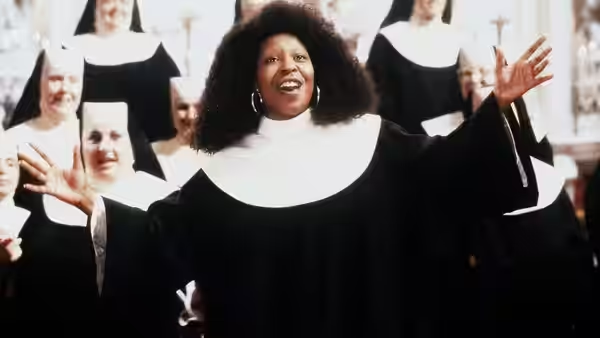
Kathy Najimy as Sister Mary Patrick, Wendy Makkena as Sister Mary Robert and Mary Wickes as Sister Mary Lazarus help make the community worth spending time with. The supporting cast has enough presence for the choir to register as a collection of people. We never feel that we are simply waiting for the star to speak again. That generosity is a substantial part of the film’s appeal, and it survives the more mechanical jokes.
The music is where the premise pays off most reliably. With Marc Shaiman handling the music, the choir’s change of style remains enjoyable after the first laugh. We found ourselves unexpectedly moved by the choir’s enthusiasm; their pleasure in making music together is easy to share. The editing by Richard Halsey and Colleen Halsey gives these stretches a momentum that the surrounding comedy does not always match. The numbers feel like time well spent, even when the route to them has been obvious.
Adam Greenberg’s cinematography is most effective when it lets us take in the ensemble without fuss. Jackson DeGovia’s production design is similarly restrained, giving the performers surroundings that do not compete for our attention. We would welcome a little more visual character, particularly when the jokes themselves are doing so much of the work. Still, the plain presentation suits a comedy that depends so heavily on watching its performers together.
Paul Rudnick’s writing is less dependable than the casting. Too often, the joke arrives already understood, and familiarity becomes an excuse for leaving it as it is. The story also gives us little reason to wonder where it is heading, which puts considerable weight on the performers’ ability to keep us amused along the way. They usually manage, but the weaker stretches make us wish the script had given this cast more to surprise us with.
There is nothing wrong with a musical comedy offering uncomplicated pleasure, provided the people making it have done enough work. Here, the cast and the songs make that bargain seem fair, though anyone hoping for much bite should look elsewhere. Choose it when the evening calls for warmth, and accept that the story will probably get where you expect before the choir has finished.