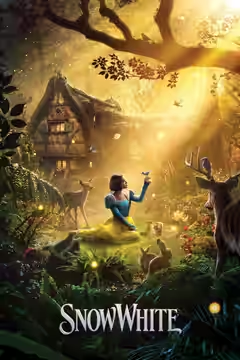
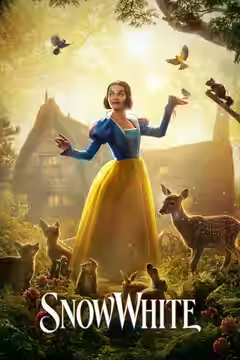
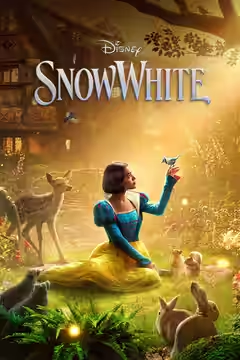
Rachel Zegler sings well enough to carry a better film than this one. Around her, Marc Webb’s remake fusses over its changes, stalls whenever Gal Gadot speaks, and hands the story’s heart to seven digital dwarfs who never look her in the eye.
Marc Webb’s remake of Snow White and the Seven Dwarfs, the 1937 film that started Disney off in features, runs 109 minutes, keeps a handful of Frank Churchill’s songs and spends a good deal of its running time explaining why it has changed everything else. The princess (Rachel Zegler) is named for a snowstorm and raised to lead a kingdom rather than to marry into one. The prince has become Jonathan (Andrew Burnap), a bandit with a political programme. The Evil Queen (Gal Gadot) has starved the kingdom and would like to be told she is beautiful. Erin Cressida Wilson’s screenplay is never idle and the film is seldom boring, but it keeps talking through the moments that ought to be sung.
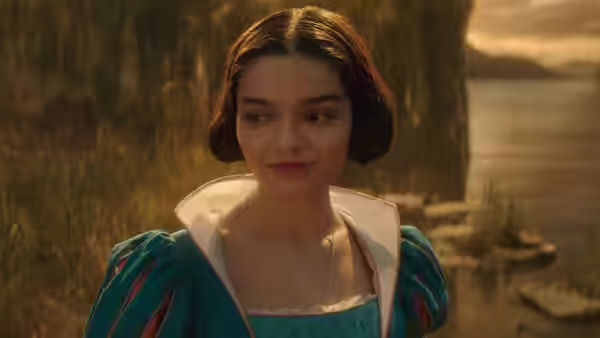
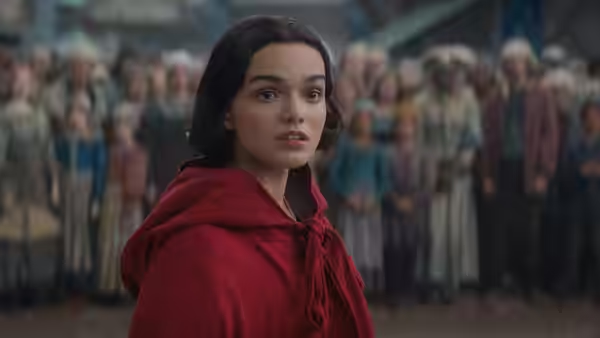
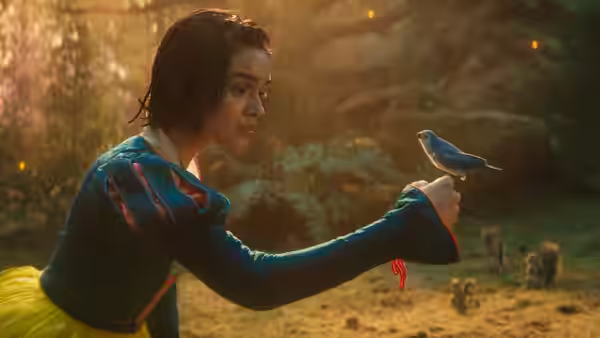
Zegler is the reason to watch it. She sings with a clear, unforced voice and plays goodness as something that takes effort, which is harder than it sounds. Her first solo, sung alone in the castle grounds at night with the windows dark behind her, is the one stretch where we forgot we were watching a remake. Mandy Walker keeps the camera close and steady, Mark Sanger and Sarah Broshar leave the shot alone, and the song lands because she is allowed to finish it. We were moved, and a little embarrassed to be, having come in with our arms folded.
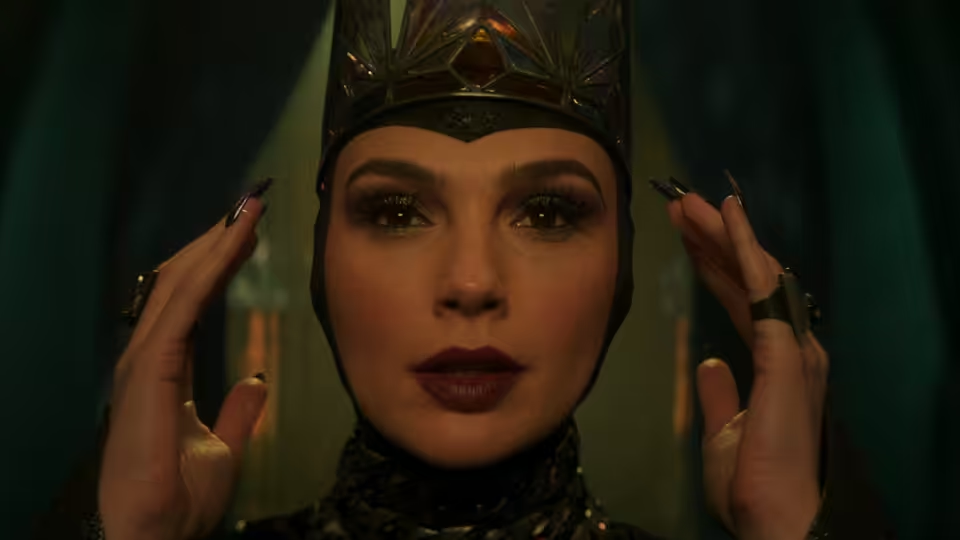
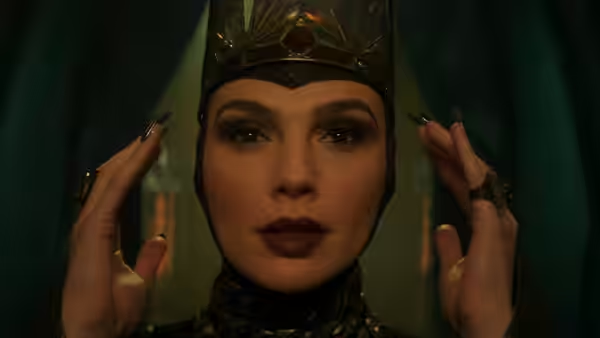
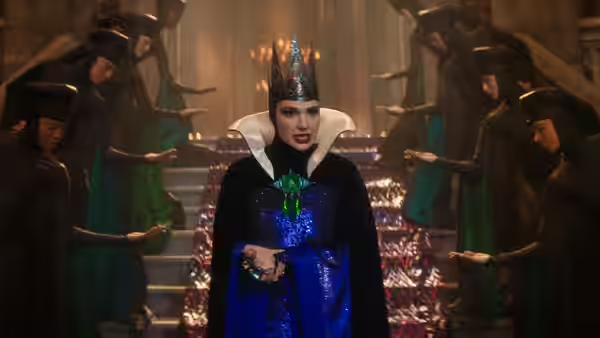
Gadot is the opposite problem. She looks the part, and Sandy Powell has dressed her in a black gown with a collar like a row of knives and a crown you could open a tin with, but the lines come out flat and evenly spaced, as if read from a card held just off camera. She gets the film’s showiest new number, all mirrors and gold light, and it is the one time she seems to be enjoying herself. The rest of the time the film cuts away from her as quickly as manners allow.
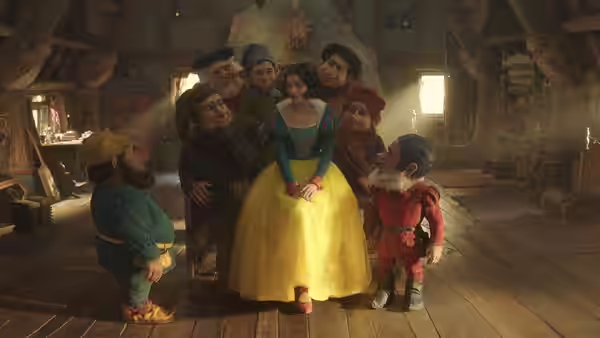
Then there are the dwarfs. They are digital, voiced by Andrew Barth Feldman, Jeremy Swift, Martin Klebba, Jason Kravits, George Salazar, Tituss Burgess and Andy Grotelueschen, and they have been given skin like polished fruit and eyes that never quite fix on the person they are talking to. The cottage scenes were the heart of the 1937 film and here they are the weakest thing in it. Zegler sings “Whistle While You Work” to a room of figures who seem to be standing slightly to one side of her, and we winced, not at anything gruesome but at the gap between the effort she is making and the nothing she is making it towards. Kave Quinn’s cottage, all crooked beams and carved cupboards, deserved tenants who cast shadows. Dopey (Feldman), given a strand about finding his voice, is the only one of the seven who registers as a character rather than an asset.
Burnap is easy company as Jonathan, and his sparring with Zegler over a stolen potato has more snap than most of the romance that follows. His gang of bandits, though, are a second set of seven companions the film did not need, and their grievances are delivered as speeches at a campfire. Ansu Kabia’s Huntsman gets one good scene, the knife and the decision, and plays it as a tired man rather than a monster. Jeff Morrow’s score does patient work underneath, stitching Churchill’s old tunes to the new ones so that the joins do not show as much as they might.
Against Disney’s own run of live-action remakes this sits in the middle: brisker than some, uglier than most, kinder to its lead than nearly all of them. Against the original it is simply longer. The 1937 film told the whole story in 83 minutes and trusted the audience to know why a girl might be frightened of the woods. This one adds twenty-six minutes and uses them to explain.
The PG is gentle; small children will be fine and the forest is more damp than frightening. See it if there is a child in the house who will want to know the songs. At home the dwarfs shrink to a manageable size and Zegler does not, which is the right way round.