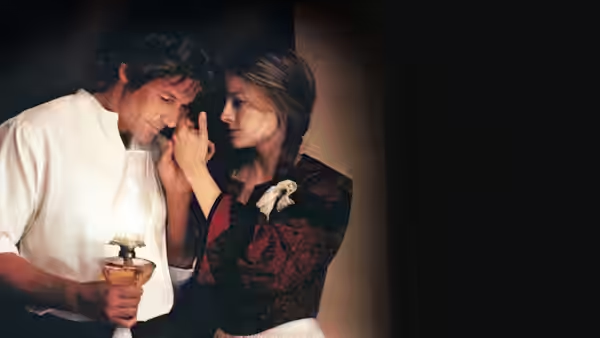
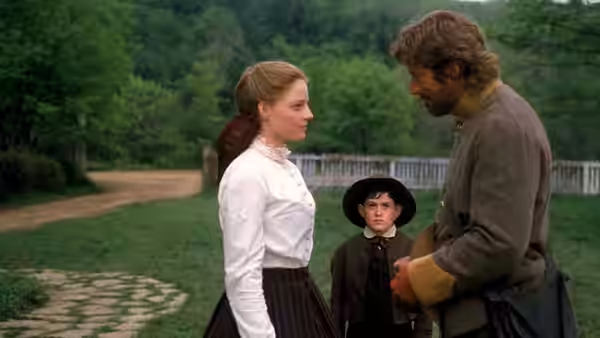
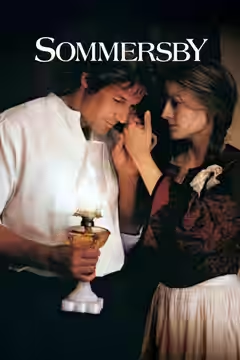
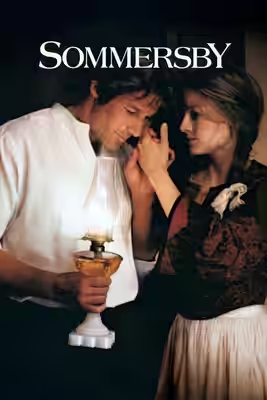
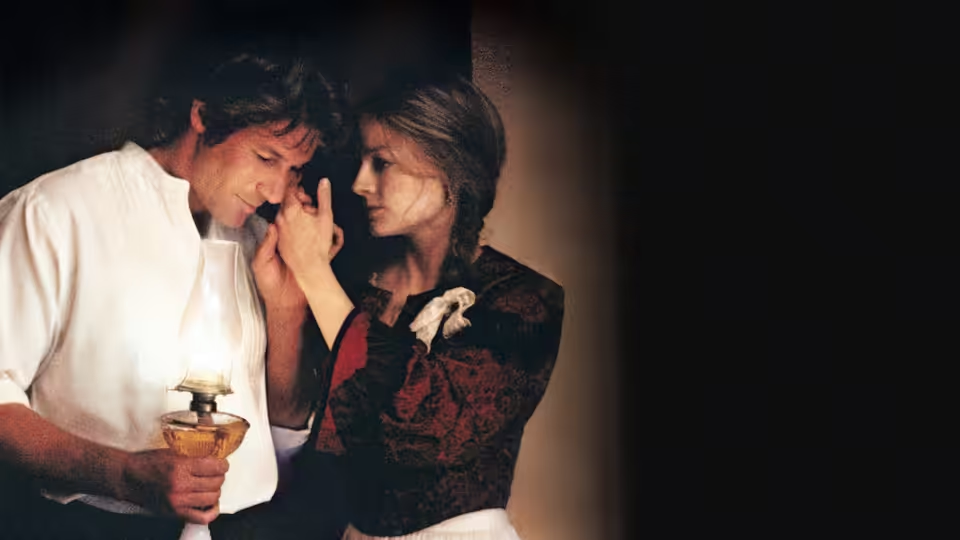
John Sommersby (Richard Gere) and Laurel Sommersby (Jodie Foster) lean close together indoors
Film review

Sommersby

1993 · Directed by Jon Amiel · 1h 49m · FSK 12

In a sentenceA husband comes home from the war a better man, which is the first thing anyone should have checked

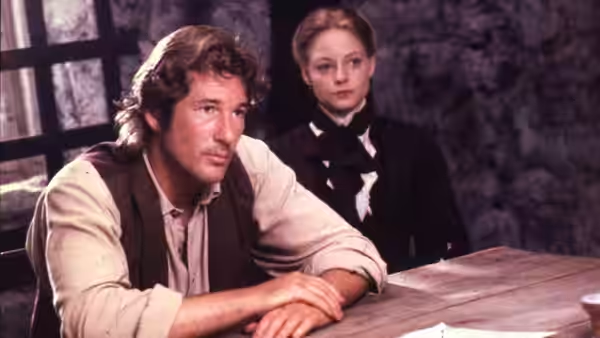
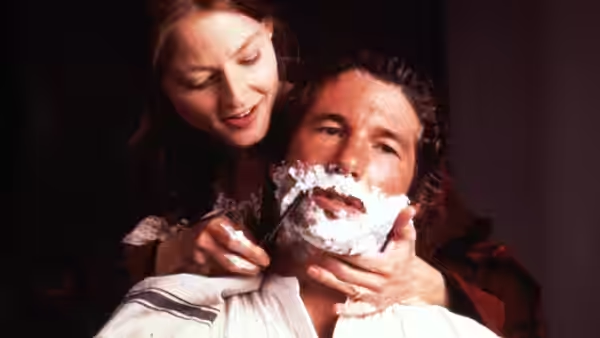
Tennessee, in the first years after the American Civil War. John Sommersby (Richard Gere) walks back into Vine Hill six years after he marched off to fight, and the town comes down the road to meet him. His wife Laurel (Jodie Foster) has spent those years keeping a ruined farm alive with their small son, Little Rob (Brett Kelley), and with the help of the neighbour Orin Meecham (Bill Pullman), who expected to marry her. The man who has come back is gentler than the one who left, reads books he never read, and his old boots do not fit. He wants the town to plant tobacco on his land and buy shares in it. Laurel wants to know who is sleeping in her bed.

Plays from YouTube when you press play; nothing loads from them until then.

Fi1m review

Jon Amiel’s handsome relocation of The Return of Martin Guerre to post-war Tennessee has Jodie Foster at her most watchful and Philippe Rousselot’s loveliest light. It also sands the hard edges off its moral problem, and the last act asks for tears it has not earned.

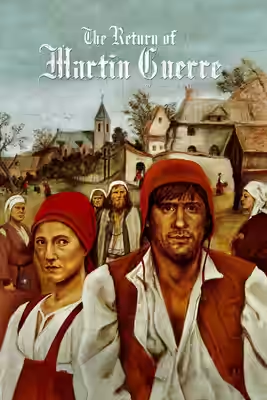
Jon Amiel takes a sixteenth-century French court case, the one Daniel Vigne filmed in 1982 as The Return of Martin Guerre, and moves it to Tennessee in the years after the Civil War. The bones are the same. A man comes home from a long absence, the town welcomes him, his wife lets him into the house, and the question of whether he is who he says he is sits over every scene. Sarah Kernochan’s screenplay knows that question is the whole film. The trouble is that it also wants us to like everybody, and the two aims pull against each other for most of its 109 minutes.

The arrival is the best stretch. Gere walks up a dirt road and the town comes down it to meet him, and Philippe Rousselot shoots the reunion in long late-afternoon light, dust in the air, the whole crowd gold at the edges. Bruno Rubeo’s farmhouse has been let go in the war: boards missing, fields gone to weed, one good room kept clean. Marilyn Vance puts Foster in the same two patched dresses and Gere in a coat that was plainly cut for somebody slightly different. Nothing is announced. The film lets us look at a man in a house and notice what does not fit.

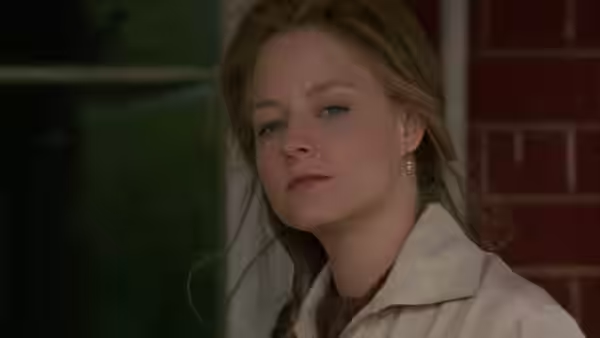
Foster carries it. Laurel has run a farm alone for six years and has learnt to keep her face still, and Foster plays her as a woman doing sums behind her eyes in every scene: the boots, the books, the hands that have softened. She lets us watch Laurel decide, more than once, to stop counting and be happy, and then watch the counting start again. It is a performance made of small refusals. When she finally says what she thinks, late on, she says it quietly.

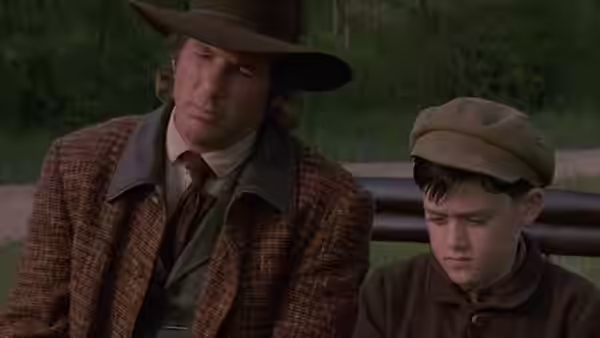
Gere is harder to place, and that is partly the point and partly a limit. He is warm, open and easy with the children of the town, a man anyone would want back, and he is good in the moments when the returned Sommersby is caught not knowing something he should. What he cannot do is suggest a past. The man who left was, by every account in Vine Hill, a brute and a drinker; the man who came back barely seems to have heard of him. Bill Pullman’s Orin has kept Laurel and the farm alive, gets no thanks for it, and plays the obstacle as a decent man being quietly robbed.

The sequence that got us was not the romance but the money. Sommersby stands in the churchyard and asks a ruined town to buy shares in his land and plant tobacco on it, and one by one people come forward with what they have: a watch, a few coins, a cow. Clarice Taylor’s Esther and Frankie Faison’s Joseph, who worked this land before the war without being paid for it, put down their money for a piece of it. We were moved more than we expected to be, and we noticed afterwards that we had stopped caring whether the man was lying. Danny Elfman scores it as straight pastoral, a long string theme that climbs and holds, and in that churchyard it is exactly right. Elsewhere it is poured on.

The softening is the problem. Vigne’s film was about a village that preferred not to ask. Kernochan and Amiel keep the shape and blunt the point: the returned man is good, the land is saved, and the people who object are small or cruel. R. Lee Ermey’s Dick Mead is given about four lines to be the nastiest man in the county. Peter Boyle cuts the first hour with patience and hurries the second as the plot arrives, and James Earl Jones turns up late as a judge to lend the final stretch more weight than the writing has, which is roughly what James Earl Jones is for. The last act takes a turn we will not describe, and then it asks for tears. We had given ours away in the churchyard.

It is worth an evening, mostly for Foster, and it suits a quiet night at home with the lights low, where Rousselot’s light does half the work and the script’s convenient turns matter less. If you have seen the French film, you will spend the last half hour wishing this one had its nerve. If you have not, see this first, then see that, and notice how much changes when a film decides its hero must be good. It carries a 12.

Critical consensus AI synthesised

64
Positive
1
Mixed
6
Negative
0

Most critics land in the middle on Sommersby, warm about the romance and unconvinced by the rest. The praise clusters on Jodie Foster, whose sensitive, thoughtful performance is singled out by nearly every review, and the Los Angeles Times also credits her chemistry with Richard Gere. Variety is the one clearly positive notice, finding the film a successful, morally intricate romance and a strong American reworking of its source.

The reservations are about softness. Radio Times finds the remake weaker than the original, if still engrossing, and Empire argues that Hollywood smoothing leaves identity and betrayal insufficiently tested. The Los Angeles Times is the lowest, judging it an uneven romance that comes close to the genre’s satisfactions without delivering them. Gere divides opinion more than Foster; Radio Times finds him and Bill Pullman less impressive. The spread is narrow, and three reviews are only partly readable, so the picture is thinner than seven notices suggest.

Variety
31 December 1992 · Variety Staff
85*

The review finds the film a successful, morally intricate romance and a strong Americanization of its source. It singles out the layered performances of Jodie Foster and Richard Gere for praise.

Read the full review →
RogerEbert.com
64*

The page could not be accessed, so the critic’s verdict cannot be verified. No specific praise or complaint is available from the page content.

Read the full review →
The New York Times
5 February 1993 · Janet Maslin
64*

The page could not be accessed, so the critic’s verdict is unavailable. The headline raises suspicion about the husband’s return, but the review’s specific praise or complaint is not readable.

Read the full review →
Time Out
· GA
64*

The available page does not reveal the critic’s verdict. No specific praise or complaint is visible in the page metadata.

Read the full review →
Empire
1 January 2000 · Barry McIlheney
60*

The review finds Sommersby genuinely romantic and entertaining, but says Hollywood softening weakens its dramatic edge. It praises the performances of Richard Gere and Jodie Foster, while faulting the film for leaving identity and betrayal insufficiently tested.

Read the full review →
Radio Times
★★★ · David Parkinson
60

Parkinson finds the remake weaker than the original, though still enjoyable and engrossing. He praises Jodie Foster’s sensitive performance, while finding Richard Gere and Bill Pullman less impressive.

Read the full review →

Straight answers AI written, from our review

Is Sommersby worth watching?
Sommersby is worth an evening for Jodie Foster, who plays a wife quietly doing sums about the man in her bed, and for Philippe Rousselot's late-afternoon light; we scored it 63. The script sands the hard edges off its central question and the last act asks for tears it has not earned. Best suited to a quiet night at home rather than anyone wanting the French original's nerve.
How long is Sommersby, and what is it rated?
Sommersby runs 1h 49m and is rated 12 by the FSK in Germany. It is a drama and thriller film.
Where can I watch Sommersby in Germany?
Sommersby is not on any streaming or rental service in Germany at the moment. It is available in 8 other countries; change your country at the top of the page to see where. Availability is checked daily.
How violent or frightening is Sommersby, and is it suitable for children?
Sommersby carries a UK 12 certificate and is a drama of suspicion and romance rather than a violent or frightening film. The Civil War is a backdrop, not a battlefield, and the tension comes from a wife watching a husband who may not be who he says. Suitable for teenagers; younger children are likely to find it slow rather than upsetting.
How does Sommersby compare to Cold Mountain?
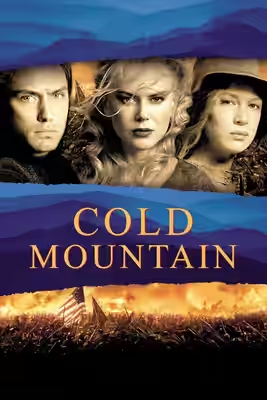
Sommersby and Cold Mountain both follow a man's long return from the American Civil War to a woman keeping a farm alive, but Sommersby stays at home and asks whether the man is who he claims. Cold Mountain is the larger, more handsomely built film and better on the journey, while Sommersby has the stronger central performance in Foster. Neither fully lands its romance.
What should I watch after Sommersby?
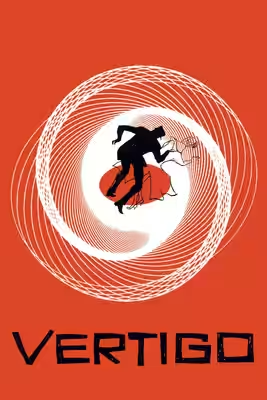
After Sommersby, try Cold Mountain (2003, Fi1m 62): The long walk home from the same war, with Nicole Kidman keeping a farm alive too. Then Vertigo (1958, Fi1m 92): The other great film about wanting someone to be who they are not.

Cast

If you liked this, try…

  1. The Return of Martin Guerre (1982) · not reviewed yetThe French original; colder, stranger, and it has the nerve this one lacks.

  2. The Imposter (2012) · not reviewed yetA documentary about a lost boy who comes home, and a family that chooses to believe.

  3. The Beguiled (1971) · not reviewed yetA wounded Yankee in a Southern girls’ school; the women decide what he is for.

  4. Cold Mountain (2003, Fi1m 62)The long walk home from the same war, with Nicole Kidman keeping a farm alive too.

  5. Vertigo (1958, Fi1m 92)The other great film about wanting someone to be who they are not.

Free account

Know what to watch tonight

Two lists that know where things are streaming, collections you can share, your own score beside ours, and Discover that remembers what you have seen.

  • Want to see, sorted by what is streaming now
  • Seen, with your score out of ten
  • No adverts, ever