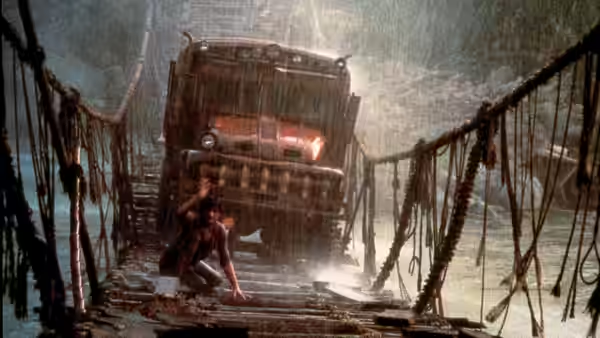
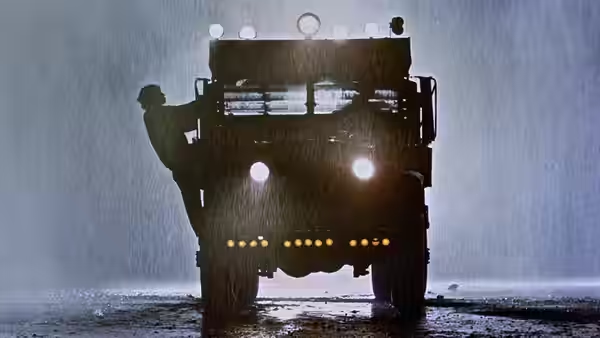
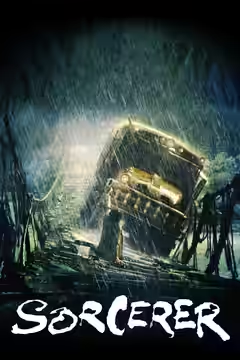
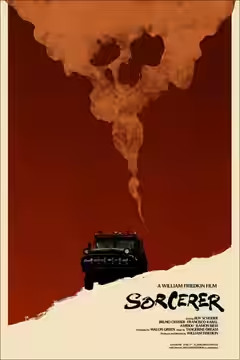
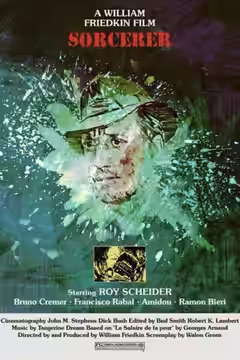
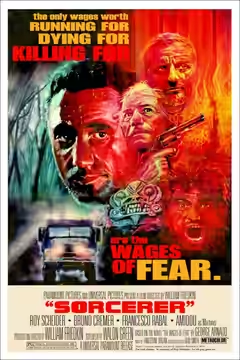
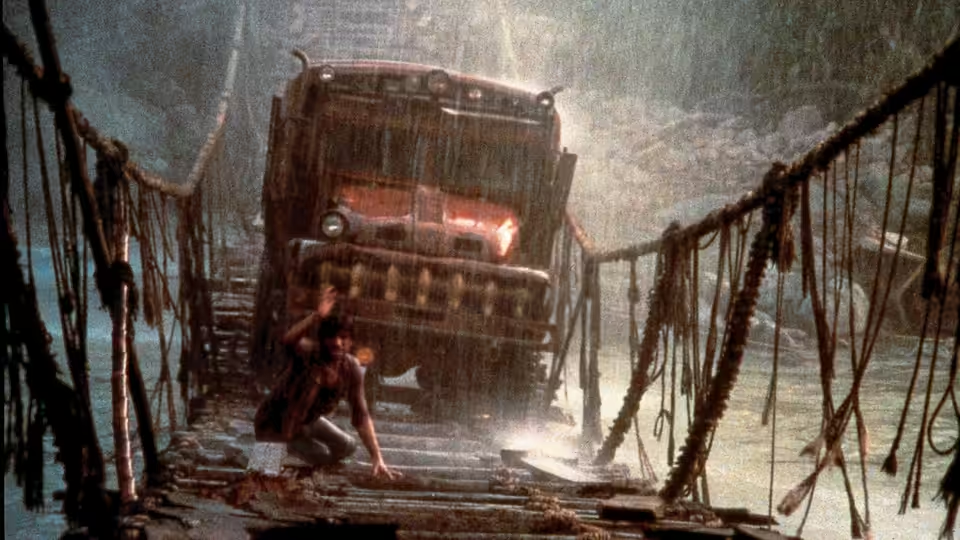
A man braces against a rope bridge as a loaded truck lurches through spray
Film review

Sorcerer

1977 · Directed by William Friedkin · 2h 02m

In a sentenceFour men drive trucks through the jungle and make the sofa feel insufficiently secure

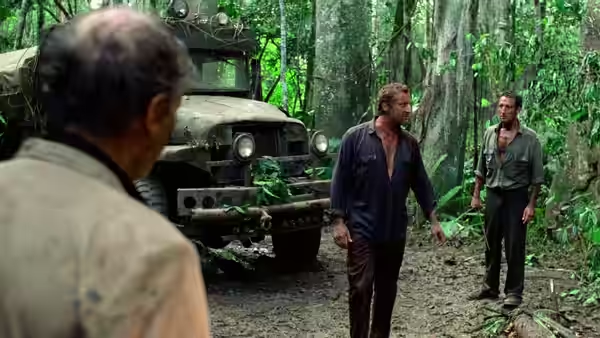
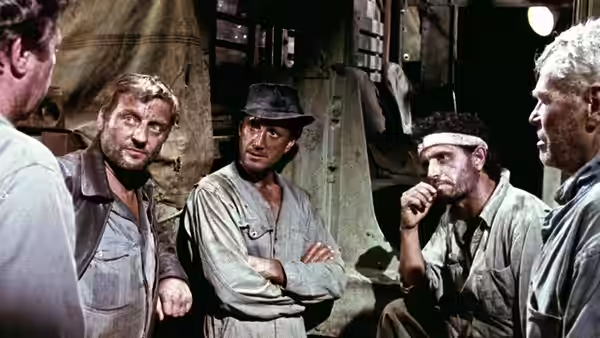
Four outlaws are thrown together, with their lives the only things left to risk. Scanlon / ‘Dominguez’ (Roy Scheider), Victor Manzon / ‘Serrano’ (Bruno Cremer), Nilo (Francisco Rabal) and Kassem / ‘Martinez’ (Amidou) face a shared undertaking that puts them behind the wheels of trucks in the jungle. Driving is the practical task; getting through alive is the immediate concern. The men must contend with difficult terrain and torrential rain, with little conversation to relieve the pressure of the journey.

Fi1m review

Sorcerer is a punishing, gripping thriller whose jungle driving makes danger feel horribly physical. William Friedkin takes too long getting there, but the performances, rain-soaked photography and sound reward the wait.

William Friedkin makes the business of driving through a jungle seem sufficient reason to abandon driving altogether. Sorcerer is an excellent thriller, demanding patience before it delivers danger with a force that makes the wait worthwhile. Its four outlaws offer little reassurance, and the film has no interest in making their undertaking look like a pleasant test of character. For an adventure film, it is unusually good at making physical effort look exhausting, however much we might enjoy watching it.

The prologue is the substantial reservation. The opening of William Friedkin and Walon Green’s screenplay runs longer than it needs to, and the film can feel remote when it ought to be drawing us closer. The distance has a purpose: these are outlaws, and easy affection would soften the film. But the amount of preparation makes the jungle driving seem unnecessarily deferred, particularly when the performances can tell us so much without explanation.

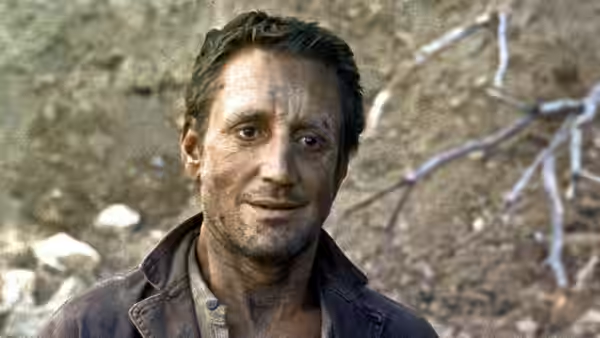
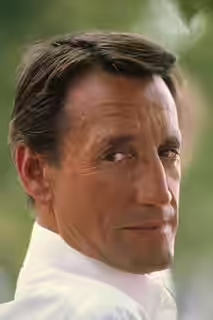
Roy Scheider gives the film a human urgency that keeps its severity from becoming monotonous. He makes the pressure convincing without asking for much sympathy, and we keep watching partly because his performance offers so little relief. Bruno Cremer, Francisco Rabal and Amidou make the group feel uneasy enough that companionship never becomes a promise of safety. The dialogue-light approach suits them: we have time to watch the men, rather than wait for each to explain himself.

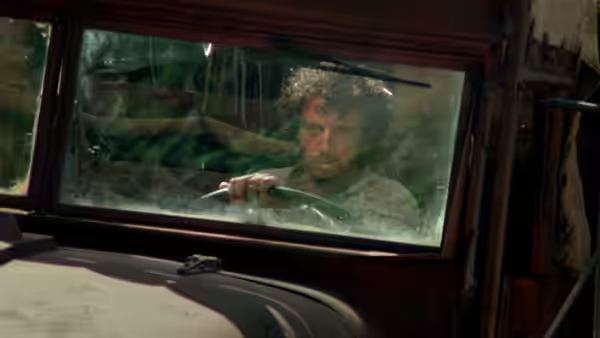
John M. Stephens and Dick Bush photograph torrential rain so that the difficulty of the jungle driving remains legible. We can see enough to understand the danger without the weather ever seeming manageable. John Box’s production design gives the trucks the weight and presence these sequences need; they remain convincing even when the circumstances become almost absurdly punishing. The film depends on our believing in the difficulty of moving these vehicles, and that belief holds.

We were frightened during the stormy bridge crossing. The sound makes the movement of a truck feel horribly precarious, and the rain keeps the sequence from offering any visual comfort. Bud S. Smith and Robert K. Lambert’s editing gives the driving enough time to become an ordeal without making the immediate problem hard to follow. The patience that drags in the prologue pays off here, because hurrying through a manoeuvre would let us stop worrying about it.

The music credited to Christopher Franke, Peter Baumann and Edgar Froese adds an unsettling pulse without having to explain the men. Its insistence suits a film that gives so little space to ordinary warmth, although the sustained harshness may exhaust some viewers before it satisfies them. That is a fair objection to a thriller which is so determined to keep us uncomfortable. We found the severity persuasive because the driving sequences make the men’s vulnerability so easy to understand.

Anyone looking for cheerful resourcefulness should choose a different adventure. The pleasure here comes from watching difficult action staged clearly enough that we cannot dismiss the risk, even when we would quite like a breather. The slow beginning remains a cost, but it should not keep those with a taste for severe suspense away. Give the sound your full attention, and leave any conversation until the trucks have stopped moving.
Critical consensus AI synthesised

76
Positive
5
Mixed
1
Negative
1

Most critics respond warmly to Sorcerer, with praise clustering around the perilous truck sequences and the craft that makes them tense. The cinematography, production design and sound draw particular notice, while Tangerine Dream’s score is repeatedly singled out for its unsettling force. Roy Scheider’s performance also earns praise. The favourable reviews value the film’s austerity and pessimism, finding substance as well as suspense in its dialogue-light approach.

The spread is wide, however, and admiration for the filmmaking does not always mean involvement in the drama. Variety supplies the clearest dissent, praising the jungle photography and rainstorm sequences but finding the film largely distant and uninvolving. The Skinny is positive but considers the prologue too long. The central division is over how much the film’s tension and technical command compensate for its emotional distance.

Little White Lies
27 October 2017 · 4/5/5 · Ian Schultz
100

The critic calls the film a stunning reimagining that deserves recognition among Friedkin’s greatest achievements. They praise Roy Scheider’s performance and single out Tangerine Dream’s pulsating score.

Read the full review →
Slant Magazine
23 May 2014 · ★★★★/4 · Clayton Dillard
100

Dillard presents Sorcerer as a formally ambitious, existentially fraught film that critiques corporate power. He especially praises the sound mixing in the stormy bridge-crossing sequence and Tangerine Dream’s unsettling score.

Read the full review →
Radio Times
★★★★ · Andrew Collins
80

Collins says the film has been re-evaluated and almost merits lost-masterpiece status. He praises its dialogue-light international thriller approach and perilous, pre-CGI driving sequences.

Read the full review →
The Guardian
3 November 2017 · Peter Bradshaw
75*

Bradshaw finds the film a fierce, austere and intriguing work of pessimism. He especially praises its gripping final stretch, including Scanlon’s psychological breakdown and the awful twist.

Read the full review →
Time Out
· RM
62*

The available page identifies this as Time Out’s review, but provides no readable critic verdict. Its metadata singles out the film’s costly production and poor US box-office performance.

Read the full review →
Variety
31 December 1976 · Variety Staff
35*

The review finds the film admirable in its craft but mostly distant and uninvolving. It praises the vivid jungle truck sequences and especially the cinematography during torrential rainstorms.

Read the full review →

Straight answers AI written, from our review

Is Sorcerer worth watching?
Sorcerer is worth watching for anyone with a taste for severe, physically convincing suspense, and we score it 88 out of 100. The overlong prologue demands patience, but the jungle driving, uneasy performances and punishing sound make the wait worthwhile; we recommend it to thriller viewers who can do without much relief.
How long is Sorcerer, and what is it rated?
Sorcerer runs 2h 02m. It is a thriller and adventure film.
Where can I watch Sorcerer in Estonia?
Sorcerer is not on any streaming or rental service in Estonia at the moment. It is available in 2 other countries; change your country at the top of the page to see where. Availability is checked daily.
How violent or frightening is Sorcerer, and is it suitable for children?
Sorcerer carries a US PG certificate, but we would not recommend it for younger children or viewers easily distressed by sustained danger. We find the stormy bridge crossing frightening because the sound and torrential rain make every movement of the truck feel precarious; the certificate should not be mistaken for a promise of gentle adventure.
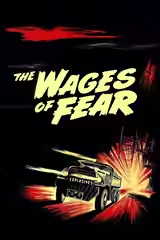
How does Sorcerer compare to The Wages of Fear?
Sorcerer makes its hazardous drive feel horribly physical, while The Wages of Fear builds patient suspense around a truckload of nitroglycerine; we recommend both, with reservations about their long openings. We favour Sorcerer for punishing weather, sound and visible effort, while The Wages of Fear suits viewers drawn to the tension of painstaking caution.
Is Sorcerer based on a true story or a book?
Sorcerer is based on a novel by Georges Arnaud, rather than presented as a true story. We recommend approaching it without preparatory reading: the immediate danger of the jungle driving is clear enough on screen, though we make no claim about how faithfully it follows the book.
What should I watch after Sorcerer?
After Sorcerer, try The Wages of Fear (1953, Fi1m 90): Another hazardous drive, with patient suspense and men who cannot afford caution. Then The Treasure of the Sierra Madre (1948, Fi1m 88): Men under pressure discover how quickly a shared undertaking breeds suspicion; and Theeb (2014, Fi1m 80): A harsh landscape and practical survival, with little room for comforting heroics.

Cast

Awards

Academy Awards, 1978

Nominated
Best Sound

If you liked this, try…

  1. The Wages of Fear (1953, Fi1m 90)Another hazardous drive, with patient suspense and men who cannot afford caution.

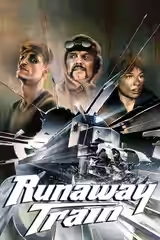
  2. Runaway Train (1985) · not reviewed yetHeavy machinery, desperate fugitives and action that makes physical effort matter.

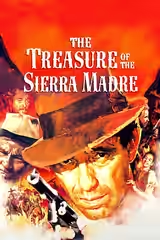
  3. The Treasure of the Sierra Madre (1948, Fi1m 88)Men under pressure discover how quickly a shared undertaking breeds suspicion.

  4. A Hijacking (2012) · not reviewed yetPatient, unsentimental suspense, with working lives dependent on decisions made elsewhere.

  5. Theeb (2014, Fi1m 80)A harsh landscape and practical survival, with little room for comforting heroics.