Cretton’s Spider-Man is the loneliest and most grown-up of Holland’s run, and for an hour it is the best of them. Then the guest stars and the green screen arrive, and the film gets longer and less interesting at the same time.
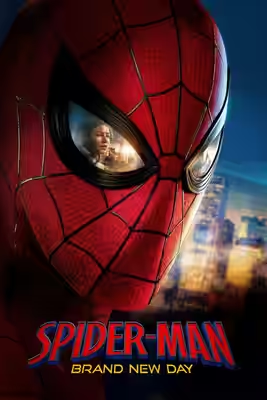
Destin Daniel Cretton inherits a Spider-Man that the previous film left with nothing: no friends, no aunt who knows his face, no girlfriend who remembers his name. Erik Sommers and Chris McKenna’s script takes that seriously, which is the first surprise. Peter Parker (Tom Holland) lives in a small flat, works, patrols, and talks to almost nobody. When Spider-Man: Brand New Day stays down at the level of the street, it is the best of Holland’s films in the part. It does not stay there for all of its 145 minutes.
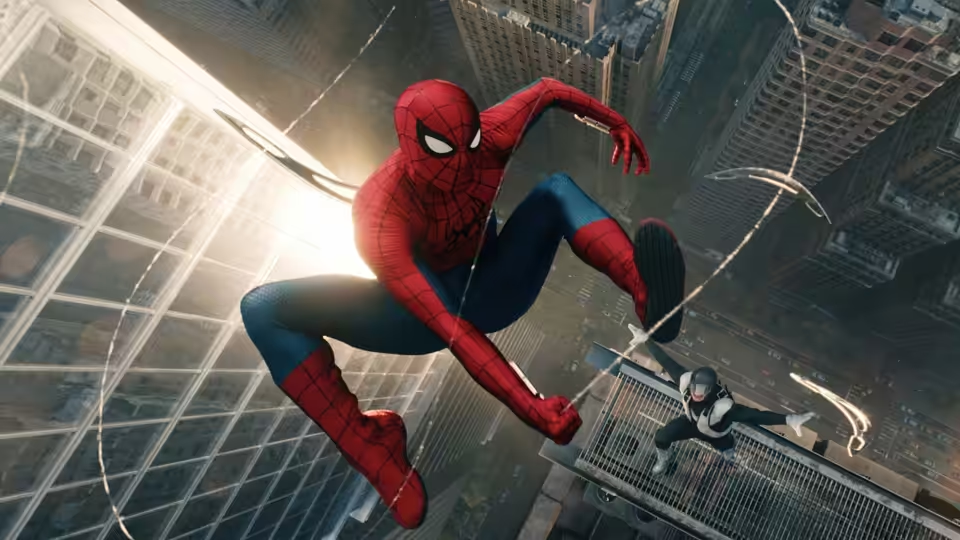
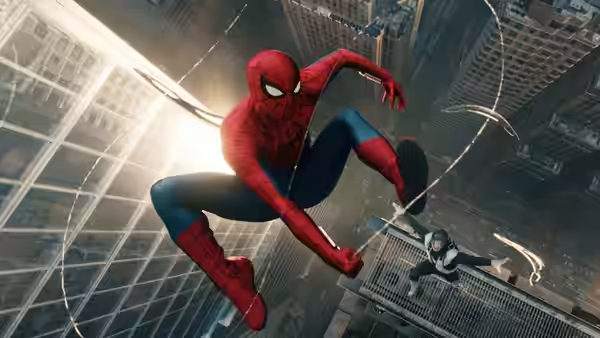
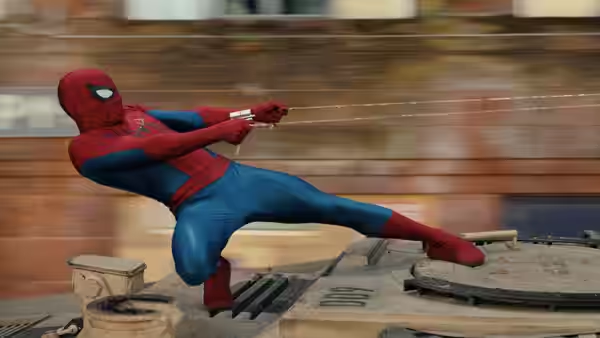
The opening stretch is a montage of nights: Peter dropping onto muggers, walking a drunk home, sitting on a water tower eating something out of a paper bag. Brett Pawlak shoots it at rooftop height with the city’s lights kept soft behind him, and Michael Giacchino holds his old theme back to a few piano notes. The webs now come out of Peter’s wrists rather than a gadget, and the film treats that as one more thing he has to manage on his own. It moved us more than we expected a Marvel film to. It was not the swinging. It was Holland’s face when a boy he has just pulled out of the road runs off without a word, and Peter stands there, and nobody comes.
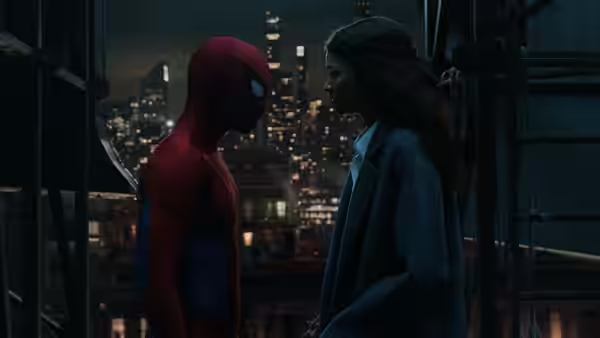
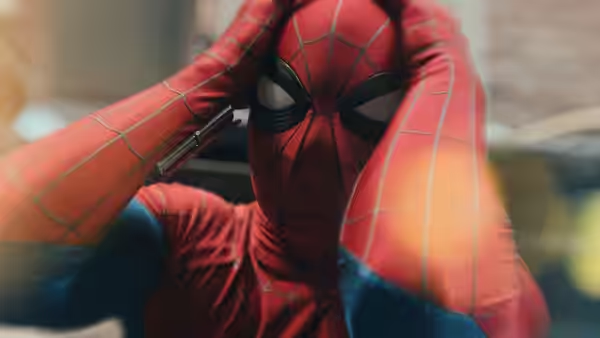
Zendaya has less screen time than in the earlier films and does more with it. MJ here is a woman with a job and a life who keeps noticing a stranger looking at her a beat too long, and Zendaya plays the not-knowing without a flicker of the old rapport, which is exactly what the scenes need. Jacob Batalon’s Ned is used more sparingly still, and the one long conversation he and Peter have across a table is the warmest thing in the film. Holland is quieter than he has ever been in the suit, and better for it.
Then the visitors turn up. Jon Bernthal’s Frank Castle is the one who earns his place: he and Peter disagree about what to do with a man on the ground, and the film lets the disagreement stand. Mark Ruffalo’s Bruce Banner is pleasant company and could be lifted out without leaving a hole. Florence Pugh and Sadie Sink pass through. Sanja Milkovic Hays keeps the costumes plain, dark and worn, so that the suit looks like something a man washes in a sink, and Charles Wood’s production design gives Peter’s neighbourhood real shopfronts and stairwells that the second half mostly abandons.
That second half is the trouble. Michael Mando’s Mac Gargan becomes the Scorpion, a threat that moves from body to body begins to spread, and the film moves with it into a run of large digital set pieces that could have come from any of a dozen other films in this series. Three editors are credited, Gina Sansom, Harry Yoon and Nat Sanders, and the seams show: scenes arrive, make their point, and are cut away from before they have settled. The script also starts saying what the first hour showed. Peter is told he is lonely; he is told what a hero is for; he is told it again. We started to notice the time at about the ninety-minute mark, and we were still noticing it at the end.
Cretton’s Short Term 12 was a small film about a young woman looking after children nobody else wanted, and the best of this one comes from the same place. His Shang-Chi showed he could stage a fight so you can follow it, and the early brawls here, in stairwells and on fire escapes, are clean and fast. When the fighting leaves the ground and the people turn into pixels, his interest visibly drops, and so did ours.
See it for the first hour and for Holland and Zendaya, who make a love story out of two people who have never met. Stay for the rest because you are already there.