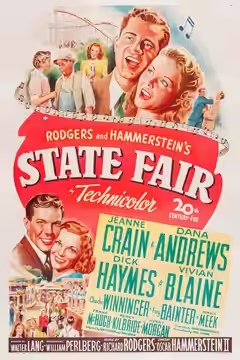
Rodgers and Hammerstein’s one musical written straight for the screen is small, sunny and slight. The romances are thin and Walter Lang directs without much curiosity, but the songs are good, two of them are better than good, and the parents steal it.
Rodgers and Hammerstein wrote one musical directly for the cinema, and this is it. Between their first Broadway hit and Carousel they took Philip Stong’s novel about an Iowa farm family’s week at the state fair, which Fox had already filmed once in 1933, and fitted it with new songs. The ambition is small on purpose. Nobody dies, nothing burns, and the largest question in the picture is whether a hog will take a ribbon. Walter Lang directs at a stroll, and for most of its 100 minutes that is enough.
The parents are the film. Charles Winninger’s Abel fusses over Blue Boy the way a man fusses over a relative in hospital, checking his appetite, talking to him in the pen, taking offence on his behalf. Fay Bainter’s Melissa watches her husband with a patience that has plainly lasted thirty years and has a few left in it. The best scene has nothing to do with romance: Donald Meek, as the judge Hippenstahl, takes a spoonful of Melissa’s brandied mincemeat, pauses, and comes back for another, and then another, and Bainter’s face does the rest of the work. We laughed, and then felt slightly sorry for the man.
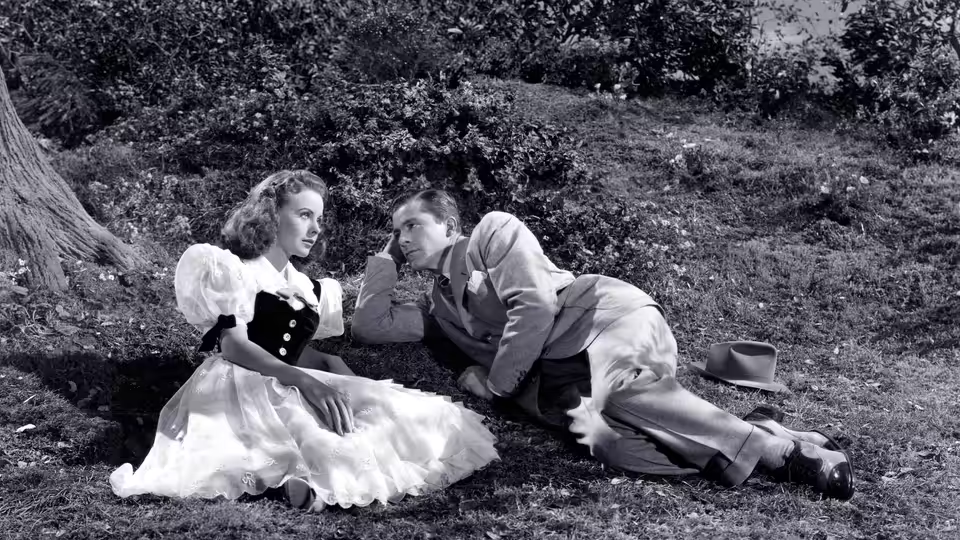
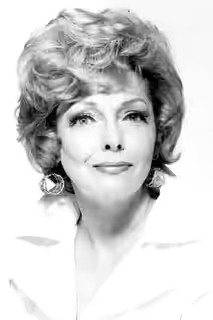
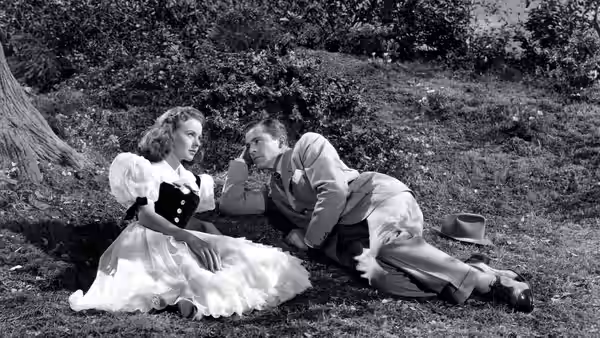
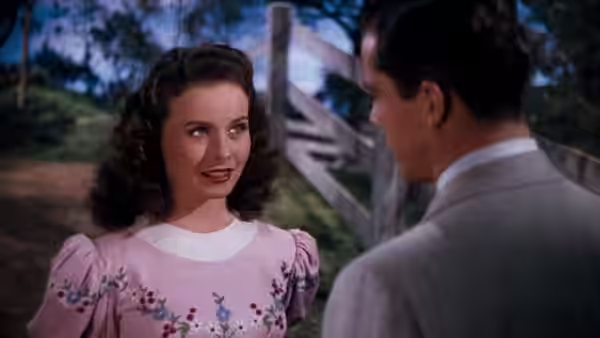
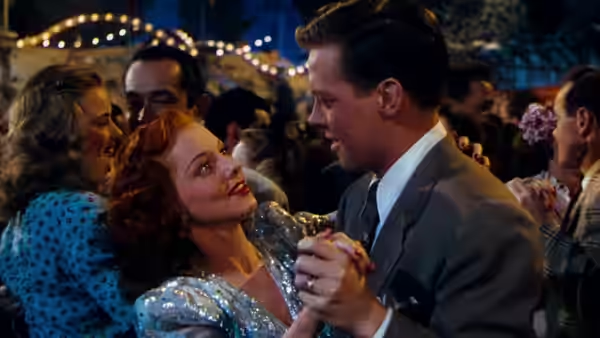
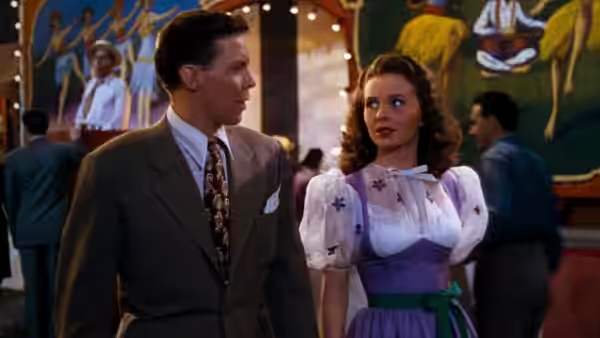
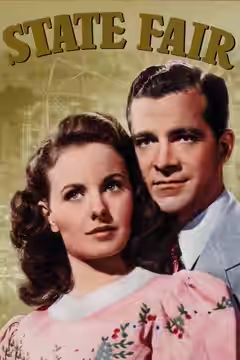
The songs are why anyone still watches it. It Might as Well Be Spring arrives early, with Jeanne Crain at a farmhouse window in a dress she has nowhere to wear, and it caught us out. We had settled in for a pleasant afternoon and had a lump in the throat within ten minutes, because Hammerstein’s lyric says the thing a girl of that age cannot say, that she is miserable and does not know why, and Rodgers’s tune keeps drifting off where it seemed to be going, the way she does. It’s a Grand Night for Singing later gathers the whole cast on the midway and is as simple and as good as its title. That’s for Me gives Dick Haymes and Vivian Blaine the film’s warmest few minutes; Blaine, in particular, sings as if she means it.
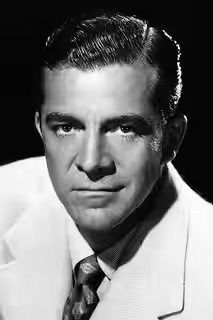
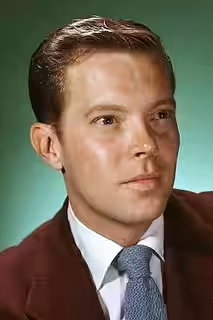
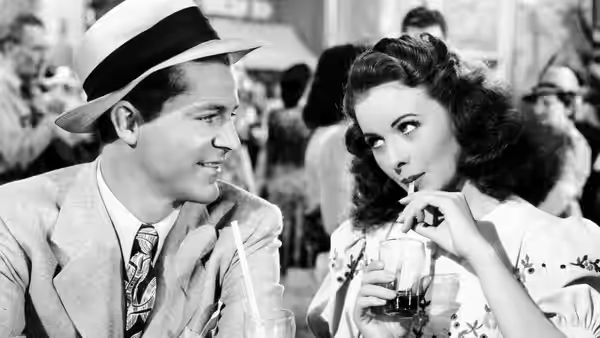
The trouble is what happens between the numbers. Dana Andrews plays Pat Gilbert, the reporter, the way Andrews plays everyone, level and watchful and a little tired, and the part wants a charmer. Crain is pretty and pleasant and, once the song is over, not much more. Haymes has a lovely voice and acts like a man waiting for the playback to start. Hammerstein’s screenplay gives the young people chat rather than scenes, so the romances are told to us rather than shown, and Wayne’s storyline, the barker, the band singer, is where we checked the time. Frank McHugh and Harry Morgan work hard around the edges and are not given much to work with.
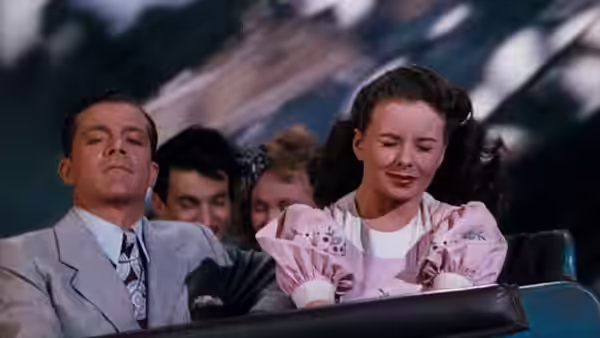
Leon Shamroy shoots the fair in Technicolor, and it is the film’s other reason for existing. The midway at night is lit by strings of bulbs and the Ferris wheel, and the farm by day sits in a flat gold light that looks like August. René Hubert’s costumes tell you who these people are more quickly than the dialogue does: Margy in gingham a shade too crisp for anyone who has fed chickens in it, Emily in the satin of a woman who has never seen a farm. J. Watson Webb Jr. cuts the fair itself as montage, livestock, pies, the track, the rides, and it moves; the middle of the film, where the four stories take turns, does not.
Their Broadway show of two years earlier had a killing in it. Carousel, the same year as this, had a wife-beater. State Fair has a hog, and a jar of mincemeat, and a girl at a window, and it never pretends otherwise. The 1933 version had Will Rogers and Janet Gaynor and a good deal more dirt on it; this one trades the dirt for colour and comes out roughly even.
See it for Winninger and Bainter, for the judging, and for the two songs that everyone remembers and deserves to. Watch it in the afternoon rather than the evening. It was made for that light, and it runs 100 minutes.