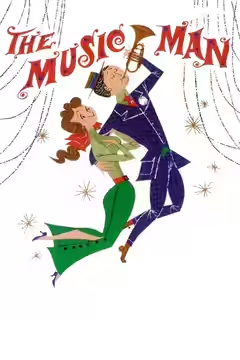
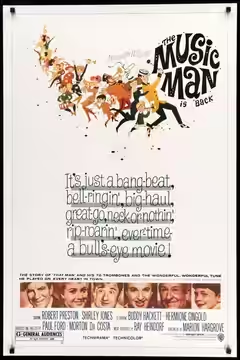
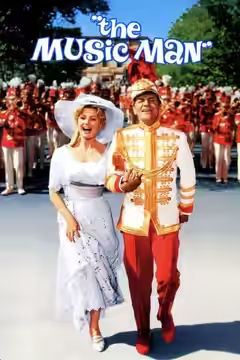
Morton DaCosta puts his Broadway hit on film more or less as it stood, and Robert Preston’s Harold Hill is worth the ticket on his own. The rest is handsome, faithful and a good half hour too long.
Meredith Willson’s musical about a con man who sells a small Iowa town a boys’ band came to the screen with its Broadway director and its Broadway star intact, and it shows in both directions. Morton DaCosta films the show he staged rather than making a new one, which keeps every number and most of the jokes, and also keeps the running time at 151 minutes. It is warm, it is loud, and Robert Preston is the best reason to sit through it. If you like musicals of this vintage you will have a good evening. If you do not, nothing here will change your mind.
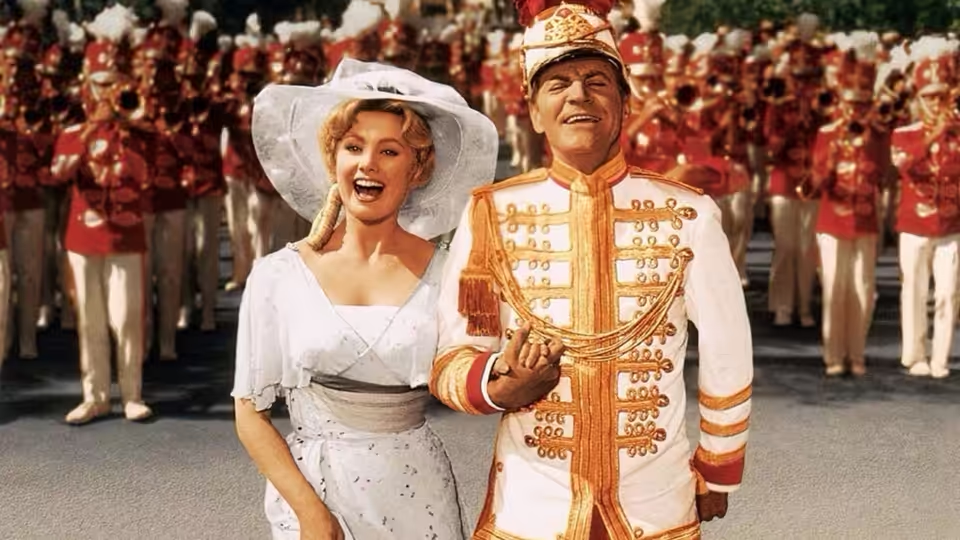
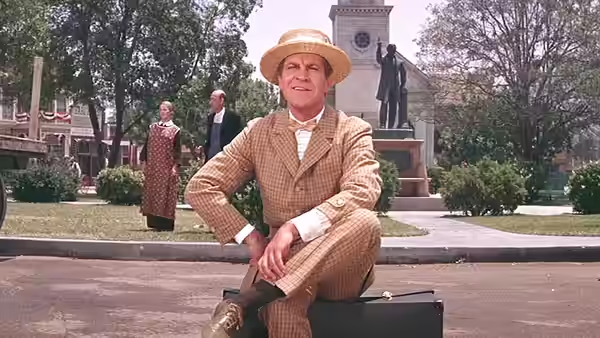
Preston played Harold Hill on the stage and he plays him here as a man who has never once stopped talking. The part is mostly patter, spoken on pitch over a marching beat, and Preston sells it the way Hill sells cornets. “Ya Got Trouble” is the film’s best ten minutes: he walks the town square inventing a moral panic about a pool table, the crowd gathering behind him, and by the end he has the whole of River City chanting a word it had never worried about. We were grinning before we noticed, and slightly ashamed afterwards, which is exactly how his customers feel. It is a performance built entirely of confidence, and it does not crack once.
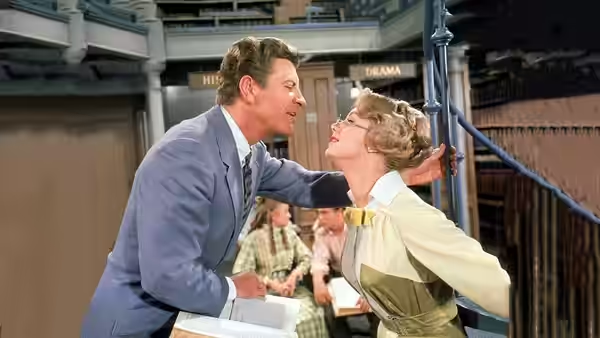
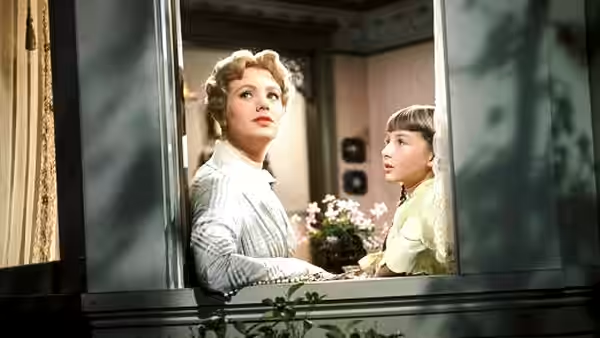
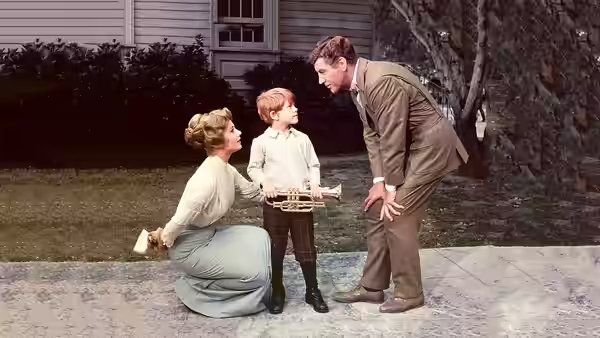
Shirley Jones has the quieter job as Marian Paroo, the librarian who has read enough to know a fraud when one arrives by train, and she is good at being the only sane person in town. Her voice is the clean soprano the ballads need, and she sings “Till There Was You” without any of the winking that surrounds it. Ron Howard, no more than a scrap, plays her brother Winthrop with a lisp and a sulk, and his “Gary, Indiana” is the scene that got at us: a child who hardly speaks suddenly cannot stop, and Jones’s face as she watches him does more than the song. Pert Kelton, as their mother, has the driest lines in the film and knows what to do with them.
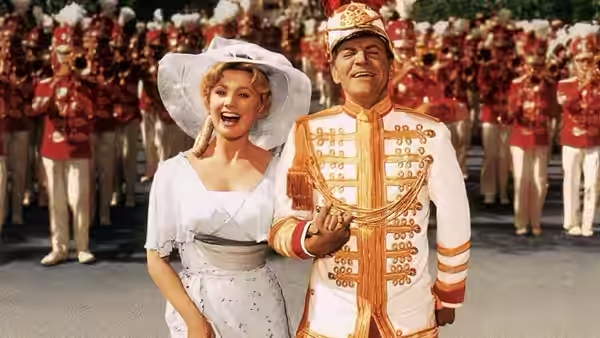
Robert Burks shot it, and it looks like money. The town square is a full-size set in July sunshine, and Burks fills the wide frame with striped awnings, bunting and a hundred extras who all appear to have somewhere to be. Dorothy Jeakins dresses the men in boaters and candy-striped waistcoats and the women in hats a pigeon could nest in, and puts Hill in a suit just loud enough to warn you. DaCosta keeps one trick from the theatre: at the end of several numbers the lights go down around the singer until only a face is left, then black. It is a stage effect, and every time it happens the film looks like a photographed play.
That is the film’s problem, and it is not a small one. William H. Ziegler’s editing lets the numbers run whole, which we approve of, but Marion Hargrove’s screenplay has not cut a scene the stage did not need, and the second hour sags between songs. Buddy Hackett’s Marcellus is given “Shipoopi”, a dance number about nothing that stops the story for six minutes while the whole town dances in a hall. Hermione Gingold and Paul Ford, as the mayor’s wife and the mayor, are funny in the first act and repeat the joke in the second and the third; Ford mangling a sentence is a pleasure that wears thin. There is a stretch in the second hour where we looked at the clock and were cross about it, because we had been enjoying ourselves so much a quarter of an hour before.
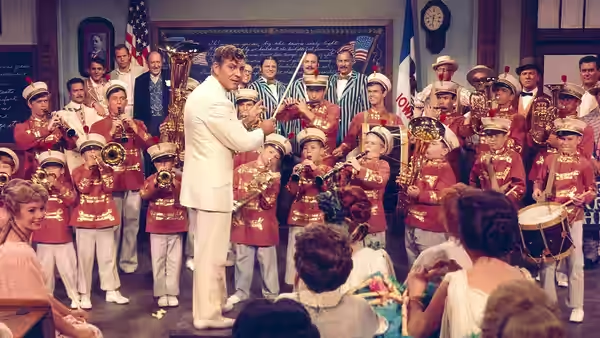
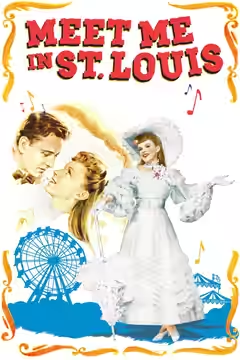
The barbershop quartet, four bickering school board members who cannot agree on anything until Hill gets them singing, is the film’s neatest idea, and it is the show’s, not the film’s. That is true of nearly everything good here. DaCosta has done the honest thing and put the show on film with its shape intact, and the price is that it never becomes a film in the way Singin’ in the Rain or Meet Me in St. Louis did. The reviews of the time were warmer than we are; they saw a big sentimental parade and forgave it the length. We saw the same parade and counted the trombones.
Watch it with the family, on a wet afternoon, with permission to talk over the middle third. Preston will bring you back.