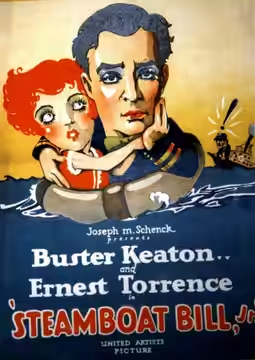
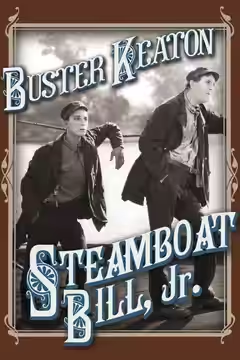
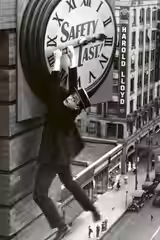
Keaton’s riverboat comedy is a neat, well-built farce for most of its length and then, for its last reel, something else entirely: a town blown to pieces around a man who will not flinch. We would tell a stranger to see it.
Buster Keaton plays a riverboat captain’s son who turns out to be the wrong sort of son, and for about fifty minutes Steamboat Bill, Jr. is a neat, well-built comedy about that disappointment. Then the wind gets up. The last reel is one of the great sequences in silent film, a whole town taken apart in front of a fixed camera with Keaton standing in the middle of it, and it lifts a good film into one we would tell a stranger to see. That is the verdict. What follows is mostly an argument that the first fifty minutes deserve better than to be remembered as a wait.
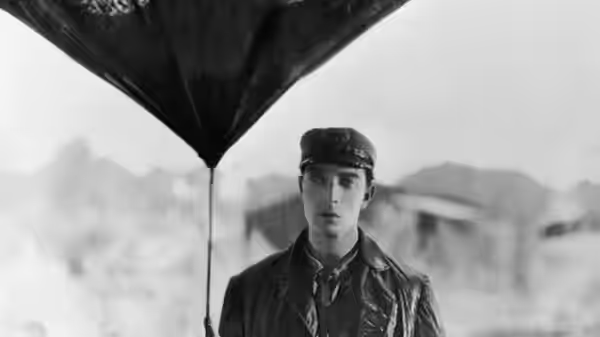
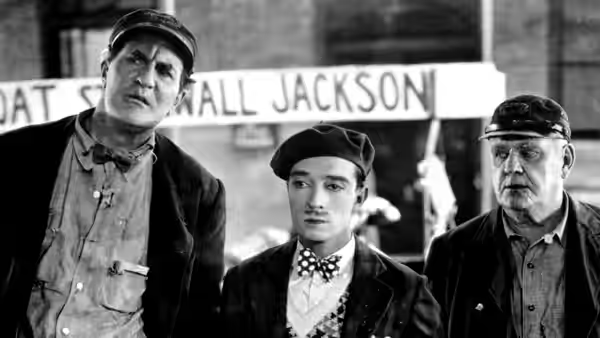
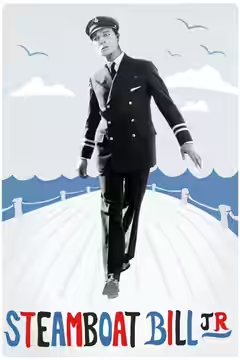
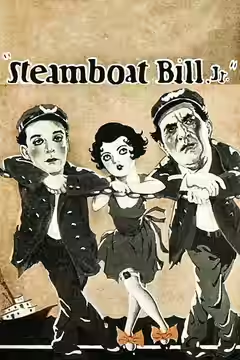
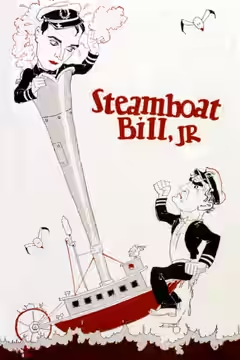
Carl Harbaugh is credited with the story, Keaton with the screenplay, and Keaton and Charles Reisner share the directing credit. The set-up could not be simpler. Ernest Torrence’s Steamboat Bill Sr. runs a paddle steamer that is losing its trade to a new boat owned by John King (Tom McGuire), and he has sent for the son he has not seen since infancy, expecting a bruiser to help him fight back. Torrence is enormous, and he plays the father as a man who has been let down by the size of his son before the boy has opened his mouth. Keaton steps off the train in a beret, a pencil moustache and a ukulele, and the father’s first act is to march him to a barber (Ford West) and have the moustache removed.
The hat shop follows, and it is the best gag in the first half. Junior tries on hats in front of a mirror while his father snatches each one off his head. One of them is a flat porkpie, and it goes back on the shelf with the rest. Bert Haines and Devereaux Jennings shoot it straight into the mirror, so we are watching Keaton watch himself being rejected, and Sherman Kell holds the shot rather than cutting for the laugh. Marion Byron, as King’s daughter Kitty, is the girl Junior already knows and is now forbidden to see; she is small and quick and given almost nothing to do, and does it with good grace. Tom Lewis, as the mate Tom Carter, mostly registers alarm.
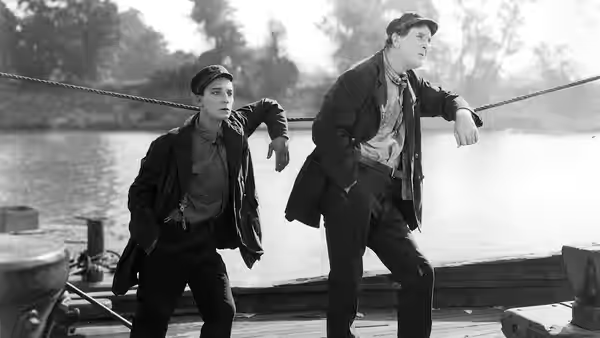
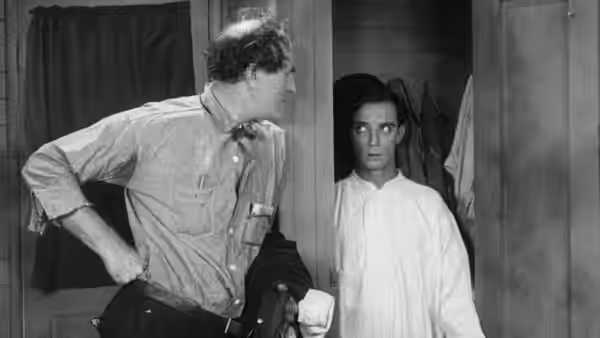
The middle stretch is a set of routines strung on the feud between the two old men: crossings between the boats, a night-time visit that goes wrong, a piece of business with a loaf of bread that we will leave you to discover. The story is a clothesline and the romance a formality, and some of the shouting between Torrence and McGuire is played wider than it needs to be. Haines and Jennings keep the frame still and the light flat and white, which is the right choice, because the whole point of a Keaton stunt is that you can see there is no trick.
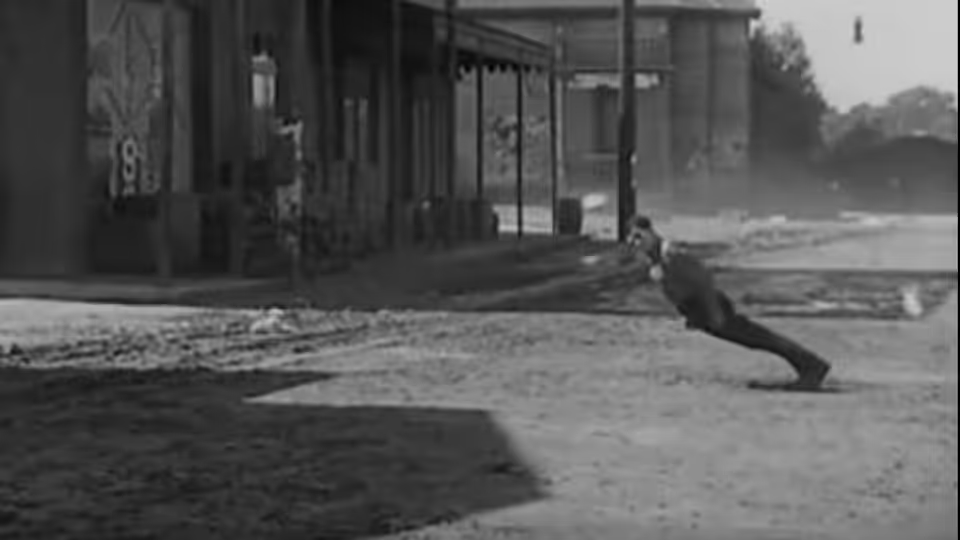
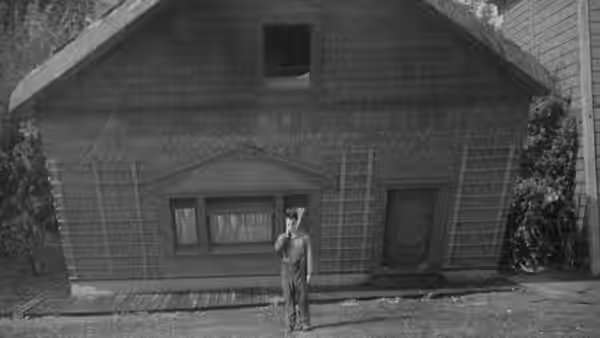
Then the storm. We will not describe what it does to the town, except to say that a great deal of it comes down and that Keaton stays on his feet in the middle of it. There is one shot in this stretch that everybody knows; it is the most reproduced image in silent comedy, and we have seen it on posters and in clip reels for years. Knowing did nothing at all. We stopped laughing for perhaps three seconds, because what is happening on screen is plainly dangerous and there is no cut to save him, and then we laughed harder than before, because he does not so much as flinch. Whoever was giving directions on set, the timing here belongs to a performer who knew to the inch where his own body would be.
It is a silent film, so there is no composer for us to name; the music you hear depends on the print you are shown, and it is worth seeking out a good one. At 70 minutes it is the right length. The reviews so far are as warm as ours, and they are right to be.
Against Keaton’s own work, The General is grander and Sherlock Jr. cleverer, and neither has twenty minutes as good as the last twenty here. Show it to someone who thinks they do not like silent films, but do not tell them about the hat, and do not tell them what happens in the last reel. The wait is short and the reward is a man standing still while a town falls over.