Rob Minkoff’s family fantasy has an appealing mouse, a funny cat and rather too much reassurance. Michael J. Fox and Nathan Lane keep it watchable when the human characters and the writing turn bland.
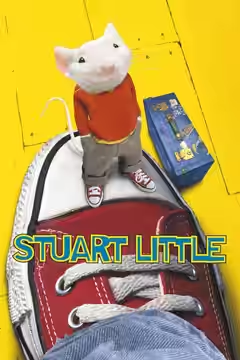
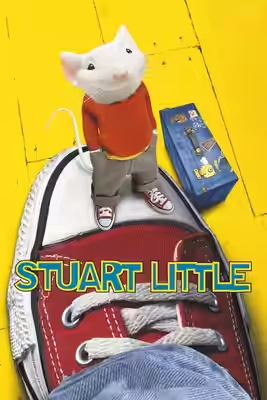
Rob Minkoff’s Stuart Little is a pleasant family film with enough charm to survive its determination to be lovable. Adapting E.B. White’s novel, screenwriters Greg Brooker and M. Night Shyamalan put a great deal of faith in sweetness, and rather less in giving the people something interesting to do. The computer-animated mouse is persuasive almost at once, which leaves the storytelling with no technical excuse for being so ordinary. It is decent entertainment for younger viewers, though their adult companions may find the warmth becoming a little insistent.
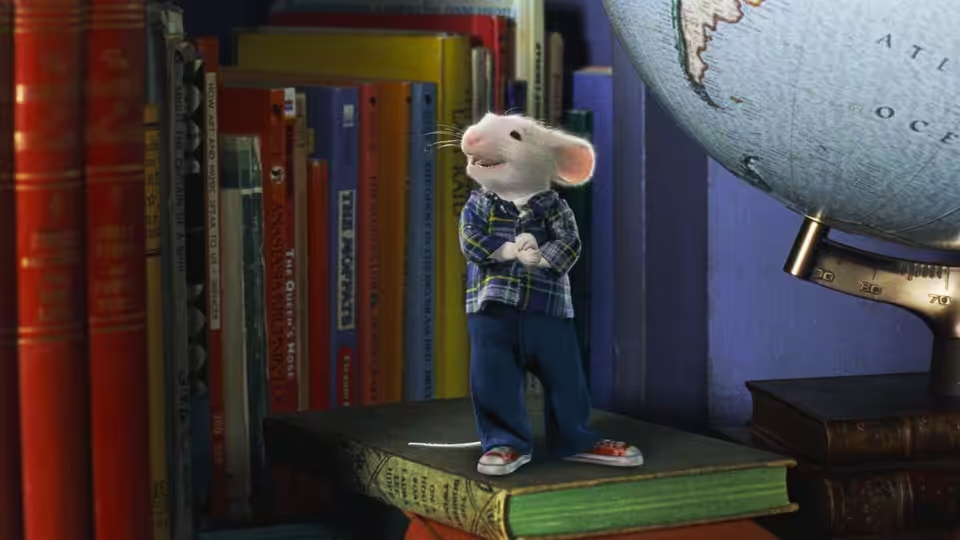
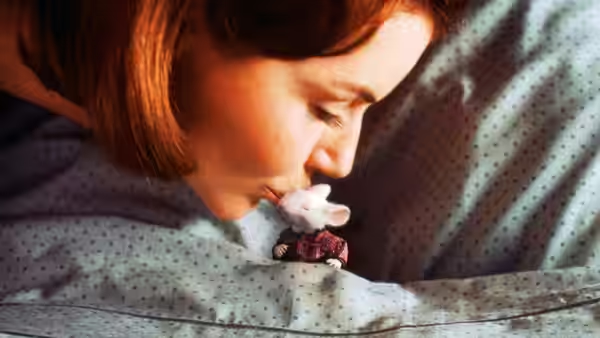
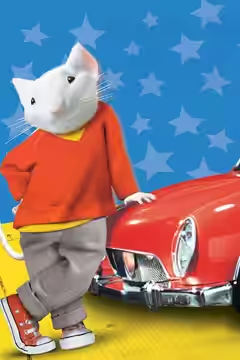
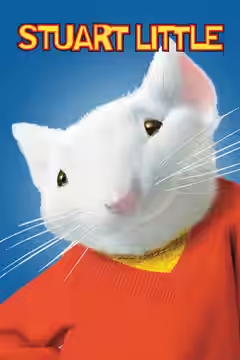
Michael J. Fox supplies Stuart’s voice with an unforced friendliness that helps considerably. There is eagerness in the performance, but little of the strenuous pleading for affection that can make an animated animal exhausting company. We found ourselves fond of Stuart almost immediately, because that modest voice and his convincing presence beside the human cast make him easy to accept. The animation lets us attend to a small character rather than spend the whole film inspecting a technical accomplishment.
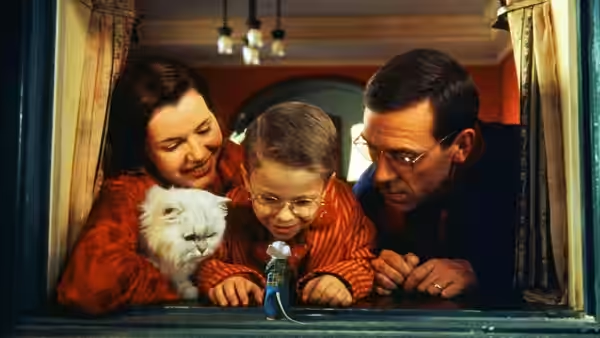
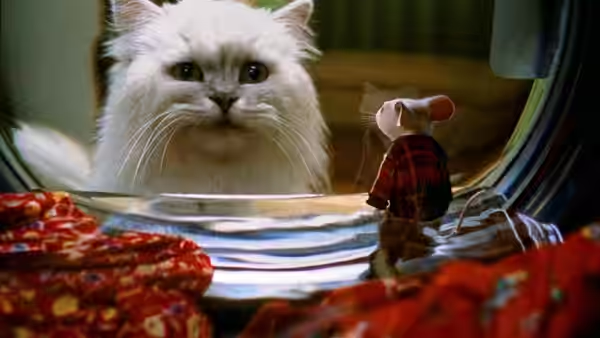
Nathan Lane gives Snowbell the sharper comic personality, and the film benefits whenever the cat is allowed to sound dissatisfied. His delivery makes even a minor grievance seem worth hearing, with an offended dignity that does not require much assistance from the writing. The animal comedy provides welcome relief from the prevailing good intentions. It also exposes a weakness: the supposedly supporting cat is often more entertaining than the mouse whose name is on the film.
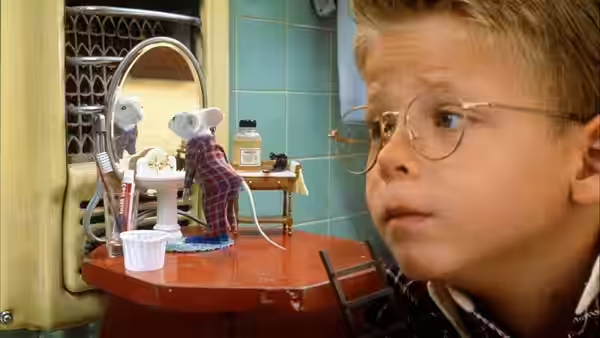
Geena Davis and Hugh Laurie have a harder job, and neither finds much room to surprise us. Their performances are amiable, but the writing leaves them representing a nice family more often than behaving like particular people. Jonathan Lipnicki, as George Little, belongs to the same carefully softened human world. There is nothing wrong with making a family film kind; the difficulty comes when kindness supplies so much of the characterisation that the actors have little else to play.
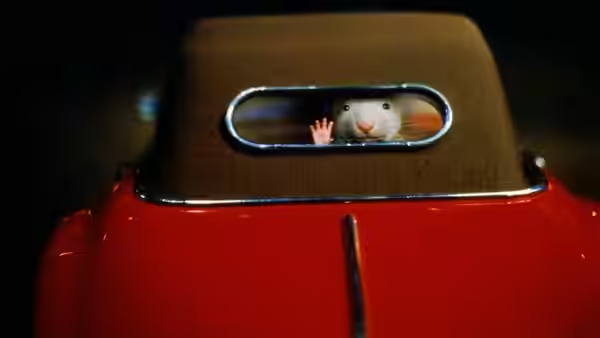
Guillermo Navarro’s cinematography helps the mouse and the human cast appear to occupy the same physical space, an essential achievement here. Bill Brzeski’s production design gives the animated figure surroundings in which he looks convincingly situated, rather than stranded in front of a backdrop. Together, those contributions support the effects without making the images feel like demonstrations. The visual credibility does useful dramatic work: we accept Stuart’s presence long before the script has earned an equal investment in everyone around him.
Editors Tom Finan and Julie Rogers keep the film to 84 minutes, a sensible length for material this slight. Even so, the sentimental passages can feel prolonged, because the emotional point is often apparent before the film has finished making it. Alan Silvestri’s music adds to that earnestness when a little less encouragement would have served the characters better. The problem is cumulative: performance, writing and music are too often working equally hard to ensure that nobody misses the affection.
As family fantasy, this gets the difficult business of making an impossible creature believable substantially right. It is less resourceful about what to do once we have accepted him, settling too readily for familiar comforts and uncomplicated people. There is enough humour in the animals, and enough appeal in Stuart himself, to make that a limitation rather than a disaster. Choose it for a gentle evening with younger children, and leave room for the cat’s objections.