Stephen Gaghan’s film about the oil trade is cold, dense and deliberately hard to follow, and the difficulty is most of the point. It rewards patience with a chill we have not shaken, and at its weakest it is a lecture.
Stephen Gaghan wrote Traffic (2000), which followed the drug trade through several stories at once. Here he directs his own script and does the same for oil, across four stories and a good deal more map. A CIA officer, an energy analyst, a Washington lawyer and two young men in the Gulf are all, we are promised, connected. Syriana is a cold, dense, grown-up 128 minutes that will not hold your hand, and for most of its length it earns the effort it asks for. Where it fails, it fails by explaining too much, not too little.
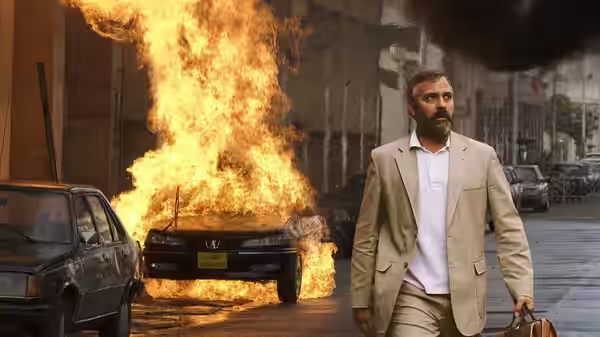
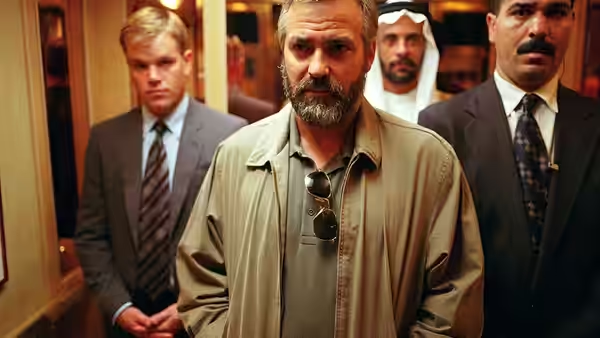
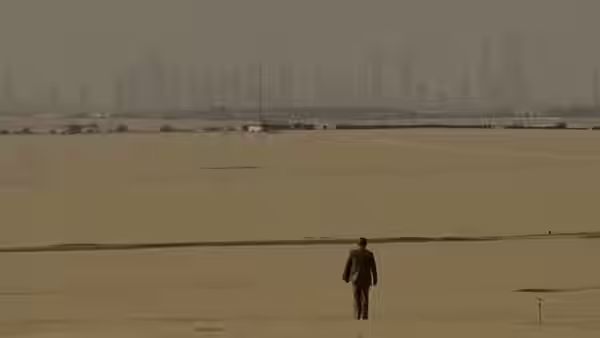
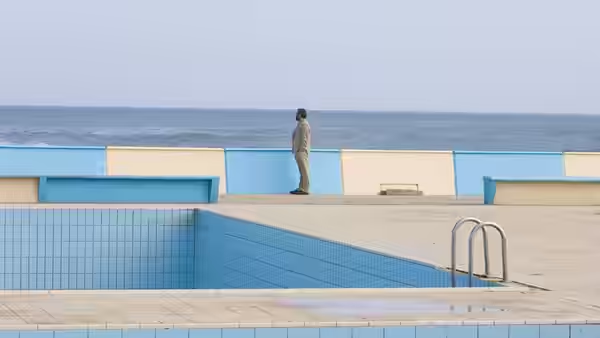
Robert Elswit gives a Washington law office and a desert road the same slightly dusty look, and nobody is lit like a hero. Dan Weil gives the money its own colour, a hushed beige that runs through hotel suites, legal chambers and the prince’s tent. Louise Frogley puts Barnes in a jacket that looks slept in and Holiday in a suit that does not. Tim Squyres cuts between the strands with no captions and no map, and he will leave a scene a line before it reaches its point. For the first forty minutes that felt like rudeness. By the end it felt like trust.
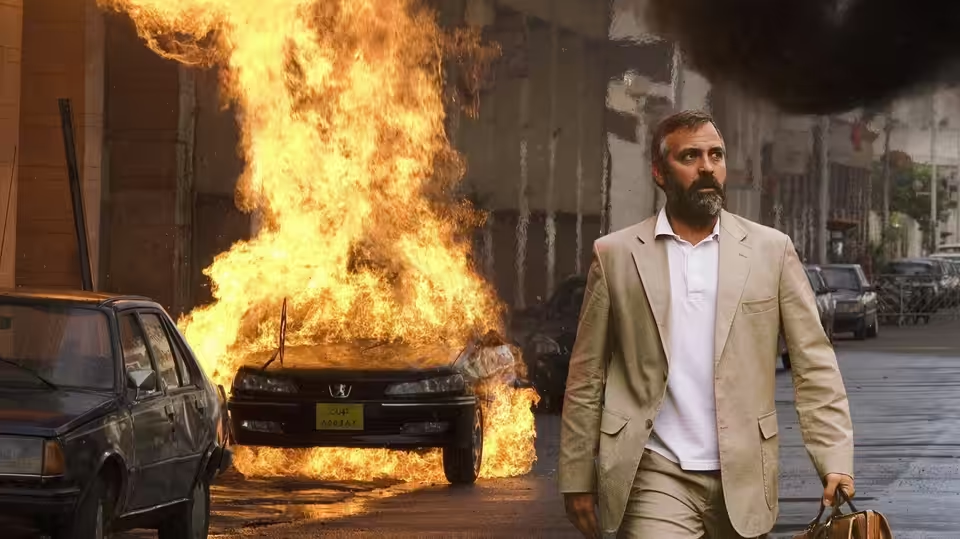
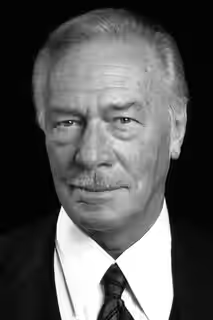
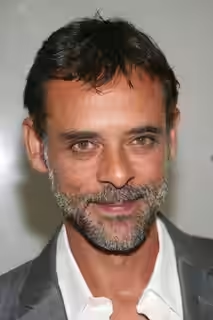
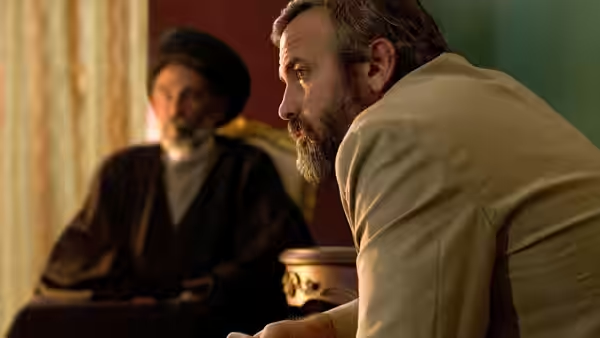
Clooney, heavier and bearded, plays Barnes as a man who has been lied to by his own side for so long that he no longer bothers to be hurt by it; he murmurs, he waits, he does the job. Jeffrey Wright’s Holiday watches everyone and gives nothing away, and the film’s best scenes are the ones where he sits in a room full of louder men and works out which of them is for sale. Chris Cooper’s Jimmy Pope is a Texan who has never been told no. Christopher Plummer’s Dean Whiting is the man who tells people no on his behalf, pleasantly. Alexander Siddig gives Prince Nasir a tired decency, a reformer who knows exactly how his plans will be received in Washington and makes them anyway.
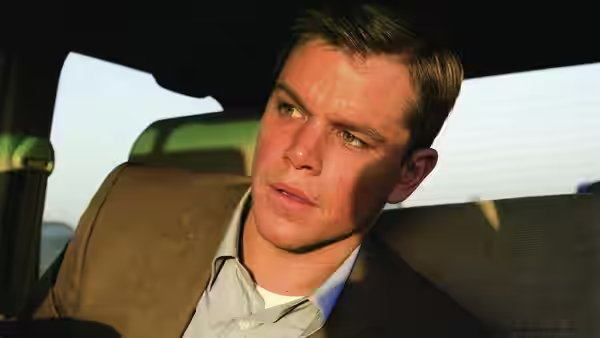
Woodman’s strand is the weak one. Matt Damon has to carry both a family’s grief and a seminar on Gulf economics, and the script keeps choosing the seminar. Amanda Peet is allowed to be angry twice and is then sent home; the film’s women are wives, and not for long. Elsewhere Gaghan has people explain the oil business to each other for our benefit, and one speech by a Washington lobbyist on why corruption is good for America sounds like it was written down first and performed second. The film is proudest of its ideas at exactly the moments it stops showing them.
We were lost early, and slightly resentful about it. Then a scene we will not describe, beyond saying that it takes place in a bare room and concerns Barnes, had us watching through our fingers; Gaghan holds on it longer than a thriller would, and Clooney barely acts it, he sits and takes it. And the two young men’s story, told almost without dialogue in a canteen, a dormitory and a classroom, became the one we cared about, because it is the only strand in which nobody explains anything. It is the one we carried out of the cinema.
Alexandre Desplat’s score is mostly held back, a few string figures and a low pulse that surface between scenes and then go, and it is the most tactful thing in the film. William Hurt turns up as Stan to deliver bad news in two short scenes, and does more with a shrug than Woodman’s plot manages in half an hour.
The paranoid thrillers of the 1970s gave their hero a conspiracy to uncover and a last reel in which to uncover it. Gaghan’s people never get that reel. Nobody in Syriana finds out; they discover they were already part of it, which is a bleaker joke and the film’s real subject. Most critics have called it demanding and most have liked it, and we are with them, with a caveat. Watch it alert and in one sitting, with nobody talking, and accept that you will not be able to say afterwards exactly who did what to whom. That is not a failure of attention. It carries a 15 and runs 128 minutes, and it wants all of them.