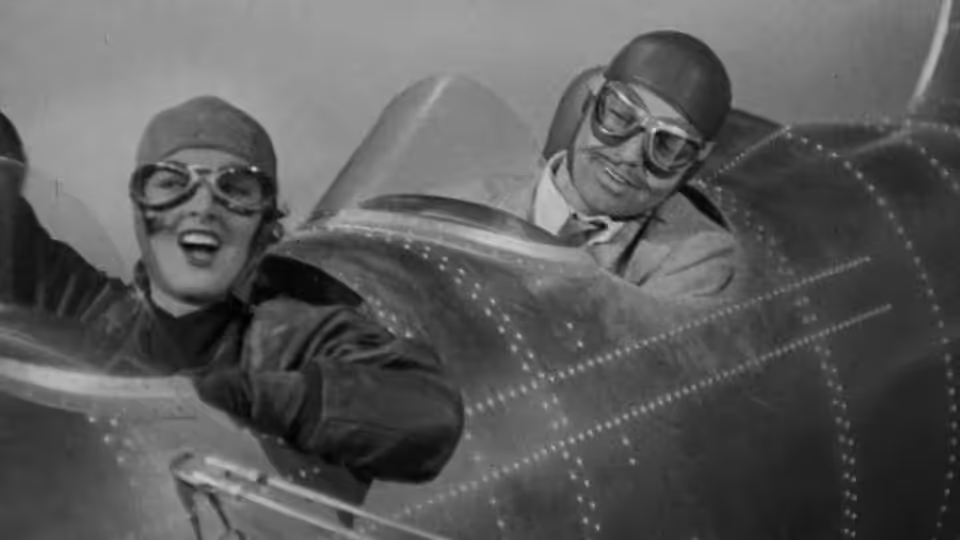
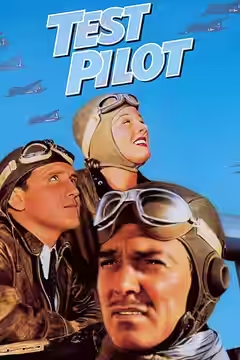
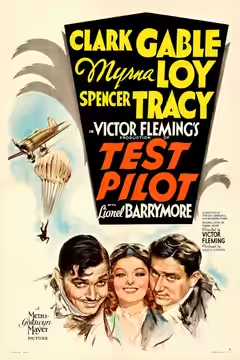
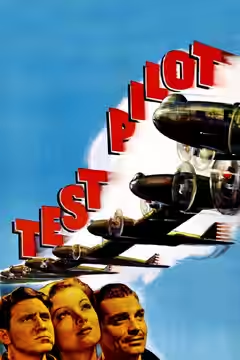
Victor Fleming’s aviation drama is at its best in the air, where Ray June’s cameras watch real aeroplanes do dangerous things. On the ground it gives Myrna Loy too many speeches about fear, and Spencer Tracy, saying almost nothing, quietly takes the film off everyone.
Victor Fleming’s Test Pilot puts three of the biggest stars of 1938 into one film and asks a plain question: what does it cost the people on the ground when a man makes his living finding out whether a new aeroplane will kill him? It answers that question well in the air and less well in the kitchen. The flying is as good as anything of its period. The marriage that fills the gaps between flights talks more than it needs to. We liked it, with reservations, and the reservations are all indoors.
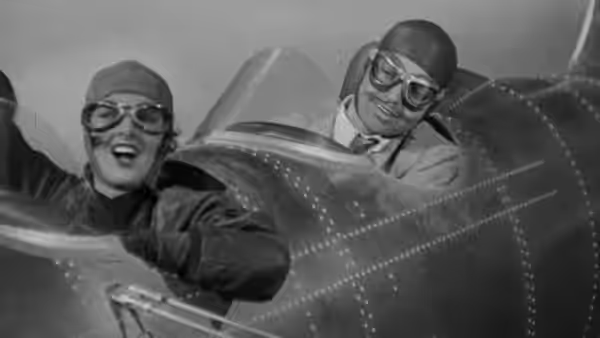
Start with what works. Ray June shoots the aeroplanes as aeroplanes, not as models on wires: the record attempt, the air race, the big bomber loaded with sandbags to see what its wings will bear. The sky is real, the ground comes up at the speed it comes up, and when a machine rolls or dives the horizon does the same. Tom Held cuts between the airborne footage and the actors in their cockpits with enough care that we are rarely caught noticing the join. Franz Waxman’s score keeps its head, swelling for the take-offs and then getting out of the way so that the engines can do the talking.
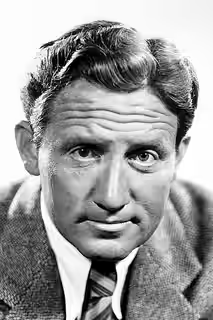
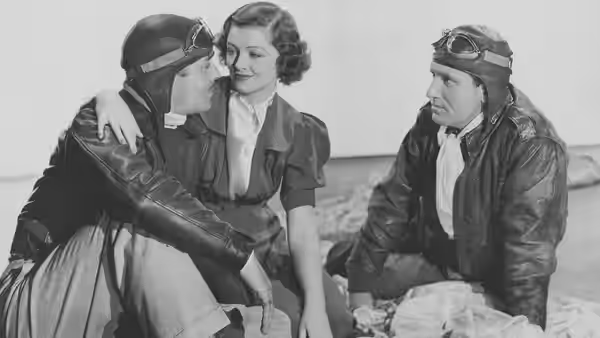
Then there is Spencer Tracy. Gunner Morse is a mechanic who has built the aeroplanes his friend is about to risk, and Tracy plays him as a man who has decided long ago never to say what he is thinking. He works his gum, he keeps his hands busy, and when Jim goes up he stands a little apart from everyone else and watches. We found we were more moved by Tracy standing still on an airfield than by any of the film’s speeches about love and death, and we can say why: he is the only person in it whose fear looks like fear rather than dialogue.
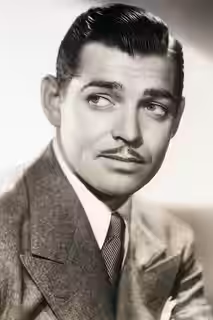
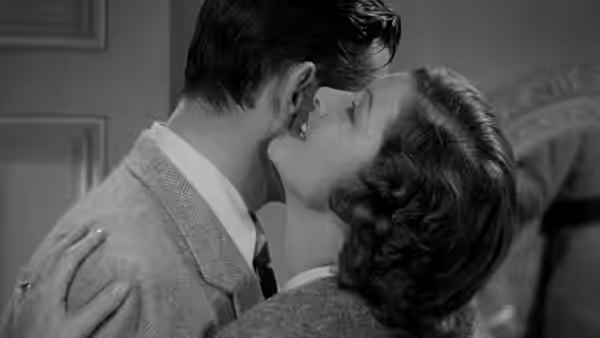
Clark Gable has the harder part and does not always get the help he needs. Jim Lane is charming, reckless and, when the film is honest, something of a heel; he drinks, he vanishes, he leaves a new wife alone in a strange city. Gable plays all of that with a grin that knows exactly what it is getting away with, and he is good at the swagger. What the script by Waldemar Young and Vincent Lawrence will not do is make him pay for any of it for longer than a scene. He is forgiven on schedule, every time.
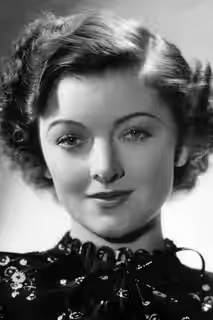
Myrna Loy is the one asked to carry the film’s argument, and the argument is the problem. Ann is a woman competing with the sky for her husband, and the writers give her that thought in three or four different forms when once would have done. Loy is credible throughout, dry and quick in the Kansas scenes and properly frightened later, but she is playing a theme as much as a person. The film’s best domestic moment belongs to someone else: Gloria Holden, as another pilot’s wife at the air race, shows Ann in a single scene exactly what she has married into, and does it without a speech at all.
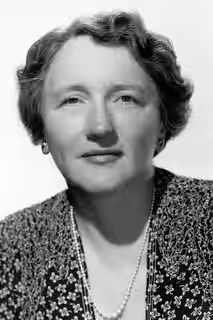
Lionel Barrymore bellows about money and schedules, which is what he was hired for. Marjorie Main turns up once as a landlady and gets the biggest laugh in the picture. Samuel S. Hinds is the Army general who wants his bomber tested and has the sense to look uneasy about it.
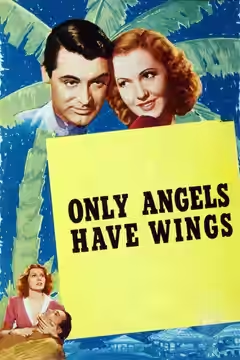
Fleming had already made Red Dust (1932) with Gable, and he knows how to keep a rough man likeable. Set beside Only Angels Have Wings, which Howard Hawks made a year later on much the same subject, this is the baggier film; Hawks kept his people in one room and let the flying come to them, while Fleming keeps sending everyone home to talk it over. The last flight, which we will not describe, is the film’s best sequence and worth waiting for.
It runs 118 minutes and feels longer whenever the aeroplanes are on the ground. See it for June’s sky, for the bomber, and above all for Tracy, who gives the performance the film is about without the film quite noticing.