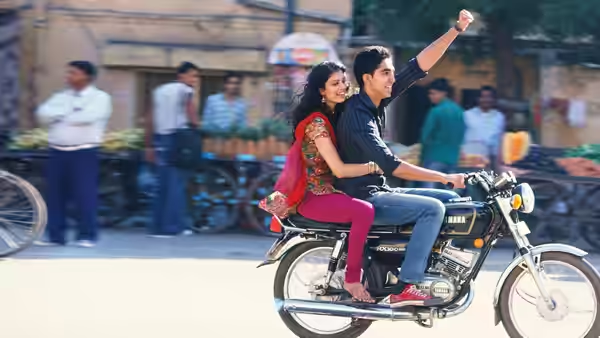
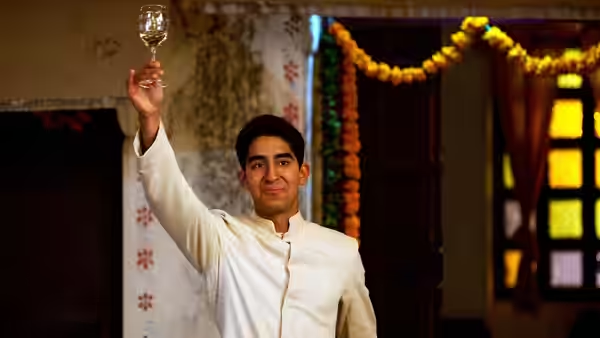
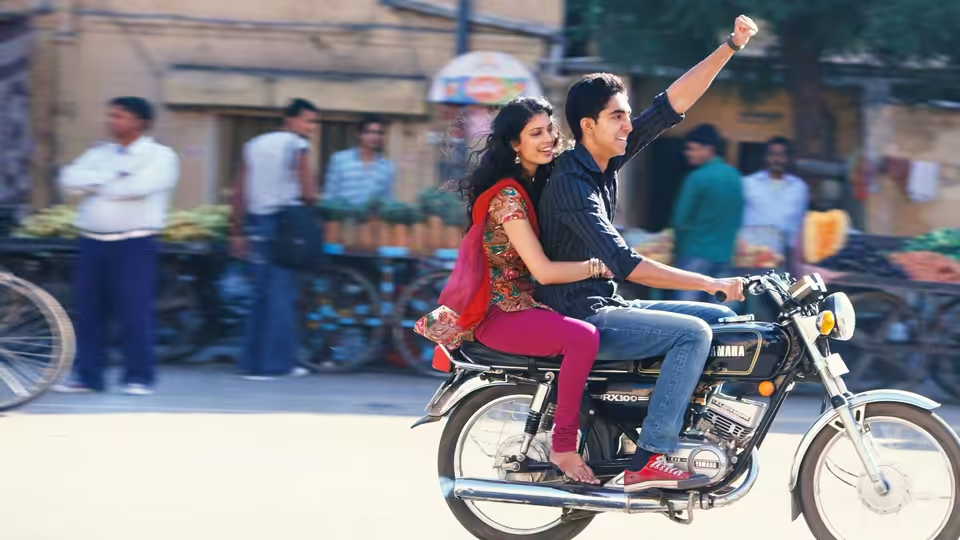
Sonny Kapoor (Dev Patel) rides a motorcycle through the street with Sunaina behind him
Film review

The Best Exotic Marigold Hotel

2012 · Directed by John Madden · 2h 04m

In a sentenceWe would attend a residents’ meeting if Judi Dench and Bill Nighy were chairing it

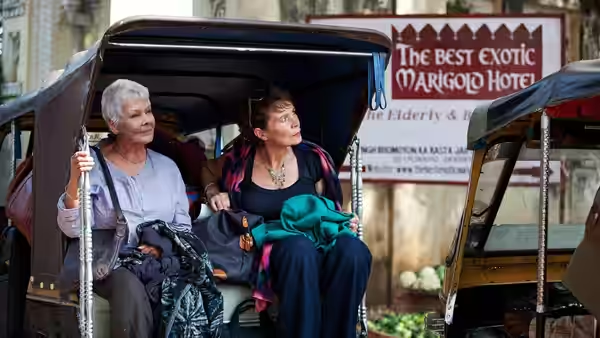
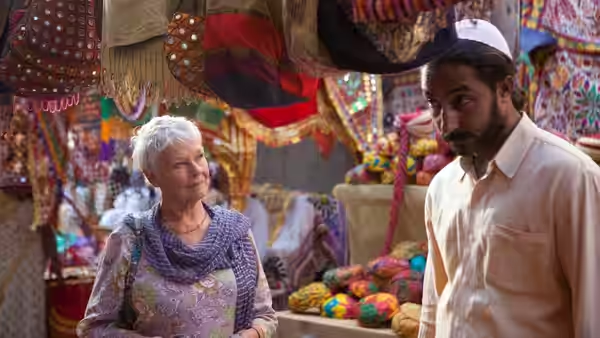
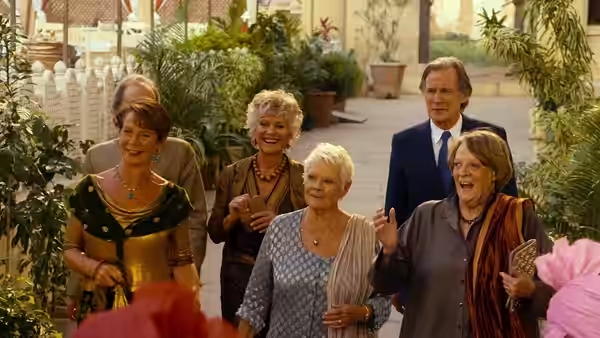
British retirees relocate to Jaipur, hoping to begin another stage of their lives in India. Evelyn Greenslade (Judi Dench) is among the newcomers, along with Douglas Ainslie (Bill Nighy), Jean Ainslie (Penelope Wilton), Muriel Donnelly (Maggie Smith) and Graham Dashwood (Tom Wilkinson). The move brings different expectations of retirement into contact. Muriel’s racism makes adjustment difficult, while Graham carries regrets into his new surroundings. As their experiences begin to overlap, the pensioners face a shared question: how much of their familiar thinking are they prepared to change?

Plays from YouTube when you press play; nothing loads from them until then.

Fi1m review

The Best Exotic Marigold Hotel is an enjoyable retirement comedy with a cast worth spending time with. The predictability is manageable; the tendency to make India serve the visitors’ personal growth is harder to excuse.

John Madden’s The Best Exotic Marigold Hotel is good company, provided a gentle ensemble comedy is what the evening requires. Its British retirees relocate to Jaipur with the possibility that life may still have something to offer them, and the film is determined to prove it. That reassurance comes with some predictable writing, but the cast makes the disappointments and tentative hopes worth attending to. We can see where much of it is going without losing interest in the people getting there.

Judi Dench gives Evelyn Greenslade enough uncertainty to make the optimism bearable. The pleasure in her scenes with Bill Nighy’s Douglas Ainslie lies in the performers’ responsiveness: neither seems to be waiting merely to deliver the next pleasant line. Their connection supplies a reason to care about these people before the screenplay begins distributing lessons. Ol Parker, adapting a novel by Deborah Moggach, is well served by actors who suggest complicated lives within such tidily assigned stories.

Tom Wilkinson gives the film its strongest reason to take the sadness seriously. We were moved by the regret he gives Graham Dashwood, because it feels like something the man has carried for years and still finds difficult to discuss. There is patience in the performance, and no hurry to make the character agreeable. The writing tends to press towards reassurance, so this willingness to let unhappiness linger matters.

Maggie Smith is funny as Muriel Donnelly, but the decision to keep using her racism for laughs is a problem. Her delivery can make an ugly sentiment amusing before there has been time to consider who is expected to absorb it. That leaves the film relying on our affection for the performer to excuse what her character says. A comedy about older people learning to change needs more care here, especially when so much of the local world receives less attention than the visitors’ feelings.

Ben Davis gives the images a welcoming warmth, which suits the film’s wish to make relocation seem possible without denying its difficulties. Alan MacDonald’s production design contributes to the same polished welcome, though the result can feel too arranged for the visitors’ benefit. Jaipur is inviting, but we get less sense of its inhabitants having lives beyond the pensioners’ experiences. That limitation matters more than the familiar plotting: the place ought to hold our interest without needing to improve somebody from Britain.

Chris Gill’s editing keeps the ensemble legible, although at 124 minutes the film gives its modest surprises more room than they need. The separate stories sometimes feel as though they are taking turns, each waiting for the others to catch up. Thomas Newman’s music supports the prevailing reassurance; it maintains the mood, but can feel unnecessary when the script already makes its intentions plain. A little less encouragement would have left more space for the actors’ quieter work.

Retirement comedy does not need to be merciless to be useful, and John Madden is right to leave room for pleasure. Older characters are allowed hope and desire here without every feeling becoming a joke about their age. The film could trust that ordinary humanity more and its lessons a little less. Choose it for the actors, especially if a forgiving evening sounds preferable to a demanding one.

Critical consensus AI synthesised

59
Positive
10
Mixed
5
Negative
6

The consensus is mixed, though praise for the ensemble runs through favourable and sceptical reviews alike. Judi Dench and Tom Wilkinson receive particular attention for giving familiar material emotional weight, while Bill Nighy and Maggie Smith are also frequently singled out. The more enthusiastic critics find the film warm, funny and hopeful about ageing, accepting its predictable turns as a limitation rather than a fatal flaw. Even some less persuaded reviewers acknowledge the cast’s charm and the pleasure of the lighter exchanges.

The divide is wide over whether those performances compensate for schematic writing and shallow characterisation. Several reviews find the sentiment comforting; others find it patronising. The Guardian objects to stereotypes of British retirees and neglect of the local world, while Eye for Film praises the depiction of Jaipur. Predictability is a common reservation across the spread, with additional complaints about excessive length, broad humour and underdeveloped younger characters.

Radio Times
★★★★ · Alan Jones
80

Jones finds the film a feel-good story about resilience, though it becomes slightly predictable. He praises Dev Patel’s subtle performance and the transformative effect of the pensioners’ shared experiences.

Read the full review →
The Hollywood Reporter
18 February 2012 · David Rooney
80*

Rooney finds the film a warmly satisfying, pleasure-filled story, despite its schematic screenplay and predictable turns. He particularly praises the sensitive performances, singling out Tom Wilkinson’s tender portrayal of Graham’s regret.

Read the full review →
Los Angeles Times
4 May 2012 · Betsy Sharkey
78*

Sharkey finds the comedy’s infectious charm and hopefulness outweigh its predictable moments. She especially praises the ensemble, with Judi Dench’s portrayal of Evelyn singled out as moving.

Read the full review →
Empire
19 February 2012 · Anna Smith
70*

Smith finds the comedy-drama enjoyable, charming and amusing, though Muriel’s racism is overused for laughs. She praises the light humour and the spark between Judi Dench and Bill Nighy.

Read the full review →
The New Yorker
70*

The critic finds the film polished and engaging despite its conventional approach. Dench’s wide-ranging performance and the cast’s work earn particular praise.

Read the full review →
Variety
18 February 2012 · Leslie Felperin
70*

Felperin finds the comedy-drama frequently droll and likable, though predictable and occasionally overstuffed. She praises the seasoned cast for giving the material emotional resonance and landing its wry lines.

Read the full review →

Straight answers AI written, from our review

Is The Best Exotic Marigold Hotel worth watching?
The Best Exotic Marigold Hotel is worth watching for its cast and gentle retirement comedy, and we score it 71 out of 100. Judi Dench, Bill Nighy and Tom Wilkinson make the familiar stories matter, though the leisurely pace and tendency to treat India chiefly as a place for British visitors to grow deserve reservations.
How long is The Best Exotic Marigold Hotel, and what is it rated?
The Best Exotic Marigold Hotel runs 2h 04m. It is a drama and comedy film.
Where can I watch The Best Exotic Marigold Hotel in Azerbaijan?
The Best Exotic Marigold Hotel is not on any streaming or rental service in Azerbaijan at the moment. It is available in 47 other countries; change your country at the top of the page to see where. Availability is checked daily.
How violent or frightening is The Best Exotic Marigold Hotel, and is it suitable for children?
The Best Exotic Marigold Hotel has a UK 12A certificate, meaning children under 12 need an accompanying adult at the cinema. We would flag its use of racism for laughs rather than promise an entirely harmless comedy; its concerns with retirement and long-held regret make it a more natural choice for adults than children.
How does The Best Exotic Marigold Hotel compare to Tokyo Story?
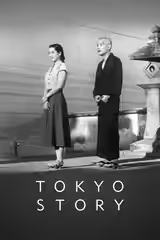
The Best Exotic Marigold Hotel offers reassuring ensemble comedy, while Tokyo Story is the stronger choice for a quieter, less forgiving look at ageing and family obligations. We recommend the former for warmth and companionable performances; the latter makes ordinary neglect painful without making anyone a villain, although its deliberate pace asks for patience.
Is The Best Exotic Marigold Hotel based on a true story or a book?
The Best Exotic Marigold Hotel is adapted by Ol Parker from a novel by Deborah Moggach, rather than presented as a true story. We find it approachable without knowing the book: the retirees’ hopes and disappointments are clear, and the performances give their sometimes tidily assigned stories a welcome sense of complicated lives.
What should I watch after The Best Exotic Marigold Hotel?
After The Best Exotic Marigold Hotel, try The Lunchbox (2013, Fi1m 75): For another tentative new beginning, with more attention to the city around it. Then Tokyo Story (1953, Fi1m 92): For a quieter, less forgiving consideration of ageing and family obligations; and Local Hero (1983, Fi1m 86): A gentler culture clash that gives the locals rather more say.

Cast

Awards

European Film Award – People's Choice Award for Best European Film, 2012

Nominated
European Film Award – People's Choice Award for Best European Film

If you liked this, try…

  1. The Lunchbox (2013, Fi1m 75)For another tentative new beginning, with more attention to the city around it.

  2. Shirley Valentine (1989) · not on Fi1m yetAnother change of country prompts a woman to reconsider what she wants.

  3. Gloria (2013) · not on Fi1m yetAdult desire and disappointment, handled with fewer reassurances and a sharper eye.

  4. Tokyo Story (1953, Fi1m 92)For a quieter, less forgiving consideration of ageing and family obligations.

  5. Local Hero (1983, Fi1m 86)A gentler culture clash that gives the locals rather more say.