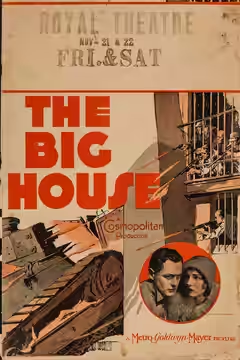
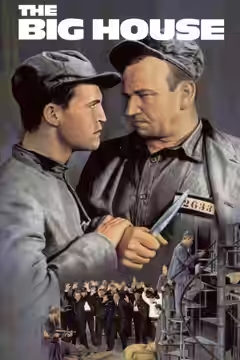
George W. Hill’s prison drama still works where it counts: in the cell block, the mess hall and the yard, with Wallace Beery as a cheerful killer. The love story bolted on outside the walls is dead weight, and the film seems to know it.
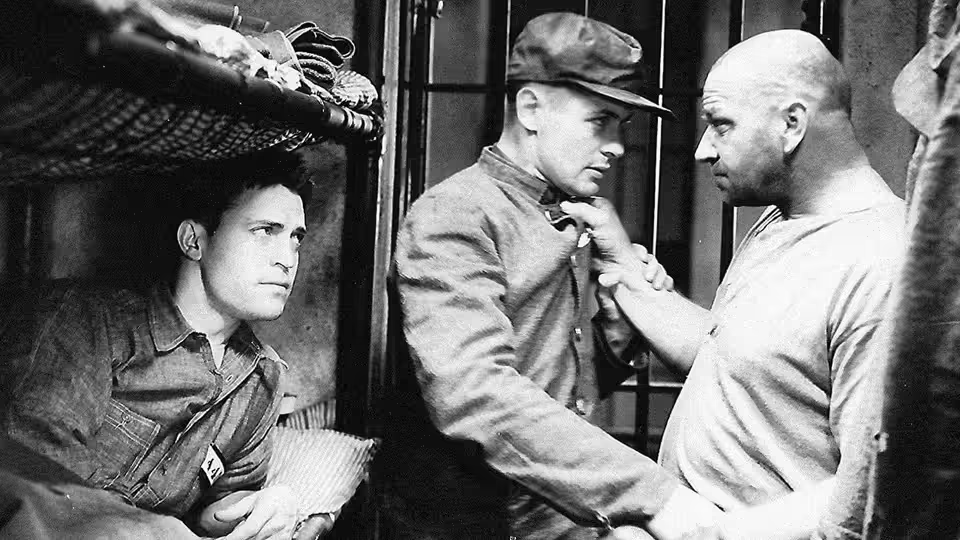
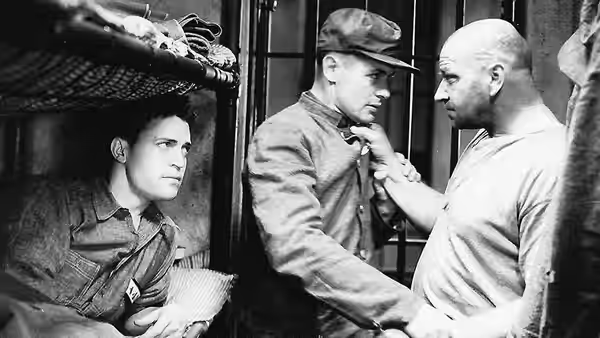
The Big House was made in 1930, when films had only just learned to talk, and it is one of the first to understand what talking was for. George W. Hill’s film, from a story and script by Frances Marion, has a plot you could write on a cigarette paper: a weak young man goes to prison, is put in a cell with a killer and a forger, and finds out what he is made of. What the film is really about is the building. Three thousand men in a place meant for eighteen hundred, and Hill wants us to hear every one of them.
The sound is the thing. The men march to meals in lockstep and the boots land together on stone; tin plates go down on the tables in one clatter; a whistle, a bell, a door. There is almost no music. Hill uses the microphone the way a later director would use a crane, to tell us how big the room is and how many people are in it. The best scene has almost nothing to look at: men in the punishment cells, in the dark, talking to each other through the walls, while Harold Wenstrom’s camera stays in a black corridor and the voices do the work. We were unnerved by it, more than by any of the gunfire later, because it is the one place the film asks us to imagine rather than watch.
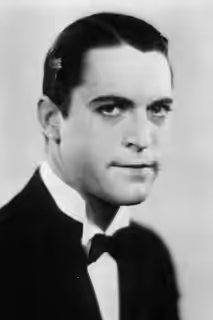
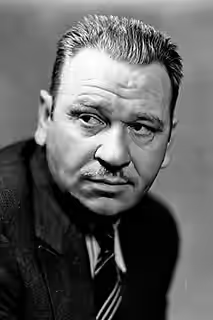
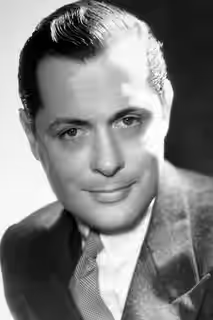
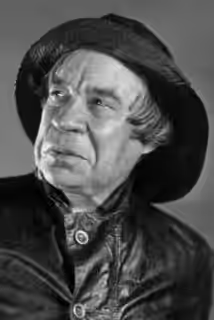
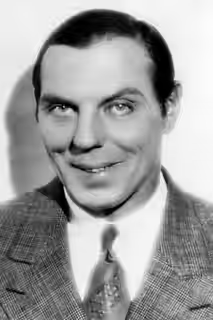
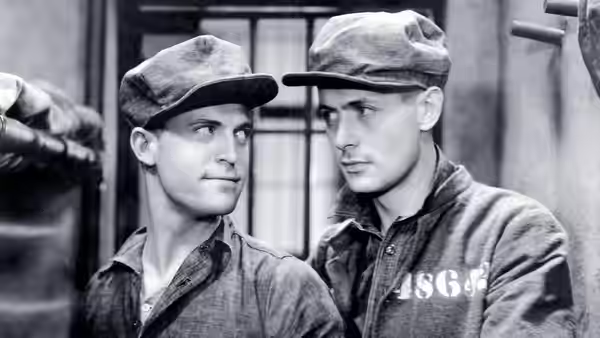
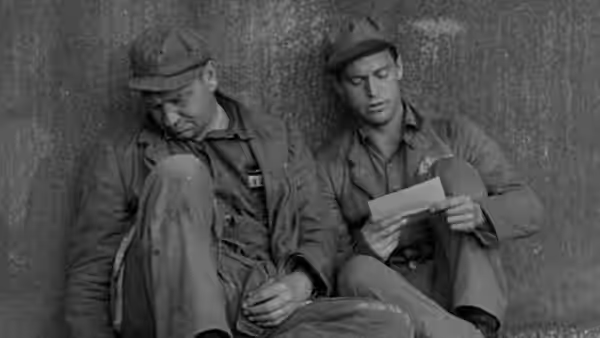
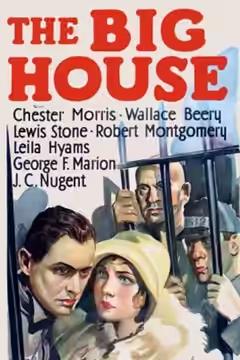
Wallace Beery is the reason the film is still watched, and he earns it. Butch is a murderer, a bully and a child, and Beery plays all three at once, often in the same sentence. He dictates a letter to a sweetheart who may not exist, grinning, and then threatens to open a man’s throat over the meat ration with the same face. He is enormous, and Hill keeps putting him in doorways so that he fills them. Chester Morris, as the forger Morgan, has the harder and less grateful part, the clever man who has learned to keep his head down, and he plays it with a stillness that makes Beery look bigger. Robert Montgomery’s Kent is the weak one, and Montgomery does not ask us to like him. That is a brave choice for a young leading man and the film is better for it.
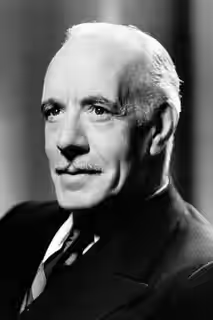
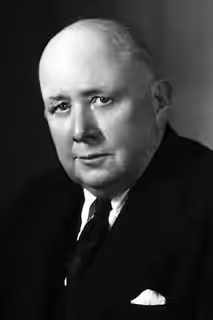
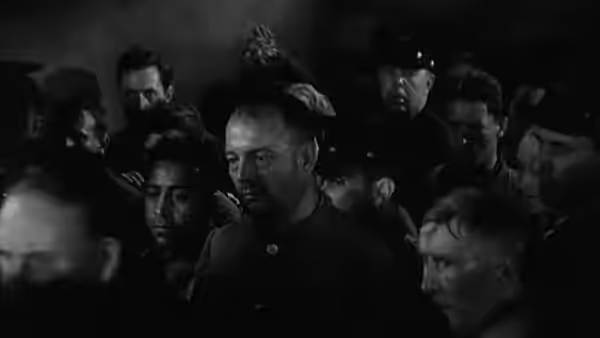
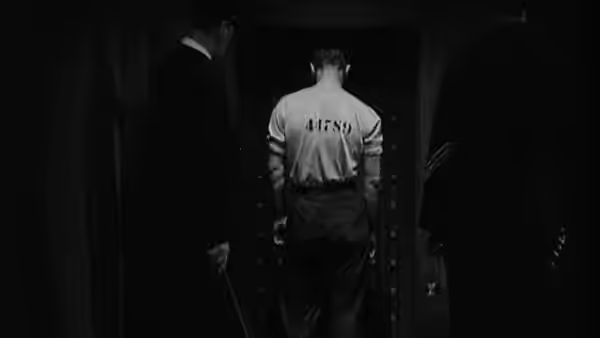
Lewis Stone’s warden gets the speech that sets the terms, about the yellow streak and what prison does with it, and Stone plays him as a tired man who knows the building is a disgrace and has been told there is no money. Around him DeWitt Clarke Jennings and Robert Emmett O’Connor make the guards ordinary rather than cruel, which is more frightening. David Cox has put the whole population in the same shapeless prison issue, and Blanche Sewell’s cutting in the mess hall keeps returning to rows of identical backs, so that when a face does come forward it counts.
Then the film leaves the prison, and it should not have. Leila Hyams plays Anne, Kent’s sister, and the second half finds a way to put her and Morgan in the same room, which we will not describe. Hyams is pleasant and Morris is patient, and there is nothing between them that the script did not order. Every scene outside the walls is lit flatter, played slower and written softer than every scene inside, and for a quarter of an hour the film goes dead. We could feel someone deciding that a picture with no woman in it could not be sold. In 1930 that was probably true. It still costs the film something.
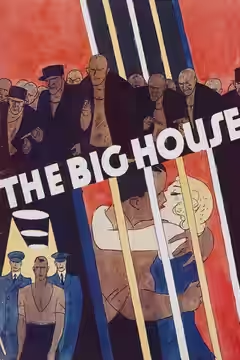
It comes back for the last reel, and what it comes back to is a riot. We will say only that Hill stages it as a siege, from inside and out, with the microphone again doing half the work, and that Sewell’s cutting between the yard and the warden’s office is as clean as anything we have seen from the period. The critics of 1930 were impressed by it and so were we. The tagline promised a jail-break and a love story. The jail-break is the picture.
It runs 87 minutes and about seventy of them are good, which is a better ratio than most prison films have managed since. Put up with the scenes outside the walls. The film is waiting for you inside, and so is Beery.