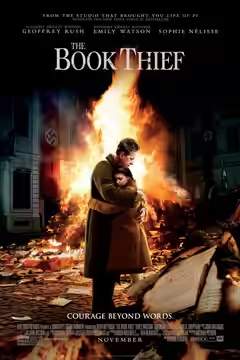
Geoffrey Rush and Sophie Nélisse bring welcome warmth to Brian Percival’s adaptation, but the film is too cosy for its subject. Its treatment of wartime Germany needs danger that the handsome images and reassuring sentiment keep softening.
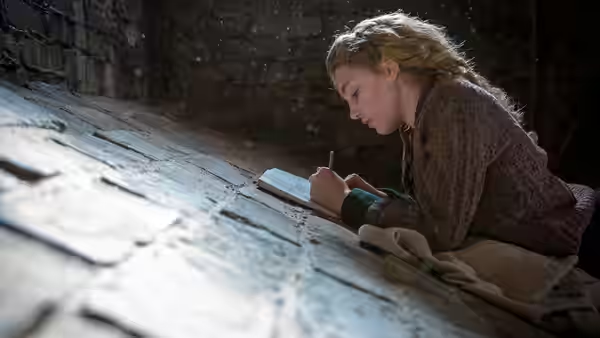
Brian Percival makes The Book Thief too comfortable to do its subject justice. His adaptation of Markus Zusak’s novel looks at ordinary Germans resisting Nazi propaganda, with books and a young girl’s attachment to them at its centre. There is room here for a drama about how people learn to think for themselves when obedience is demanded. Too often, however, the film seems content to establish that its principal characters are good people and wait for us to love them.
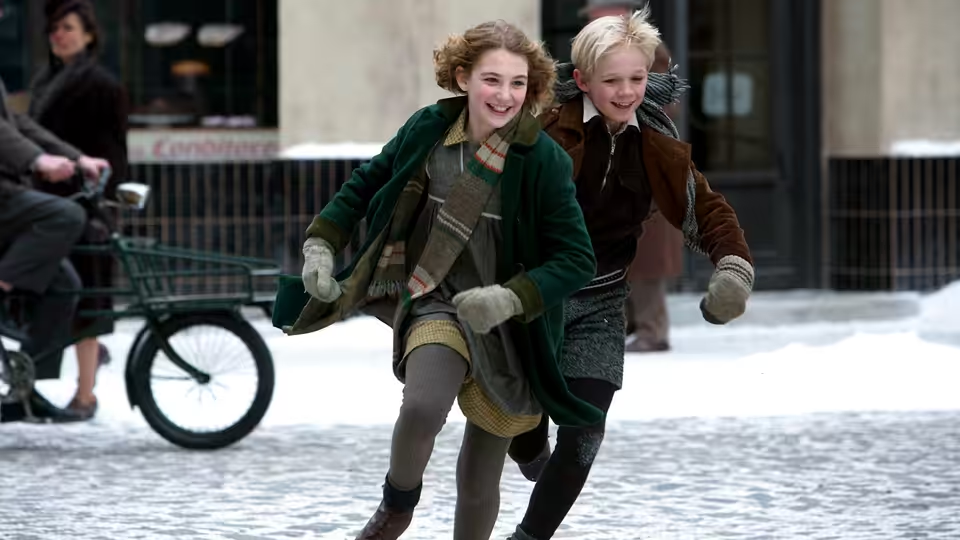
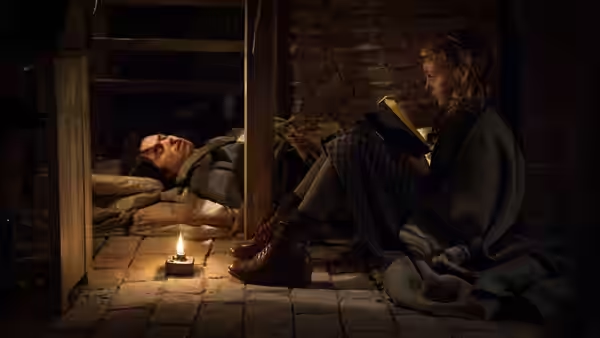
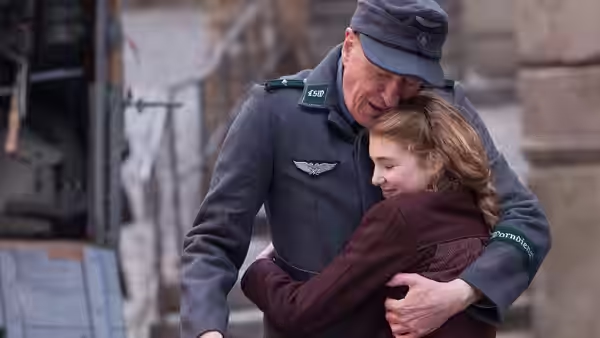
Sophie Nélisse gives Liesel Meminger enough watchfulness to hold our attention even when the storytelling slows. Geoffrey Rush makes Hans Hubermann warm and funny without turning every exchange into an appeal for affection. We were moved by their scenes together, because his easy manner gives her guarded performance somewhere to relax. Their company is the film’s strongest reason to stay, and for a while their relationship provides the interest that the wider story lacks.
Emily Watson is another reason to persist, giving Rosa Hubermann a firmness the film could use more often. She gives the character the weight of an adult with her own concerns, and makes the surrounding sweetness easier to accept. Ben Schnetzer gives Max Vandenburg an appealing directness. Yet Michael Petroni’s screenplay arranges these sympathetic people so tidily that there is little room for awkwardness or doubt, even when either might have made their decency more convincing.
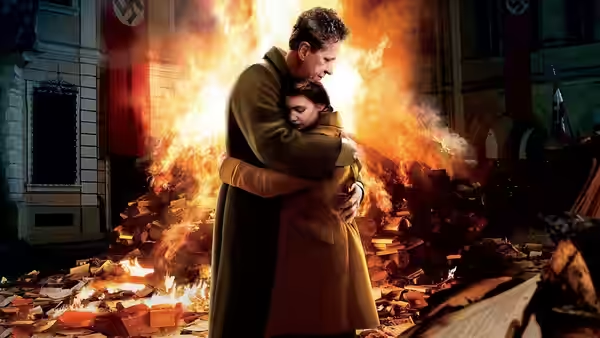
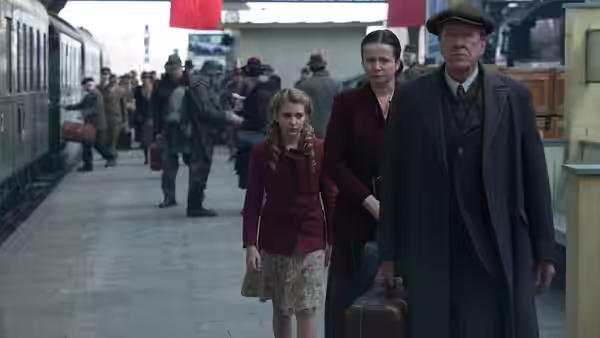
Florian Ballhaus’s use of natural light makes the affectionate exchanges look warm and inviting. Simon Elliott’s polished production design is easy to admire, but the setting feels too carefully presented to make the threat around these people immediate. John Williams supplies a sensitive score, though its reassurance adds to the problem. The image, the music and the performances keep making the drama comfortable to sit through. That becomes a serious limitation in a story set in wartime Germany.
Then there is Death, voiced by Roger Allam, whose recurring narration gives the film another way to explain itself. The whimsical delivery is an awkward choice: the subject is already difficult enough without a narrator making it sound manageable. His interruptions also weaken the cast’s work by telling us how to regard a story they are capable of carrying. We kept wishing the voice would leave them alone long enough for a feeling to arrive without an introduction.
John Wilson’s editing leaves the drama moving at much the same measured pace for too long. At 131 minutes, there is ample time to develop tension, yet the stretches between the stronger performances drag. Against the demands of a wartime childhood drama, this is a substantial failure. We do not need graphic suffering, but we do need to believe that the people on screen cannot count on being safe.
Brian Percival’s restraint is understandable, and making room for kindness in this setting is worth the effort. The problem is that fear has been reduced so far that the kindness begins to seem easier than it should. The cast can sustain individual scenes, but we would hesitate to recommend the whole 131 minutes on their account. Come for the performances only if a reassuring wartime drama is something you want.