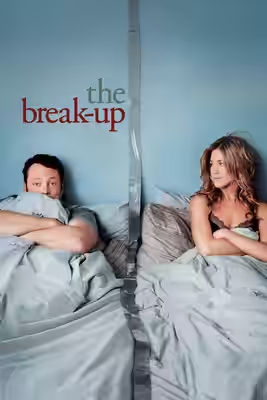
Peyton Reed’s sour romantic comedy finds something painful in an argument about the dishes, helped by Jennifer Aniston and Vince Vaughn. The performances deserve attention; the repetitive quarrelling and uncertain comedy make a whole evening with them harder to recommend.
The arguments in The Break-Up hurt, and for a while that makes up for the shortage of laughs. Peyton Reed approaches romantic comedy through the unpleasant business of sharing a home when affection has worn thin. There is something worth watching in that, especially when a minor disagreement exposes a much larger grievance. The film loses us through repetition. Once the grievance is clear, it keeps finding reasons to have the disagreement again.
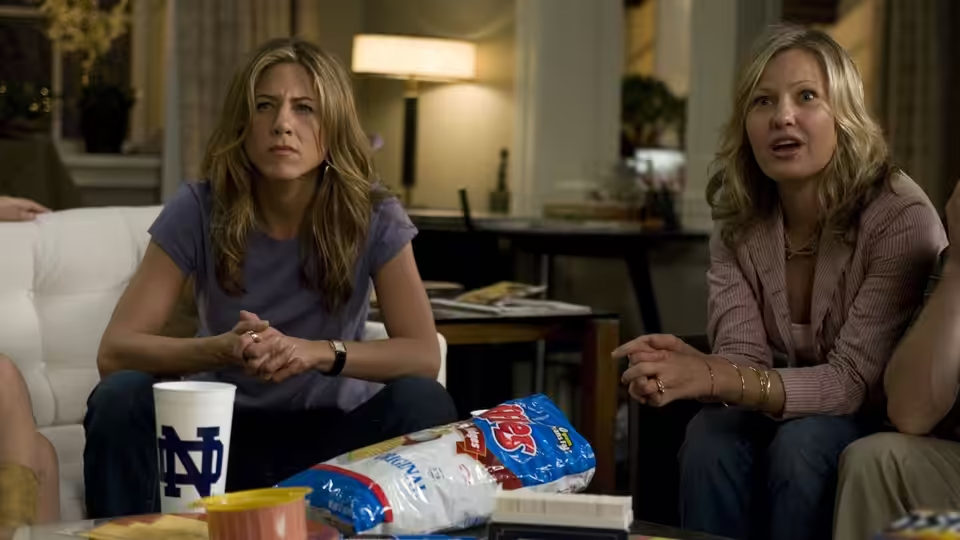
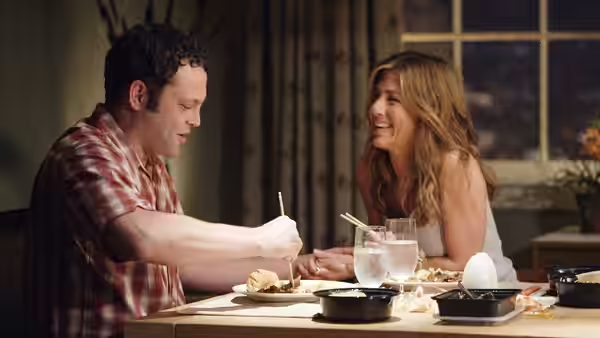
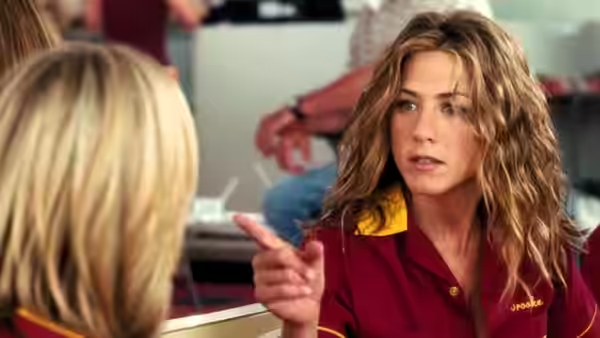
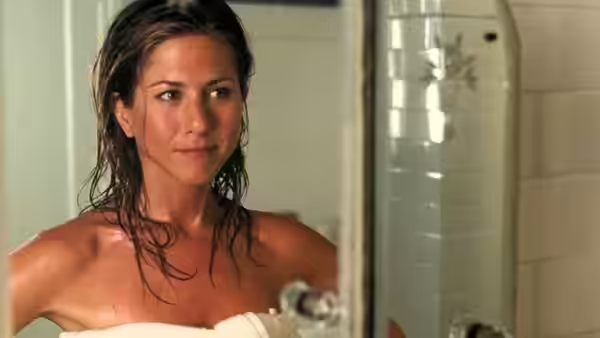
The argument about the dishes gets closest to what works. We felt miserable watching it, because Jennifer Aniston makes Brooke Meyers’s effort to be understood look exhausting, while Vince Vaughn’s Gary Grobowski keeps the quarrel moving. Aniston gives the complaint enough hurt to make the household task matter; Vaughn makes argument sound like a habit he cannot interrupt. We can recognise these people without particularly wanting to spend another hour with them. For this scene, that discomfort seems entirely earned.
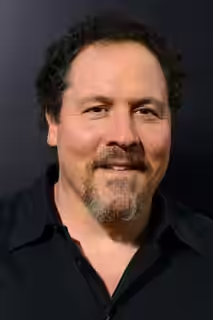
The casting makes sense even when the chemistry fails. Vaughn’s quickness gives the quarrels some comic energy, and Aniston’s hurt is persuasive enough to stop us dismissing them as bickering. Yet the film offers too little sense of the pleasure these two might once have taken in each other. That matters in a romantic comedy built around their separation: without that earlier affection, there is little reason to hope they can get through to each other. Jon Favreau, playing Johnny O, provides comic relief with less apparent effort.
Screenwriters Jay Lavender and Jeremy Garelick understand how an argument can continue after both people have stopped listening. They struggle to find much else for these exchanges to tell us. Too often, another failure to communicate merely confirms what the previous exchange established, and a joke interrupts the pain without changing our view of either person. Dan Lebental and David Rosenbloom’s editing does not solve that repetition. The shifts between broad comedy and distress can feel abrupt even while the film itself feels slow.
The house gives the dispute a useful physical limit. Andrew Laws’s production design makes the shared space credible as somewhere difficult to surrender, although the struggle to occupy it together ought to generate more comic friction. Eric Alan Edwards’s cinematography keeps the domestic setting readable, but does little to sharpen the comedy of sharing it under these circumstances. The actors supply most of the tension. We kept attending to Aniston rather than to the space around her.
Jon Brion’s score is agreeable enough, but the music does not make the move from quarrel to comedy feel any less awkward. The unhappiness is difficult to shrug off when another laugh is required. Supporting turns from Judy Davis as Marilyn Dean and John Michael Higgins as Richard Meyers offer welcome changes of company. They also expose how little variety there is in the central dispute.
A romantic comedy can be miserable company and still be worth watching. The problem here is how little we learn from staying with these particular disagreements. At 106 minutes, this is a wearying watch despite the flashes of recognisable hurt. Try it for Aniston and Vaughn if domestic friction is your subject; choose something else if tonight needs cheering up.