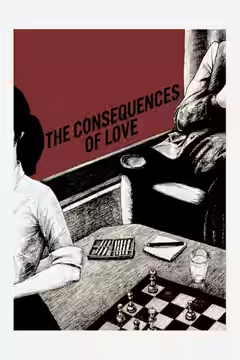
Paolo Sorrentino makes a tense character study anchored by Toni Servillo. Its slow pace and insistent styling sometimes keep us at a distance, but the hotel-bound unease earns much of the patience it asks for.
The Consequences of Love is a good, sometimes over-managed thriller about a man whose hotel-bound existence has begun to feel oppressive. Paolo Sorrentino is interested in how long we will watch that man before demanding an explanation, and the answer depends largely on Toni Servillo. His controlled performance gives us enough to study while the story takes its time. The film rewards patience, though there are passages where Sorrentino tests it more than he needs to.
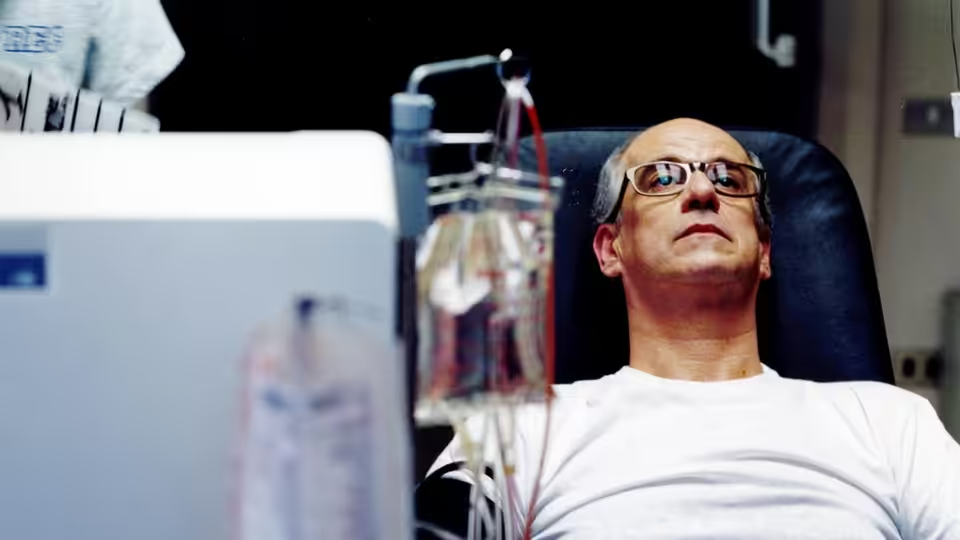
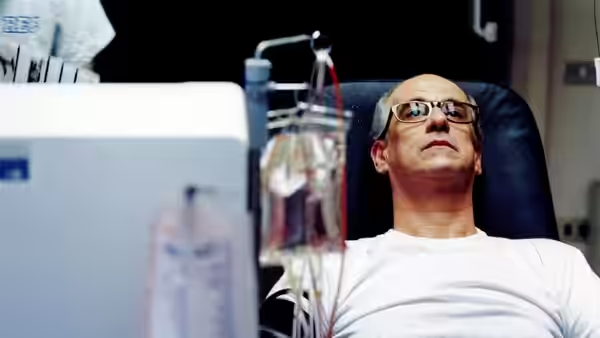
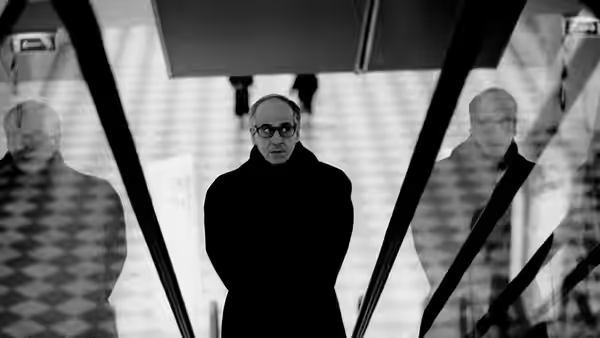
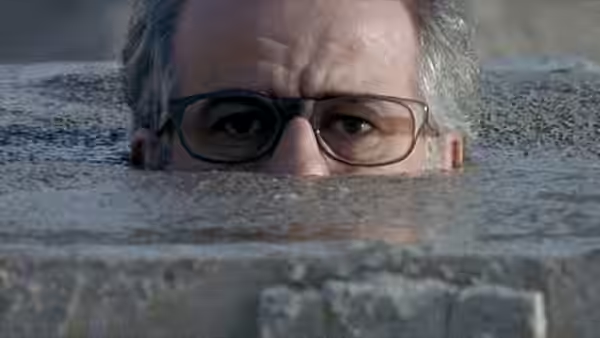
As Titta Di Girolamo, Servillo lets us suspect that being this reserved takes practice. His restraint matters because the film needs someone we can keep watching without immediately understanding him. We felt shut in by the hotel, and Servillo’s refusal to make Titta easy company made that feeling more uncomfortable. His remoteness never becomes particularly enviable. We are left wondering what it costs him to maintain it.
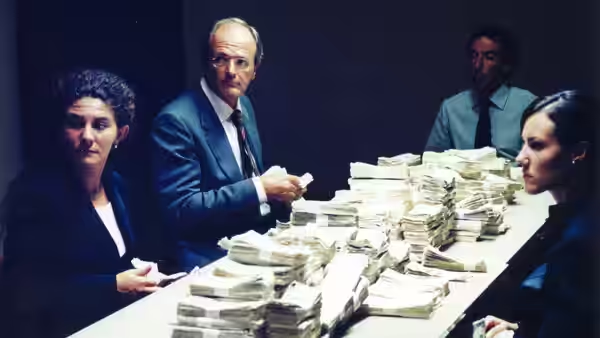
Luca Bigazzi’s widescreen photography and deliberate camera movement give that discomfort a physical setting. The hotel remains insistently present around its occupant; the images encourage us to look at the space as much as the man. Lino Fiorito’s production design helps make somewhere intended for a stay feel oppressively permanent. The precision is pleasurable, but it can also distract us from Titta: occasionally we notice the framing before we register the unease.
Giogiò Franchini’s editing gives Servillo room to sustain the performance without hurrying us towards an explanation. That patience is necessary, and at first it makes the smallest suggestion of change seem significant. The slow pace does, however, start to repeat an effect we have already understood. Sorrentino could shorten those passages without making Titta less difficult to read. Some of the film’s mannerisms would trouble us less if the stretches between developments were shorter.
Pasquale Catalano’s music contributes to the pressure of the hotel setting, keeping the atmosphere uneasy when the drama pauses. It works, although the combined insistence of soundtrack and image sometimes feels excessive. Servillo can hold our attention without quite so much assistance. When the film presses the mood too hard, we become conscious of the effort going into something the performance has already established.
Sorrentino’s screenplay uses the thriller to examine a life that seems to have stopped moving. Uncertainty about a person can be as absorbing as uncertainty about what will happen next, and the film understands that. It also places a burden on the writing that careful composition cannot carry indefinitely. We remain interested in Titta, but Sorrentino occasionally seems too pleased with how little he is telling us.
At 100 minutes, this is not an especially long film, but it asks for attention of a kind that makes duration noticeable. Anyone hoping for a brisk thriller should look elsewhere. For those who enjoy studying a difficult character, the deliberate pace is a worthwhile bargain, with occasional grounds for complaint. Choose it for an evening when nobody is likely to keep asking when something is going to happen.