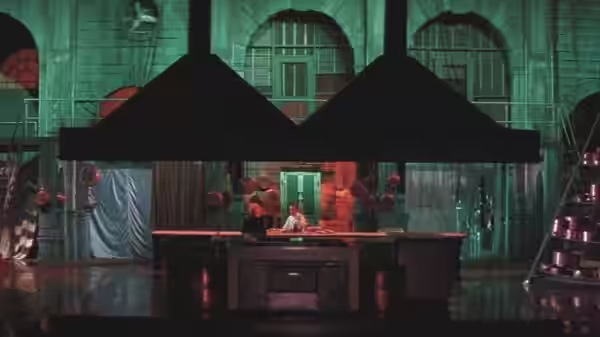
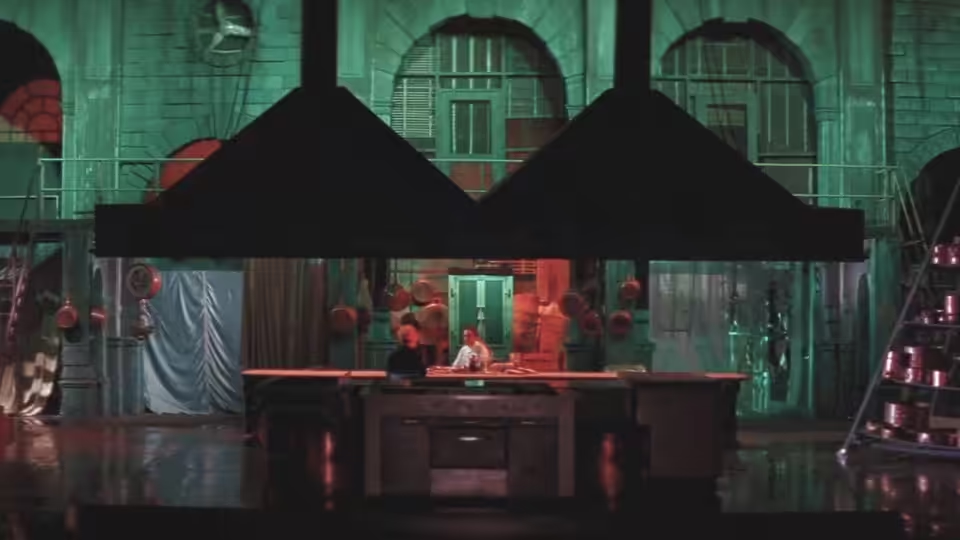
Cooks work behind a broad kitchen counter beneath dark ventilation hoods
Film review

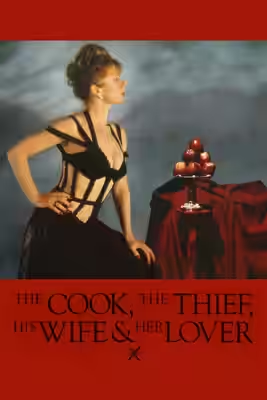
The Cook, the Thief, His Wife & Her Lover

1989 · Directed by Peter Greenaway · 2h 04m · BBFC 18

In a sentenceMichael Gambon behaves so appallingly that adultery starts to look like good manners

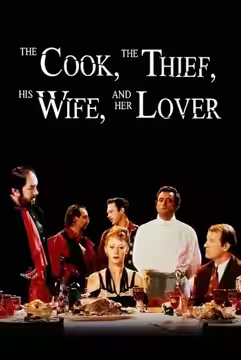
An affair entangles Albert Spica (Michael Gambon), Georgina Spica (Helen Mirren), Richard Boarst (Richard Bohringer) and Michael (Alan Howard) in a story of adultery and violence. The cook, the thief, his wife and her lover find their lives caught up in sexual infidelity, with the thief’s cruelty making intimacy dangerous. Albert’s behaviour leaves little room for anyone else’s wishes. Peter Greenaway writes and directs this crime drama, with Tim Roth as Mitchel and Ciarán Hinds as Cory among the surrounding characters.

Fi1m review

Peter Greenaway’s crime drama rewards a taste for theatrical excess, though its cruelty becomes exhausting. Michael Gambon is horribly funny, and the elaborate craft gives a simple adultery story enough force to survive some heavy-handed writing.

Peter Greenaway’s The Cook, the Thief, His Wife & Her Lover is worth the discomfort for anyone with an appetite for theatrical excess. The adultery story is simple, and its treatment deliberately excessive, making cruelty difficult to ignore even when the images invite admiration. It rewards a willingness to spend time with people whose company becomes increasingly unpleasant. Its humour offers little relief, since it so often belongs to the person causing the pain.

Michael Gambon gives Albert Spica a greed for attention that makes even the comedy unpleasant. He plays wickedness with such relish that we can feel ourselves being encouraged to enjoy it, and that is where the performance becomes disturbing. We laughed at his bullying and were uneasy about it almost at once; the pleasure he takes in imposing himself makes the laughter feel like encouragement. The size of the performance is justified by the way it crowds out everyone else, although spending this long in its company is hard work.

Helen Mirren’s Georgina Spica is essential because her presence gives the adultery some human weight. With Alan Howard as Michael, the film allows quieter acting to compete with the bullying, and we wanted more room for that competition. Richard Bohringer’s Richard Boarst also benefits from restraint amid so much excess. The weakness is Peter Greenaway’s writing: the lovers are less fully imagined than the man whose behaviour bears down on them, and their relationship sometimes feels too slight for the importance placed on it.

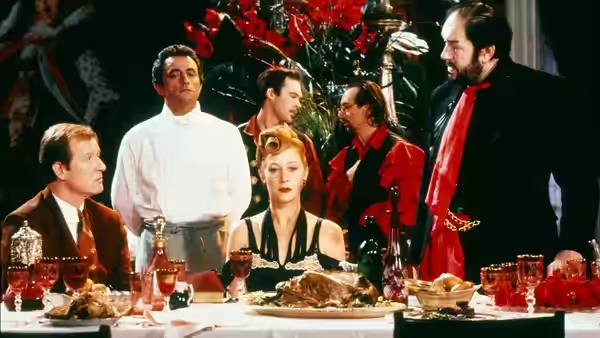
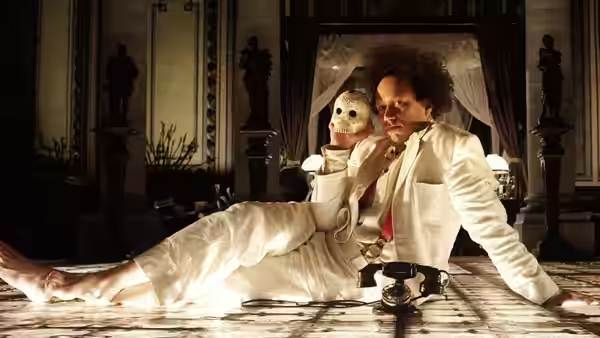
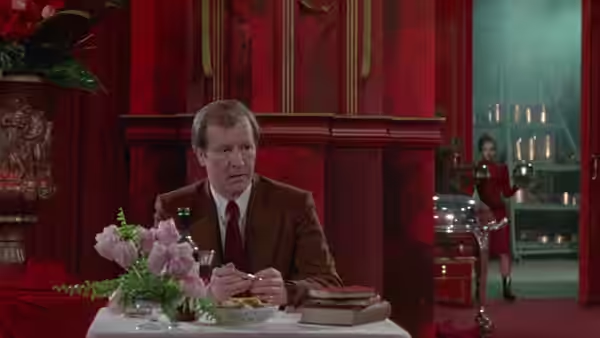
Sacha Vierny’s cinematography makes the elaborate surroundings hard to stop looking at, complicating our wish to turn away from the violence. Production designers Ben van Os and Jan Roelfs give the film a richness that feels oppressive, with sets so insistently elaborate that they compete with the performers for attention. Jean-Paul Gaultier’s costumes add to that sense of people dressed for display, making vanity visible before anyone needs to explain it. The precision is impressive, even when we find ourselves studying the clothes instead of attending to the person wearing them.

Michael Nyman’s music helps sustain the operatic scale, giving the brutality a solemnity that the grotesque humour keeps disturbing. That combination is unnerving, and the music contributes substantially to the film’s emotional force. John Wilson’s editing is less consistently persuasive: the excess needs time to register, but repetition gradually reduces its effect. There are passages where we have understood the ugliness and are simply being asked to endure more of it.

As crime drama, this offers few of the pleasures of a puzzle or a neatly managed scheme. Peter Greenaway keeps presenting appalling behaviour with such care that enjoying the film becomes uncomfortable, even before we consider the violence. Most critics are less persuaded than we are by the excess, finding that it overwhelms the achievements of the cast and collaborators. We think they give too little weight to Michael Gambon’s humour, which keeps making us laugh at behaviour we know we should find repellent.

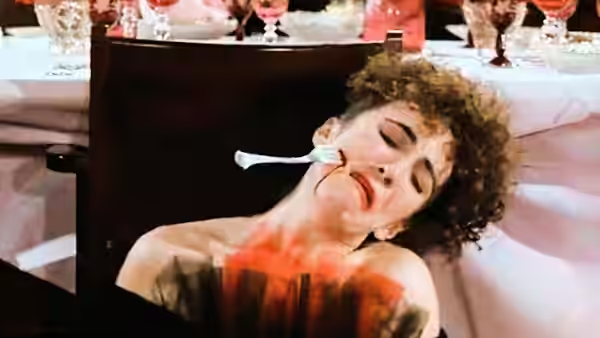
The 18 certificate deserves attention here, as does the prospect of 124 minutes spent with deliberate cruelty. The elaborate presentation will offer no comfort to anyone put off by grotesque violence. Even an appetite for abrasive drama may be tested by how long the bullying continues. Choose it for an evening when being unsettled is part of the plan.

Critical consensus AI synthesised

55
Positive
2
Mixed
3
Negative
1

The reviews are mixed on Greenaway’s film, with praise clustering around its visual style and performances rather than agreement about its provocations. Michael Gambon receives particular approval from Variety and Empire, which emphasise the richness and ferocity of his performance. Empire also praises the sets and costumes. Even the more resistant assessments acknowledge the skill involved, though admiration for the craft does not necessarily make the cruelty easier to accept.

The spread is wide, and the central disagreement concerns whether the grotesque excess is compelling or merely punishing. Eye for Film embraces the operatic style and unflinching brutality; the Los Angeles Times finds the film self-indulgent and depressing, arguing that its cast and visual and musical collaborators are poorly served. The New York Times takes a mixed position, recognising the striking imagery while resisting the excesses. Empire’s qualified approval likewise comes with a warning about the misanthropy and cruelty.

Variety
31 December 1988 · Variety Staff
70*

The review presents Greenaway’s film as a grimly humorous assault on convention. It singles out Michael Gambon’s performance as gloriously rich.

Read the full review →
Empire
1 January 2000 · John Mount
65*

Mount finds the film startling but profoundly disturbing, noting that many viewers may be offended by its misanthropy and cruelty. He praises the astonishing sets and costumes, as well as Michael Gambon’s ferociously wicked performance.

Read the full review →
Time Out
· GA
64*

The available description presents the film as deliberately shocking, with grotesque violence and a simple tale of adultery. The review text is unavailable, so its overall verdict and specific praise or criticism cannot be confirmed.

Read the full review →
The New York Times
26 April 1991 · Vincent Canby
50*

The review offers a mixed assessment of Greenaway’s film. It singles out the film’s striking visual style, while finding its excesses difficult to embrace.

Read the full review →
Los Angeles Times
13 April 1990 · Kevin Thomas
10*

Thomas condemns the film as self-indulgent and depressing rather than exciting or entertaining. He singles out the masterful cast and gifted visual and musical collaborators, arguing their work is squandered on grotesque excess.

Read the full review →
Eye for Film
24 November 2003 · Angus Wolfe Murray
80*

The critic finds the film horrifying yet brilliant, calling it a fierce and beautiful work poisoned by evil. They single out its operatic style and its unflinching depiction of brutality and decadence.

Read the full review →

Straight answers AI written, from our review

Is The Cook, the Thief, His Wife & Her Lover worth watching?
The Cook, the Thief, His Wife & Her Lover is worth watching if theatrical excess and abrasive drama appeal; we score it 78 out of 100. Michael Gambon’s horribly funny bullying and the elaborate visual craft justify the discomfort, though the lovers are thinly written and the repeated cruelty becomes exhausting.
How long is The Cook, the Thief, His Wife & Her Lover, and what is it rated?
The Cook, the Thief, His Wife & Her Lover runs 2h 04m and is rated 18 by the BBFC in the UK. It is a crime and drama film.
Where can I watch The Cook, the Thief, His Wife & Her Lover in the UK?
The Cook, the Thief, His Wife & Her Lover is not on any streaming or rental service in the UK at the moment. It is available in 5 other countries; change your country at the top of the page to see where. Availability is checked daily.
How violent or frightening is The Cook, the Thief, His Wife & Her Lover, and is it suitable for children?
The Cook, the Thief, His Wife & Her Lover has a UK 18 certificate and is unsuitable for children, with grotesque violence and sustained cruelty making it a demanding choice for adults too. We find the bullying and the humour drawn from it deeply unsettling; the elaborate surroundings offer little relief for anyone squeamish about violence.
How does The Cook, the Thief, His Wife & Her Lover compare to The Servant?
The Cook, the Thief, His Wife & Her Lover is the more theatrical and openly brutal of these enclosed struggles over power; we recommend The Servant more strongly. In The Servant, cruelty operates through impeccable social behaviour, though its final half-hour pushes too hard. Choose Greenaway’s film for grotesque humour and elaborate spectacle rather than quieter social menace.
What should I watch after The Cook, the Thief, His Wife & Her Lover?
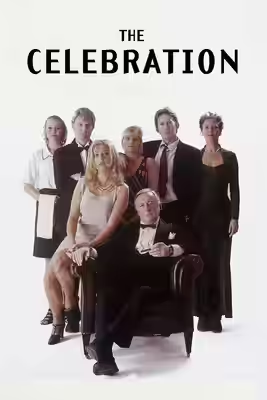
After The Cook, the Thief, His Wife & Her Lover, try The Servant (1963, Fi1m 89): Another enclosed struggle over power, with cruelty conducted through impeccable social behaviour. Then The Discreet Charm of the Bourgeoisie (1972, Fi1m 83): For more dining rituals undone by appetite, hypocrisy and the failure of good manners; and The Celebration (1998, Fi1m 85): A family meal becomes unbearable, with fewer ornaments and no shortage of cruelty.

Cast

Awards

European Film Award for Best Production Designer, 1990

Nominated
European Film Award for Best Production Designer

Sitges Film Festival Best Actor award, 1989

Won
Sitges Film Festival Best Actor award

Sitges Film Festival Best cinematography, 1989

Won
Sitges Film Festival Best cinematography

Sitges Film Festival Best Director award, 1989

Won
Sitges Film Festival Best Director award

If you liked this, try…

  1. The Servant (1963, Fi1m 89)Another enclosed struggle over power, with cruelty conducted through impeccable social behaviour.

  2. The Discreet Charm of the Bourgeoisie (1972, Fi1m 83)For more dining rituals undone by appetite, hypocrisy and the failure of good manners.

  3. The Celebration (1998, Fi1m 85)A family meal becomes unbearable, with fewer ornaments and no shortage of cruelty.

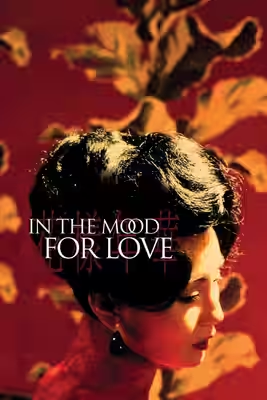
  4. In the Mood for Love (2000, Fi1m 91)For restrained desire, exacting clothes and feelings that refuse to stay politely concealed.

  5. The Menu (2022) · not reviewed yetAnother meal where elaborate presentation does little to conceal the hostility towards the guests.

Free account

Know what to watch tonight

Two lists that know where things are streaming, collections you can share, your own score beside ours, and Discover that remembers what you have seen.

  • Want to see, sorted by what is streaming now
  • Seen, with your score out of ten
  • No adverts, ever