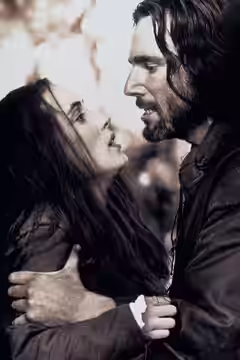
Nicholas Hytner takes Arthur Miller’s play out onto the marshes and loses some of its pressure, and the hysteria is played louder than it needed to be. But Paul Scofield’s judge is quietly terrifying, and Joan Allen is nearly as good.
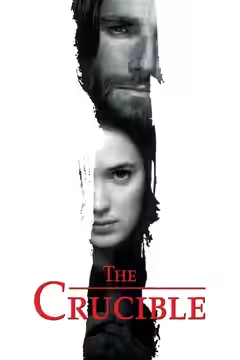
Arthur Miller wrote The Crucible in 1953 about the Salem witch trials of 1692 and about the McCarthy hearings he was living through. Here, adapting his own play for the screen, he works with Nicholas Hytner, whose previous film was The Madness of King George (1994). The result is a serious, well-acted, handsomely dressed 123 minutes that is often gripping and nearly as often shrill. It is worth an evening. It is also a lesson in how much a play can lose when the walls are taken away.
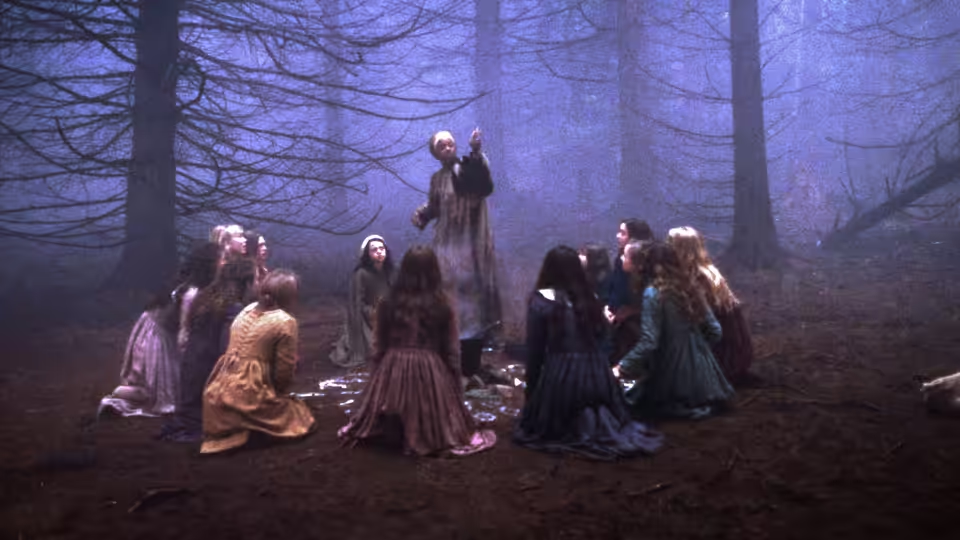
Hytner and Miller have taken the play outdoors. The girls’ dance, which Miller kept offstage, opens the film: night, a fire, Tituba chanting, Abigail with blood on her mouth. Andrew Dunn shoots the village under a flat grey sky, all mud, salt marsh and dark water, and Lilly Kilvert’s Salem is timber and whitewash with ceilings low enough to stoop under. Bob Crowley puts everyone in black and brown and starched white, so that a flushed face reads from across the meeting house. It all looks right. The trouble is that the play’s power comes from people trapped in rooms with one another, and every time the film cuts to a procession or a shoreline the pressure drops.
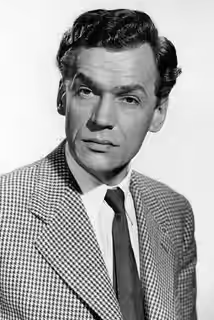
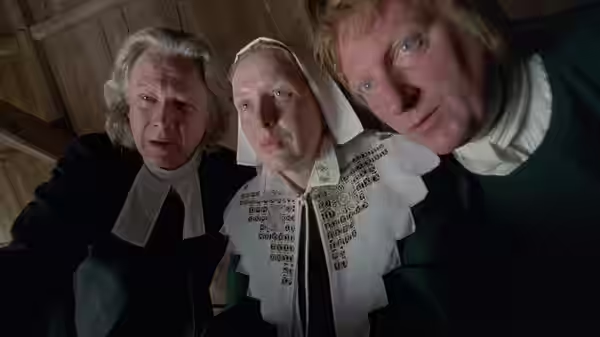
Paul Scofield is the reason to see it. His Danforth does not appear until the village is already in its fever, and once he does he barely moves; he sits, he asks a question in a low even voice, and he waits, and the waiting is worse than anything the girls do. When he tells a frightened man that a person is either with the court or against it, we felt the air go cold. This is where the film becomes properly frightening: not in the screaming but in a reasonable man explaining, patiently, why he cannot now be wrong. Joan Allen matches him from the other side. Her Elizabeth has forgiven her husband and cannot make it look like forgiveness, and the kitchen scene between her and Day-Lewis, two people talking about supper when neither means supper, is the best written and best played thing in the film.
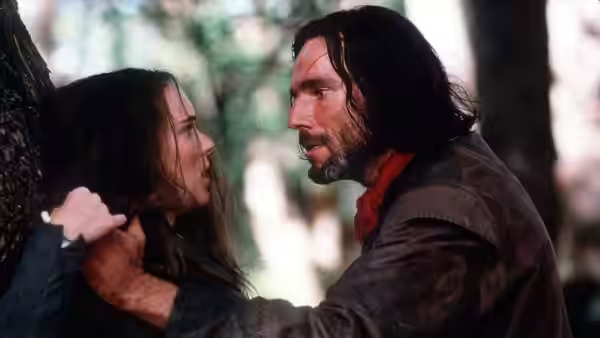
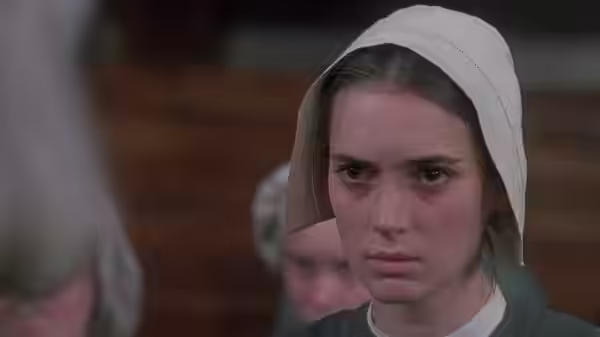
Daniel Day-Lewis plays Proctor as a big, sweating, physical man who would rather plough than talk, and for the first hour that is exactly right; when he finally shouts, we believed it had cost him. Later the performance goes up a notch and stays there, and the final stretch asks for more of that than it can carry. Winona Ryder is the problem. Her Abigail is all intention and no cunning; she shows us she is lying when the character’s whole power is that nobody can be sure. Alone with Day-Lewis she looks like a girl with a crush, and Abigail needs to be more dangerous than that. Bruce Davison’s Parris perspires splendidly, Peter Vaughan gives Giles Corey a stubborn, comic dignity, and Rob Campbell’s Hale is the one person on screen whose mind we actually watch change.
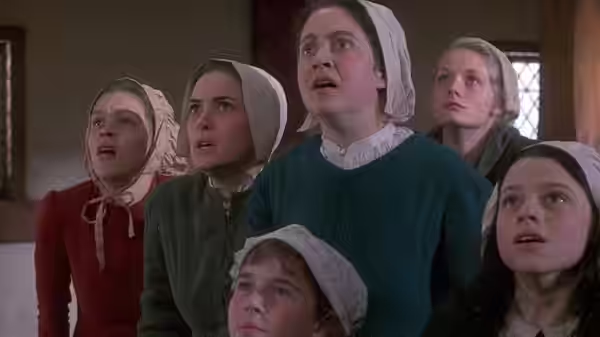
The fits are the film’s weakest stretch. Hytner stages the girls’ seizures as full-cast set pieces, bodies on the floor, screaming in unison, and Tariq Anwar cuts them fast, face to face to face, so that we never get to watch one girl decide to join in. By the third of these we were tired rather than horrified, and we suspect the opposite was intended. George Fenton’s score does not help; the strings rise with every accusation, and we were grateful whenever they stopped.
Against The Madness of King George, which had the sense to keep its best scenes in small rooms, this is the louder and lesser film. Against the play it is faithful almost to a fault: the speeches arrive intact, which on screen can feel like a man addressing a hall. The second half goes where the play goes; anyone who did it at school knows, and we will not repeat it. What we will say is that the quiet scenes in the final stretch earn their feeling and the loud ones spend it.
Watch it at home, where the screaming is smaller and the faces are larger. Scofield does not need a big screen; he barely needs the lights on.