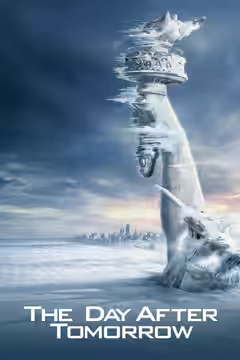
Roland Emmerich’s disaster film freezes the northern hemisphere in a week, and for an hour the destruction is frightening enough to forgive the writing. Then the weather settles, the people start talking, and there is not much left to watch.
Roland Emmerich has already blown up the White House with a spaceship and marched a lizard through Manhattan. For The Day After Tomorrow he needs nothing from outer space; the weather will do. Jack Hall (Dennis Quaid) is a climatologist drilling ice cores in Antarctica when the shelf splits under his camp. He tells a conference of delegates that the melting ice will shut down the ocean currents and freeze the north, and Vice President Becker (Kenneth Welsh) tells him the economy comes first. Within a week the currents stop. The film’s point is that Jack was right, and it makes the point for 124 minutes.
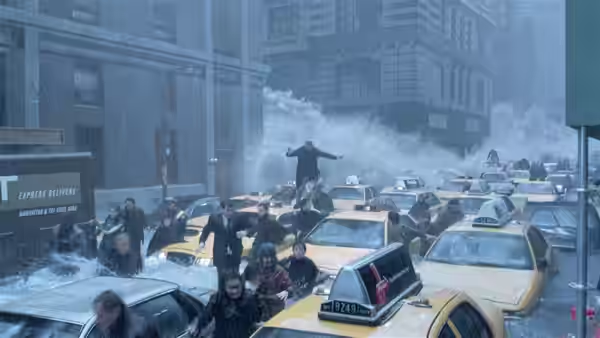
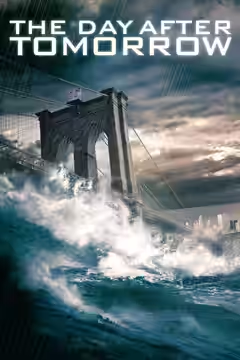
For its first hour it is a frightening film, and the fright is earned by pictures. Hail comes through the windscreens in Tokyo. Three or four tornadoes cross Los Angeles at once, filmed by Ueli Steiger in ordinary afternoon light rather than storm-dark, which makes them look like something that could happen on a Tuesday. Then the sea arrives in New York, a wall of grey water moving between the buildings at about walking pace, faster than the people, and Steiger holds the shot long enough for us to count the taxis it picks up. David Brenner cuts between the three cities and the two Halls without losing us. Harald Kloser’s score swells where you expect, but under the flood he pulls it back and lets the water make the noise.
We had seen the trailer and knew the water was coming, and it still got us. We were properly frightened, gripping the arm of the chair while cars went past the windows of a second floor. Forty minutes later Quaid was walking through snow and we were bored, and then cross about it, because a film that can frighten us that well ought to have somewhere to put the fear afterwards. This one puts it down and starts talking.
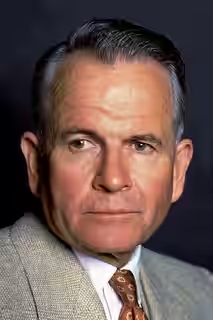
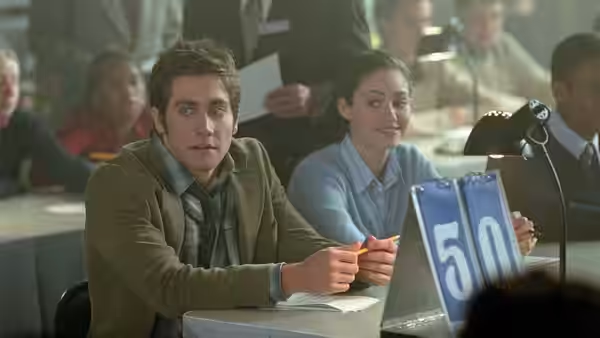
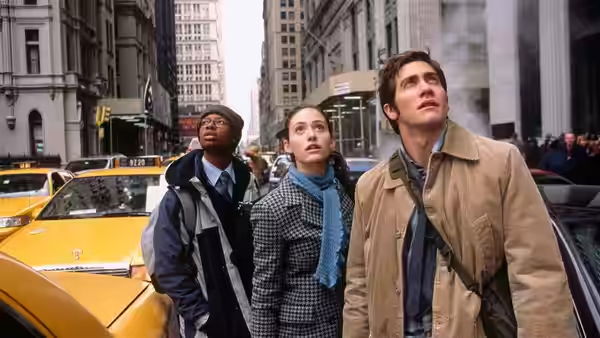
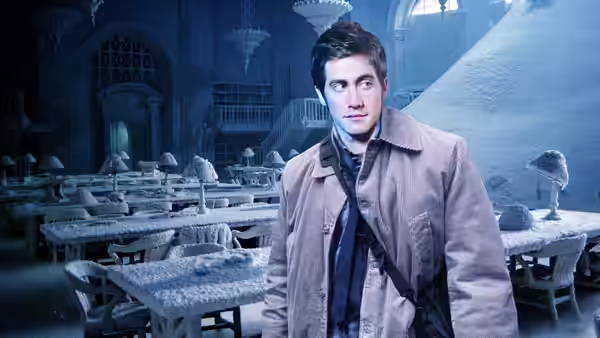
The talking is the trouble. Emmerich and Jeffrey Nachmanoff have written a script in which nearly every scene is a briefing, and the person being briefed is usually Becker, who exists to be wrong so that Quaid can be right at him. Quaid does the square-jawed decent father; he has nothing else to do. Jake Gyllenhaal, as his son Sam, spends the film looking damp and apologetic, and his courtship of Emmy Rossum’s Laura Chapman is conducted in whispers in a public library. Sela Ward, as Sam’s mother Lucy, a doctor, is given a sick child to sit beside and a telephone to hold. Ian Holm is the one who gets out clean. As Terry Rapson, the Scottish oceanographer watching his buoys go cold with Adrian Lester’s Simon beside him, he talks like a person, and the film’s one quiet scene belongs to him.
Barry Chusid’s sets do more storytelling than the dialogue. Rapson’s weather station is a cramped room of monitors and cardigans, and the library reading room becomes a camp of desks and burning books. The second half lives in these rooms and on a long walk north, and once the storm has settled into a steady white there is nothing left for the camera to do. Emmerich fills the gap with a lecture about the climate that arrives with the subtlety of the hail, and one dry joke about who ends up crossing which border, which comes late and which we will leave where it is.
The old disaster films knew the trick. The Towering Inferno (1974) had one building and thirty stars, and it kept the stars in the building. Emmerich has a hemisphere and half a dozen thin people, and he sends them off in different directions, so that by the end we are watching a man in a parka and hoping for another tornado. Independence Day (1996) knew it was silly and enjoyed it. This one thinks it is serious, and the seriousness is where the enjoyment leaks out.
Watch the first hour with the sound up and the curtains drawn. How long you stay for the second depends on how much you like snow. It carries a 12 and runs 124 minutes, about half of which are weather.