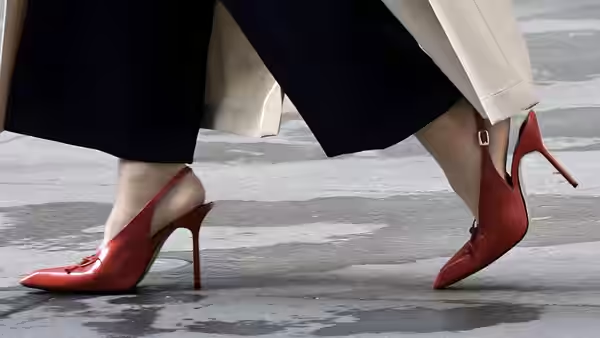
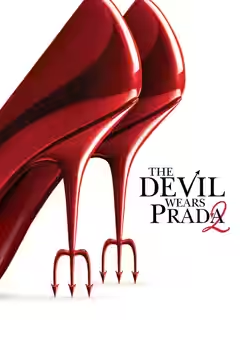
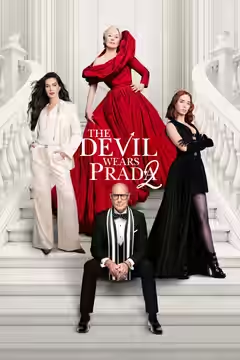
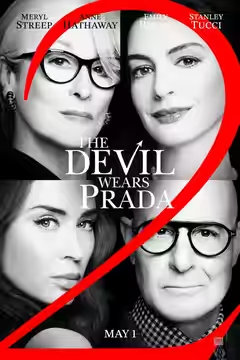
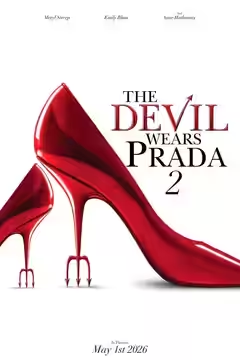
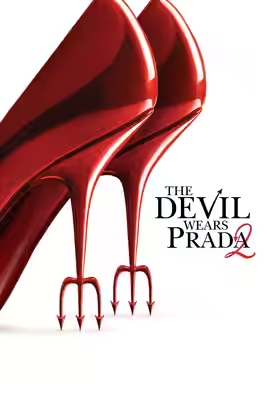
The Devil Wears Prada 2 poster

The Devil Wears Prada 2

2026 · Directed by David Frankel
1h 59mComedyDrama12A
64
Fi1m score
67
Critics · 9
Audience · not yet

Where to watch in the UK

Checked 10 September at 22:28. Prices and availability change; the service’s page is the last word.

Plays from YouTube when you press play; nothing loads from them until then.

Synopsis

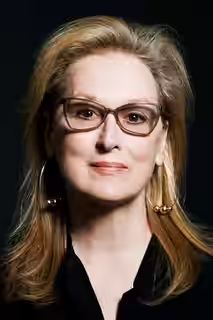
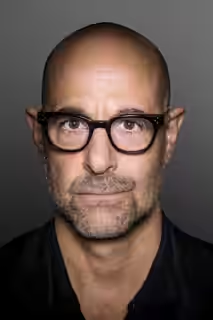
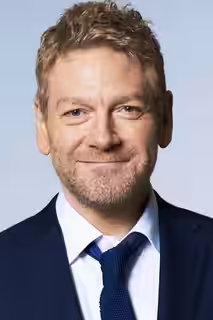
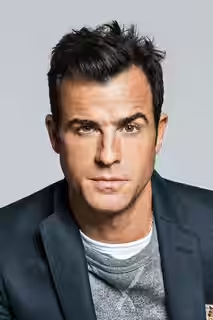
Twenty years on from her stint fetching coffee for Miranda Priestly (Meryl Streep), Andy Sachs (Anne Hathaway) is drawn back into the orbit of the editor who nearly broke her, at a moment when print magazines are dying, artificial intelligence is circling what is left of the trade and an online scandal is never more than a post away. Emily Blunt returns as Emily Charlton and Stanley Tucci as Nigel, with Kenneth Branagh, Justin Theroux, Lucy Liu and Simone Ashley among the new faces. David Frankel directs from a script by Aline Brosh McKenna, both back from the 2006 film. It runs 119 minutes and carries a 12A.

Fi1m review

In a sentencePrint journalism is dying, and it has never been better dressed

Twenty years on, the old team is back, dressed better than ever and given rather less to do. It is amiable, well acted and easy company for two hours, and it says nothing about the death of magazines that a magazine has not already said.

Twenty years after The Devil Wears Prada, David Frankel and the writer Aline Brosh McKenna have got the band back together. Anne Hathaway’s Andy Sachs, once the assistant who fetched the coffee, is back in the orbit of Meryl Streep’s Miranda Priestly, and the two square off again at a time when print magazines are dying, artificial intelligence is circling what is left, and a scandal is only ever one post away. The tagline says icons reign forever. The film is decent company, well acted, well dressed and a little frightened of upsetting anyone, and it is about as pointed as that tagline.

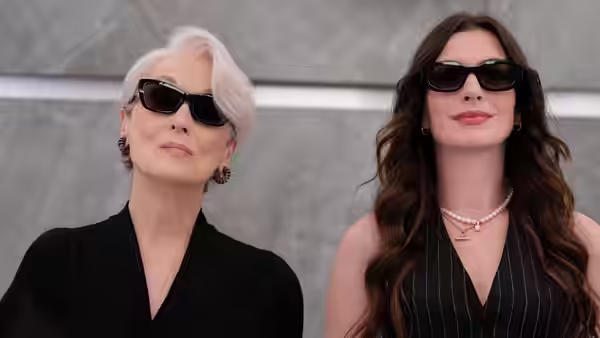
The cast is the reason to go, and the cast knows it. Streep plays Miranda as before, barely moving, saying less than anyone at the table and being heard by all of them, and she can still make a pause in a meeting feel like a sacking. Emily Blunt’s Emily Charlton gets the sharpest lines and delivers them as if each one has been rationed. Stanley Tucci’s Nigel returns as Andy’s ally and quietly walks off with every scene he is in. Hathaway holds the middle, which is the thankless job, and does it with the same open-faced decency that made Andy worth following the first time.

We laughed, properly and more than once, mostly at Blunt and Tucci and mostly in the first hour. Then, somewhere past the midpoint, we noticed we were waiting for the next line rather than caring what happened, and that nobody on screen seemed in any danger of losing anything they minded about. The first film ran on a real question: what Andy would give up to be good at a job she despised. This one does not ask her for much.

McKenna’s script has the right subject and the wrong method. The money leaving magazines, the machines that write copy, the sponsors who now have a say in what gets published: all of it is here, and nearly all of it arrives as someone explaining it across a desk. Andy is told what is at stake, we are told with her, and then the film cuts to a frock. A film about luxury that has plainly been paid for by luxury has a problem, and this one never solves it; the satire stops exactly where the sponsors would start to mind.

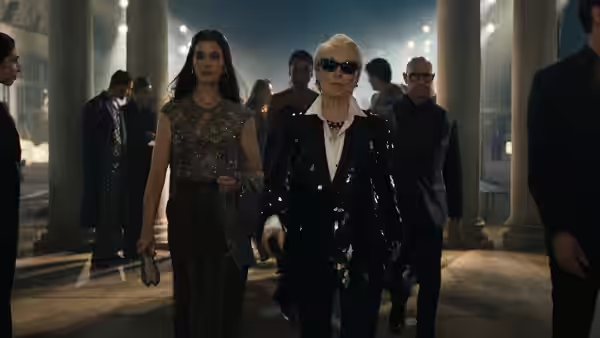
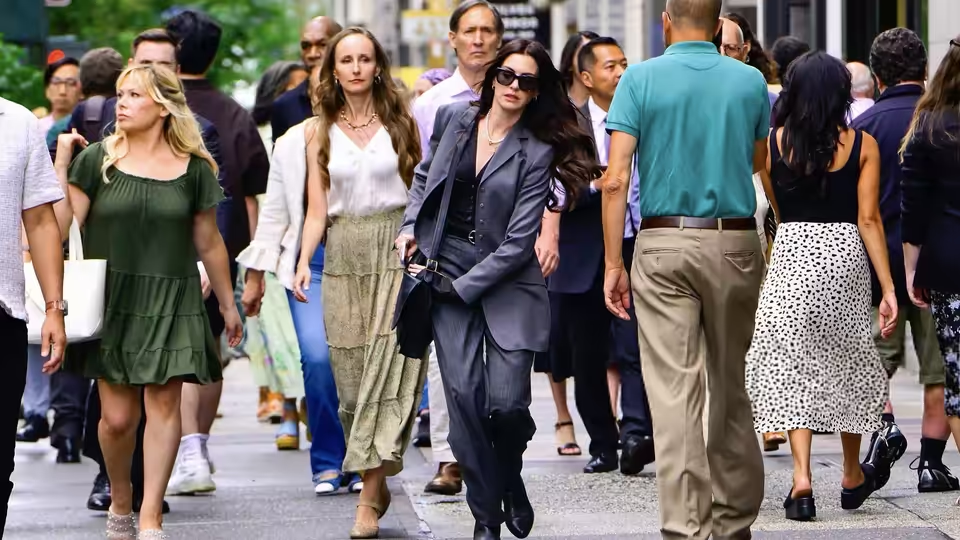
Florian Ballhaus, who shot the original, lights this one bright and clean, so that every room looks like a shop window and every face looks rested. Jess Gonchor’s production design keeps the magazine’s world expensive and a little too quiet, so the decline is visible in the rooms before anyone states it. Molly Rogers’s costumes are the best writing in the film: who has money, who is pretending and who has stopped caring is clear from the clothes long before the dialogue gets round to it. Theodore Shapiro’s score is brisk and cheerful and never once suggests anything might go wrong. Andrew Marcus cuts it to 119 minutes and keeps it moving, which is a kindness, since the story has perhaps ninety in it.

The newcomers are short-changed. Kenneth Branagh, Justin Theroux, Lucy Liu and Simone Ashley all arrive with a name and a purpose and are given rather less to do than their billing suggests. Miranda herself, the one character who ought to be unbreakable, is pushed by the plot into corners the first film would never have let her near, and Streep plays each of them with such conviction that you only notice afterwards how little sense they made. The final stretch softens into sentiment we will not describe.

The 2006 film was a comedy with a cruel streak, and the cruelty was the point: it knew what this world costs. The sequel likes everyone too much to send the bill. Go with someone who loved the first one, and go for the cast. Do not go expecting to learn anything about the state of magazines that you could not learn from the state of magazines.
Critical consensus AI synthesised

67
Positive
5
Mixed
3
Negative
1

Most critics find the sequel a pleasant evening rather than a necessary one, and the reviews cluster closely around that view. The praise goes almost entirely to the returning cast: Streep, Hathaway, Blunt and Tucci are picked out again and again, with several reviews noting how easily the four fall back into step, and the costumes get their due. The reservations are about the script. Critics agree it updates the story to a media world of collapsing print and online scandal, but most think it does so timidly, leaning on callbacks to the original, softening into sentiment at the close and never generating much friction between Andy and Miranda. The Ringer goes further and argues the satire is undone by the film’s own sponsorship deals. The spread is narrow, with one clear dissent: Deadline finds the story too flimsy to engage with either fashion or romance, though even there Tucci is singled out for stealing his scenes.

Empire
29 April 2026 · Beth Webb
75*

The sequel updates the story for today's journalism landscape with returning director David Frankel and gives the core cast fresh material to work with. Streep and company remain magnetic, though the drama lacks sufficient friction or stakes.

Read the full review →
The Guardian
29 April 2026 · Peter Bradshaw
75*

The critic finds the sequel a sprightly, amiable and good-natured entertainment that reunites the original team and recycles the plot with style while updating the fashion and media world. They single out the pleasure of seeing the old cast back and the buoyant tone as the main strengths.

Read the full review →
The Hollywood Reporter
29 April 2026 · David Rooney
70*

The critic finds the sequel delivers the expected glamour, bitchy one-liners, and strong turns from Streep, Hathaway, Blunt and Tucci, while updating the story with media-industry satire. It ultimately settles into cozy sentimentality and sends mixed signals about luxury and wealth.

Read the full review →
Sight and Sound
29 April 2026
60*

The sequel is a bold but uneven mix of nostalgic callbacks and meditations on the decline of print media amid AI threats and online scandals. Strong performances from Streep, Hathaway and Blunt stand out, but excessive references to the original and an inability to balance its themes with a feel-good ending limit its impact.

Read the full review →
The New York Times
30 April 2026 · Manohla Dargis

The sequel is a sleek diversion with brittle and sharp laughs, truckloads of couture threads and lashings of light drama. It turns on a series of crises that set the stage for a larger, existential catastrophe while Andy and Miranda square off again.

Read the full review →
Collider
29 April 2026 · 8/10 · Taylor Gates
80

The sequel succeeds as a legacy entry by updating the story for contemporary media and fashion industry challenges while delivering enjoyable nostalgia. The returning cast, particularly Streep, Hathaway, and Blunt, along with strong new additions, elevates the film.

Read the full review →

Cast

Stills

If you liked this, try…

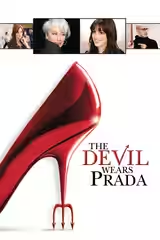
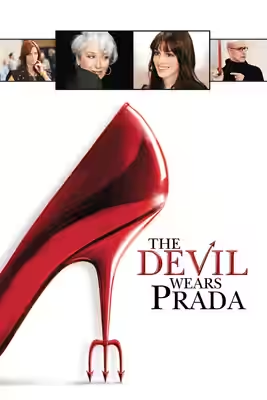
The Devil Wears Prada poster

The Devil Wears Prada

2006 · The original, with the edge this one has sanded off; Streep’s pause still frightens.

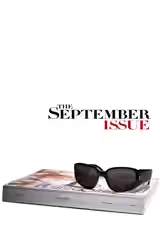
The September Issue poster

The September Issue

2009 · The real Vogue, the real deadlines, and an editor who does not need a script.

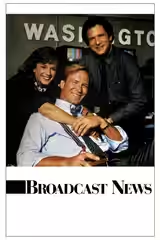
Broadcast News poster

Broadcast News

1987 · Journalism in decline, played as comedy, and it actually hurts when it should.

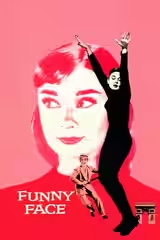
Funny Face poster

Funny Face

1957 · Fashion magazine, reluctant recruit, Paris; the frocks do the arguing here too.

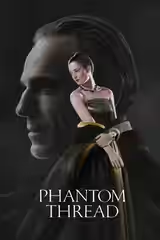
Phantom Thread poster

Phantom Thread

2017 · Clothes as power, a monster at the top of the house, no jokes at all.