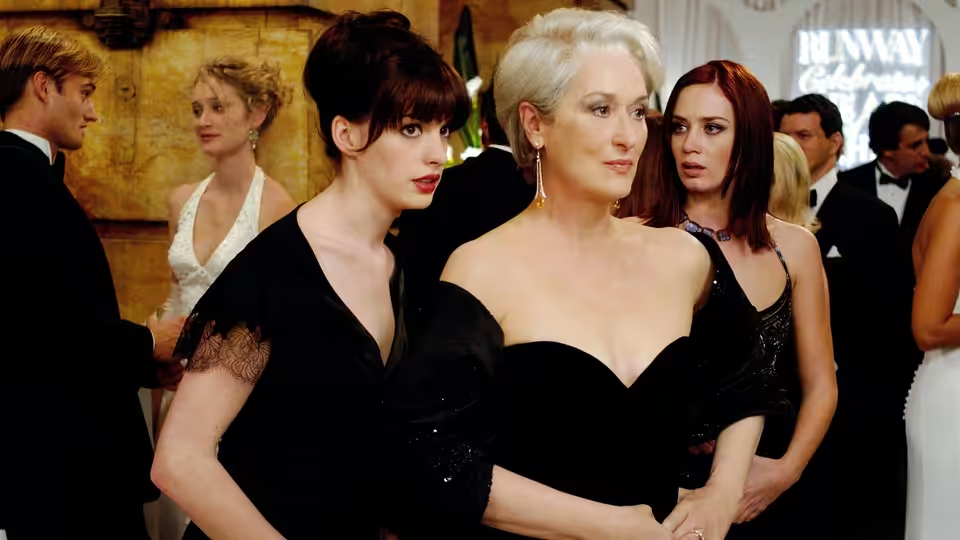
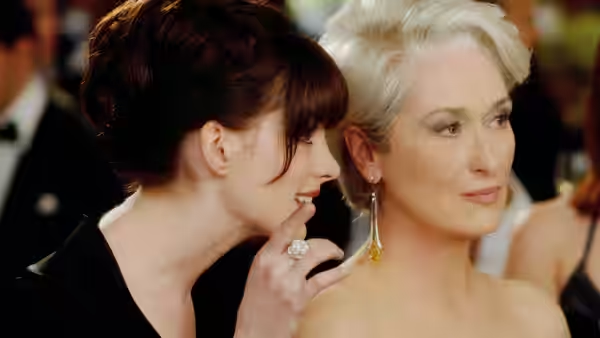
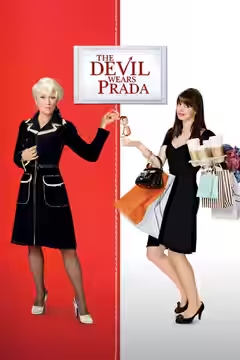
Meryl Streep’s Miranda Priestly, delivered almost entirely in a murmur, is a screen monster we could have watched for twice the length, and Emily Blunt steals whatever she is left. The film around them is tidy, formulaic and never quite sure whether it disapproves of the clothes.
David Frankel’s film, from Lauren Weisberger’s novel and a screenplay by Aline Brosh McKenna, is an old story in new shoes. A nice girl takes a job in a cruel and glittering place, finds she is good at it, and has to decide how much of herself to leave at the door. The film knows exactly what it is and runs it in 109 minutes without a wasted scene. What makes it worth an evening is not the moral, which is thin, but the two women on either side of it, who are not.
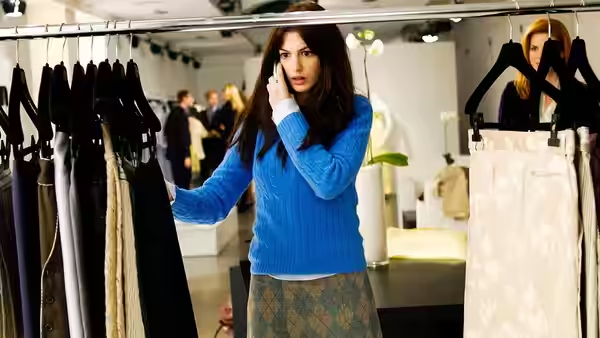
Meryl Streep plays Miranda Priestly against every expectation the title sets up. She does not shout. She barely lifts her voice above a conversational murmur, dismisses people with two words, and lets a long silence do the work a lesser performance would hand to a tantrum. The scene that announced the film to us comes early: Andy snorts at two near-identical belts, and Miranda, without a flicker of temper, explains that the lumpy blue jumper Andy is so proud of not caring about was chosen for her, years earlier, by the people in this room. We sat up. It is the one moment where the film’s case that fashion matters actually gets made, and Streep makes it with contempt so quiet it sounds like patience.
Emily Blunt, as the first assistant Emily, is the film’s second engine. She is hungry in every sense, living on nothing until the Paris trip she treats as a pilgrimage, and she looks at Andy the way a cat looks at a vacuum cleaner. We laughed harder at her than at anything else in the film, mostly at the sniff. Stanley Tucci’s Nigel is kind in a place that does not reward kindness, and he gets the one speech about what the job costs and why people pay it, delivered with the weariness of a man who has given it before.
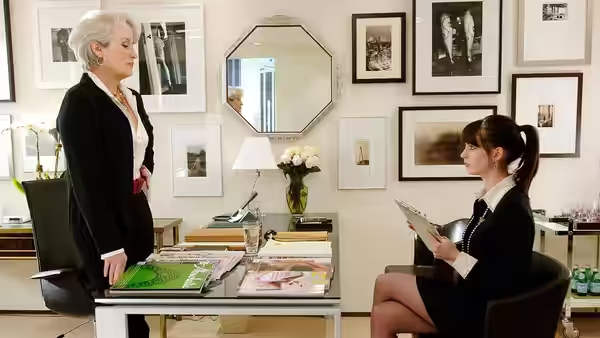
Florian Ballhaus shoots New York in a hard, clean morning light, all glass and taxi yellow, and Jess Gonchor’s Runway offices are white corridors and white desks that make Andy’s first outfit look like a stain. Patricia Field and Molly Rogers dress the cast so that the clothes do half the storytelling: Blunt’s Emily in armour, Streep in silver and fur, Hathaway going from frumpy to fabulous over a single walk to work that Mark Livolsi cuts as a sequence of doorways, a new outfit through each. Theodore Shapiro’s score is light and quick and stays out of the way. The pop songs laid over the montages are louder and have aged less well.
The trouble is everything outside the office. Anne Hathaway is good at being flustered and less good at being tempted, which is a problem, because the film needs us to believe Andy is falling for this world and she mostly looks like a nice girl in borrowed clothes. Adrian Grenier’s Nate, the boyfriend who makes grilled cheese and sulks about missed birthdays, is the dullest person in the film, and the script keeps asking us to prefer him. Tracie Thoms and Rich Sommer, as the friends Lily and Doug, are there to disapprove. Simon Baker’s Christian Thompson arrives as a temptation of a different kind and is about as tempting as a hotel bar. Every scene in the flat we were waiting to get back to work, which may be the film’s point about Andy but is certainly not its point about us.
Which leaves the moral. The film says this world hollows out the people in it, then photographs the handbags with real love, and it never settles the two. The boss-from-hell comedy usually gives us a monster who is also a fool, and McKenna’s best idea is a monster who is right more often than not. The film does not quite know what to do with that idea, but it is a better one than most of the genre bothers with.
See it for Streep and Blunt, who between them account for every scene we would watch again. It carries a PG and barely needs it. It warns you off the job and sends you out wanting the coat, which is roughly where most of us end up.