Anselmo Duarte’s film keeps one stubborn farmer on the steps of a church for 98 minutes and watches a city gather round him. It is plainly staged and blunt about its villains, and Leonardo Villar’s patience holds it together. Worth your evening.
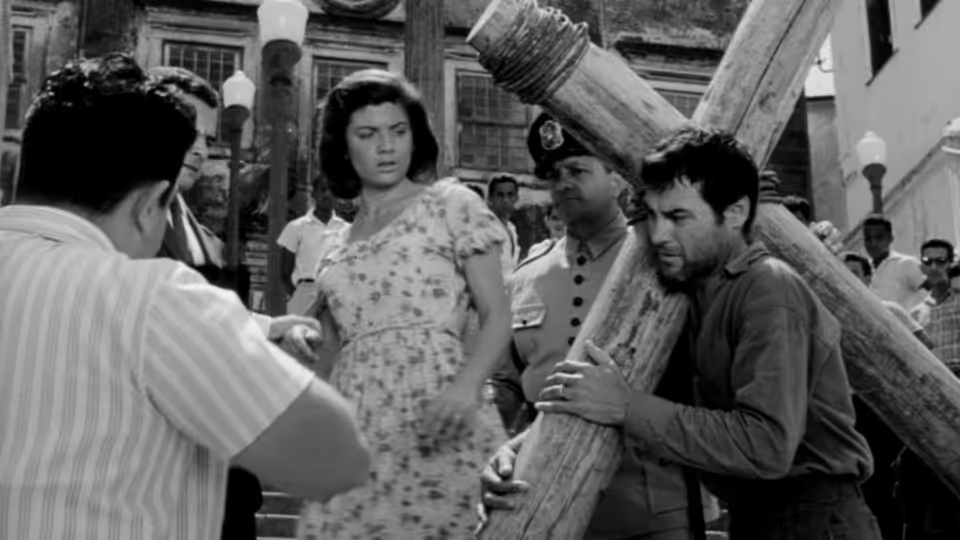
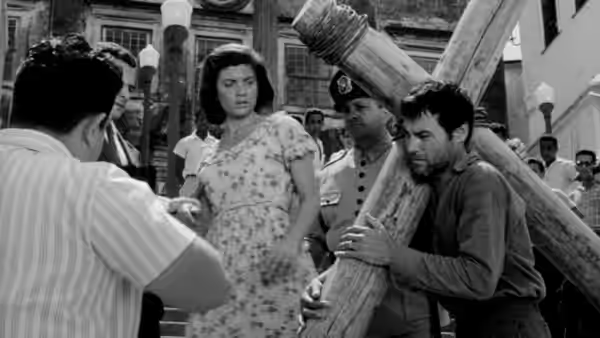
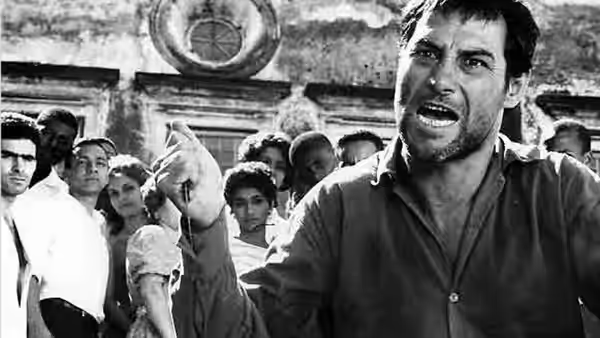
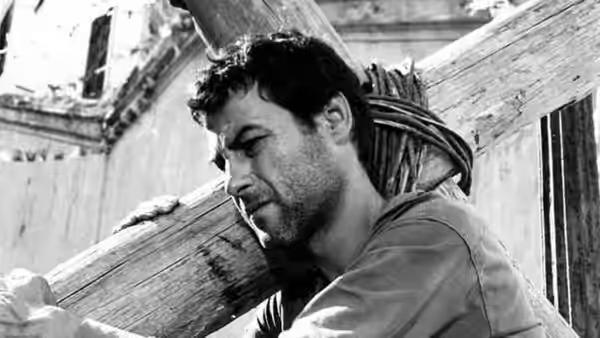
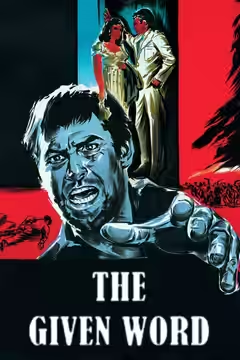
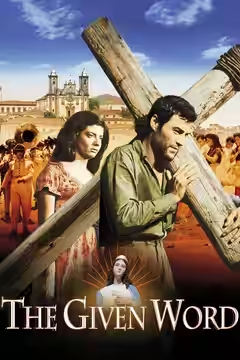
Zé do Burro (Leonardo Villar) has walked seven leagues from his patch of land in the Bahian interior to the city of Salvador, with a wooden cross the size of a door on his shoulder. He made a promise: if his donkey recovered, he would carry the cross to the church of Saint Barbara and give his land to the poor. The donkey recovered. He has kept both halves of the bargain, and when he reaches the church steps, Padre Olavo (Dionísio Azevedo) will not let him in, because the promise was made in a Candomblé terreiro and the saint he prayed to was really Iansã. Anselmo Duarte’s film, written with Dias Gomes from Gomes’s own play, then keeps Zé on those steps for the rest of its 98 minutes. It is a good film, clumsy in places, and worth seeing.
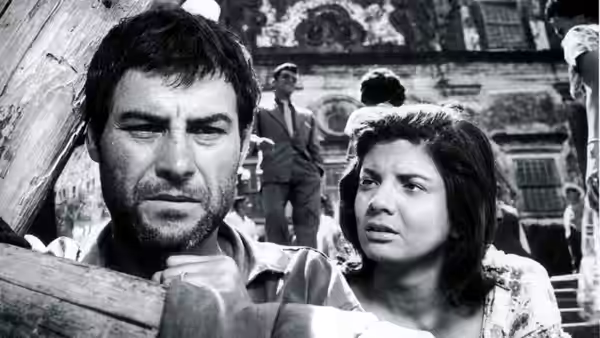
What Duarte is after is a parable in a single square. Word gets round that a peasant is camped at the church door with a cross, and the city comes to have a look. Bonitão (Geraldo del Rey), a pimp with a good jacket, sees Rosa (Glória Menezes) and sees an opportunity. A reporter (Othon Bastos) sees a headline. Mestre Coca (Antônio Pitanga) brings his capoeira circle. Marly (Norma Bengell), who works for Bonitão, watches from a window. A police inspector (Enoch Torres) arrives to find out who is causing the trouble. Each of them wants Zé to stand for something, and Zé wants to get his cross through a door.
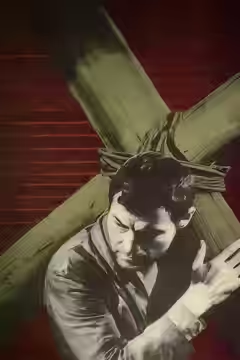
Villar is the reason it works. He plays Zé as a man who does not know he is being stubborn, because to him there is nothing to decide: he said he would do a thing, so he is doing it. He barely raises his voice. He explains the promise to the priest, to the reporter, to the crowd, in the same flat words each time, and the words never change while everyone around him changes what they think they mean. When he finally sits down on the step and lays the cross across his knees, we were moved more than we expected to be by a man sitting down. Azevedo, opposite him, does not play a villain. Padre Olavo is frightened, of the bishop, of the drums he can hear from the terreiro, of a faith he cannot control, and Azevedo lets the fear show through the rules.
H.E. Fowle shoots it in hard black and white, mostly in full sun, so the square is white stone and black shadow and the church door sits pale and shut at the top of the frame in shot after shot. The crowd scenes are held in deep focus, with the cross visible somewhere in nearly every one, and Carlos Coimbra cuts them fast and cuts the steps slow, so that the city hurries and Zé does not. Gabriel Migliori’s score is at its best when it is not a score at all: the atabaque drums start off screen and get closer, and the capoeira sequence, with Pitanga’s men circling on the flagstones to the berimbau, is the most alive stretch in the film.
The weaknesses are the play’s. People walk into the square on cue and announce their position, and the reporter and the political fixers who follow him are written as cartoons, greedy in a way that needs no explaining because the film has already decided it. Bastos is enjoyable, but the newspaper subplot is where we grew impatient, roughly the middle third, waiting for the film to get back to the steps. Bonitão’s designs on Rosa are handled with the delicacy of a nudge in the ribs. The Radio Times has it right that this is closer to melodrama than to the rougher Brazilian cinema that was about to arrive.
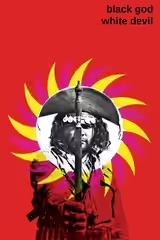
That is worth saying, because two years later Glauber Rocha’s Black God, White Devil (1964) would take the same country, the same faith and the same poverty and make something far stranger with them. Duarte is more conventional and more legible, and that is a large part of why his film travelled and Rocha’s took longer. Both approaches have a case. This one has a clear story, a clear man at the centre of it and a clear door he cannot pass through.
The second half takes a turn we will not describe, though anyone who has watched the sky over the church darken will have a fair idea. See it for Villar, for the drums, and for the way the square fills. Do not expect it to be fair to journalists.