Glauber Rocha’s film about a Bahian cowherd who kills his boss and follows first a prophet and then a bandit is fierce, strange and often thrilling to look at. It is also loud for two hours, and louder in the second.
Manoel (Geraldo del Rey) counts a landowner’s cattle across the dry scrub of Bahia, and when the Colonel (Antônio Pinto) rules that the four cows that died on the drive are Manoel’s share of the herd, then hits him for objecting, Manoel kills him with a machete. That is the first ten minutes. Glauber Rocha’s film, written with Paulo Gil Soares and Walter Lima Jr., sends Manoel and his wife Rosa (Yoná Magalhães) running, first to a preacher and then to a bandit, and does not let them or us sit down for two hours. It is fierce, odd and often thrilling to look at. It is also loud, and it gets louder.
Waldemar Lima shoots the sertão at noon, the sky burned to white and the thorn bushes gone black, so that people stand in a country with no shade and squint. There is a cow’s skull in the first shot and a dead cow in the second. When Manoel kills the Colonel the camera is handheld and swings round the two men so fast that for a moment we could not tell who had struck whom. Manoel does not decide to kill; it happens. Rafael Justo Valverde cuts against the grain throughout, repeating a movement, jumping ahead a beat, holding a wide shot after the people have left it.
The sound is stranger. Sérgio Ricardo’s ballads, sung on the soundtrack by a voice we never see, tell us what Manoel and Rosa are about to do before they do it, in the manner of the region’s street ballads, and then Villa-Lobos and Bach come in over the wide shots. The first time we saw the pilgrims climb Monte Santo, hundreds of them in white against that white sky, with Lima in among them and the chanting laid over the strings, we felt dizzy and a little frightened, and we could not tell whether the film wanted us to join in or to run.
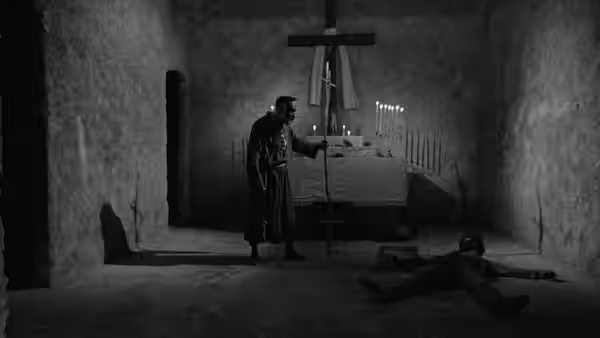
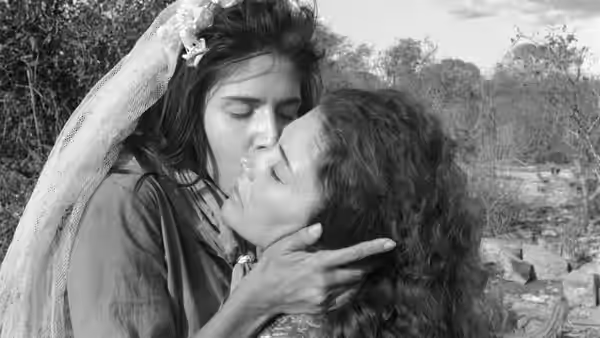
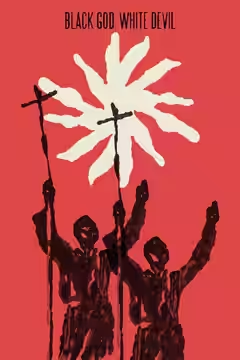
The preacher is Sebastião (Lídio Silva), the black God of the title, who stands on the hill in a black robe with a staff and tells the starving that the sertão will become sea and the sea sertão. Silva plays him without a flicker of doubt. Rosa is the only person who doubts him, and Magalhães gives the best performance in the film: she watches her husband kneel and kiss the hem of a stranger’s robe, and her face does the arguing the script leaves to the men. Below the hill a priest (João Gama) and the landowners hire Antônio das Mortes (Maurício do Valle), a killer of bandits and holy men, to deal with the sect. What he does we will leave to the film.
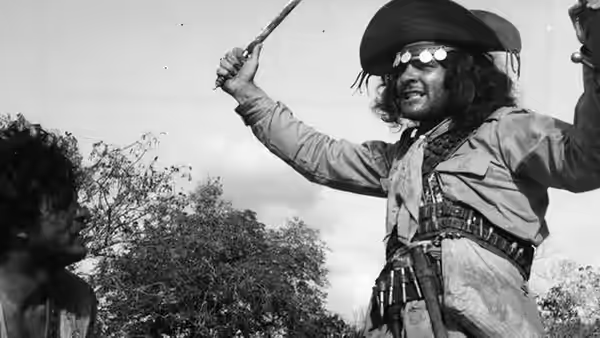
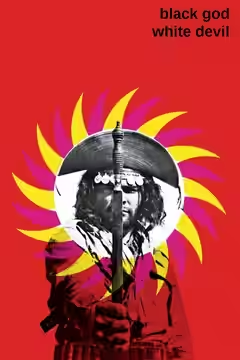
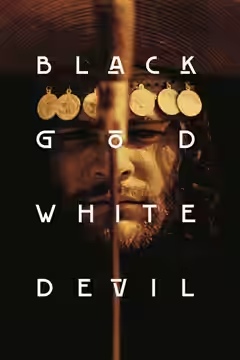
The second half belongs to Corisco (Othon Bastos), the white devil: blond, in leather, a hat sewn with stars and coins, calling himself the last of Lampião’s band. Soares’s costumes do a lot of work here; you can tell what a man believes from his hat. Bastos plays Corisco straight to the camera at a shout, in speeches about justice and the gun, and for twenty minutes it is exciting. Then it goes on, and we found ourselves checking how long was left. Manoel’s grievance against one man has become a set of positions declaimed at the audience, and Sonia dos Humildes’s Dadá, Corisco’s companion, is handed a knife and little else.
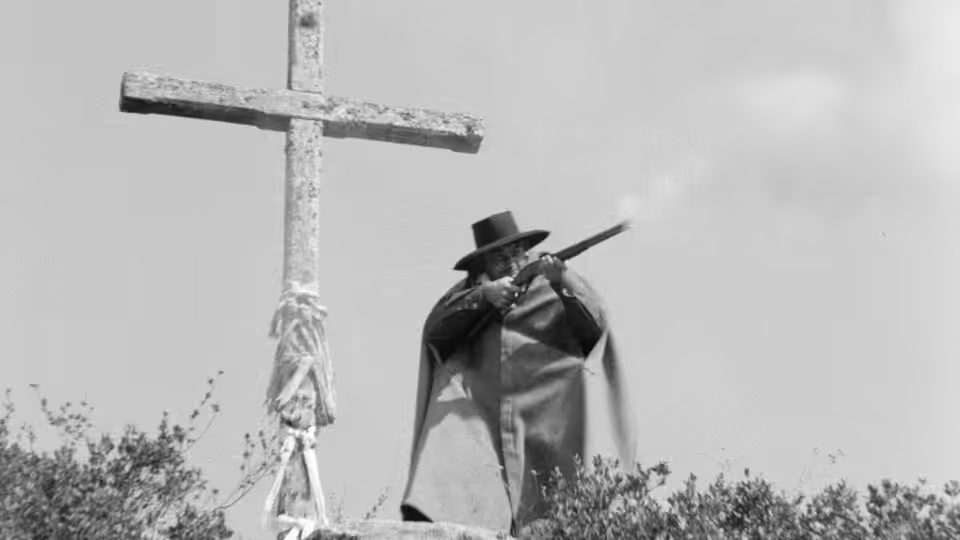
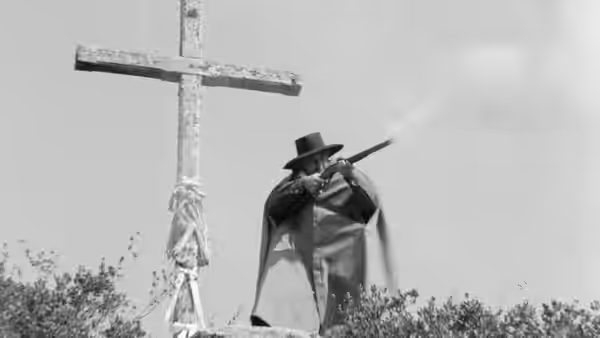
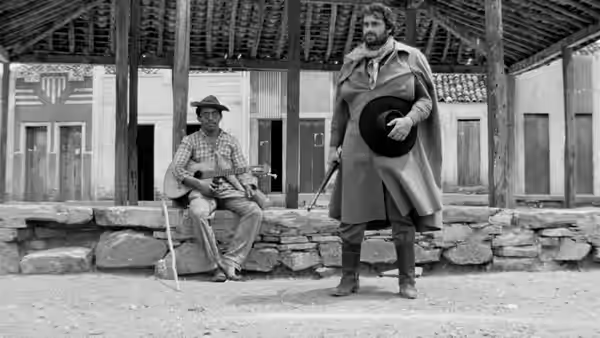
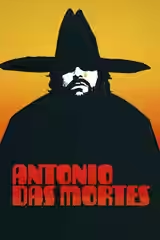
Rocha was arguing about Brazil, its landlords, its Church and its poor, and about what the poor are offered instead of land: a prophet or a bandit. The film has been claimed as the centre of Cinema Novo, and we can see why; nobody had put the north-east on screen with this much anger. It also takes the shape of a Western, a hired gun crossing flat country after a fugitive, and then refuses the Western’s rewards. Do Valle’s Antônio das Mortes, in a long coat and wide hat, is the only man in the film who speaks quietly, and he is the one Rocha brought back for a film of his own five years later.
Watch it in one sitting, in a dark room, with the sound up. In daylight, on a sofa, with tea, the second half becomes a lecture with singing, and the first half is too good to have that done to it.