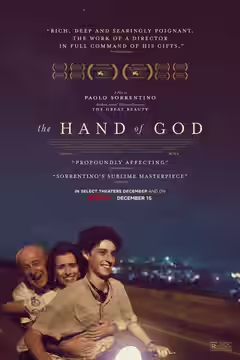
Paolo Sorrentino’s coming-of-age drama is warm, funny and worth an evening for its family alone. Its later passages drift, and the women deserve more attention than the boy’s sexual curiosity allows.
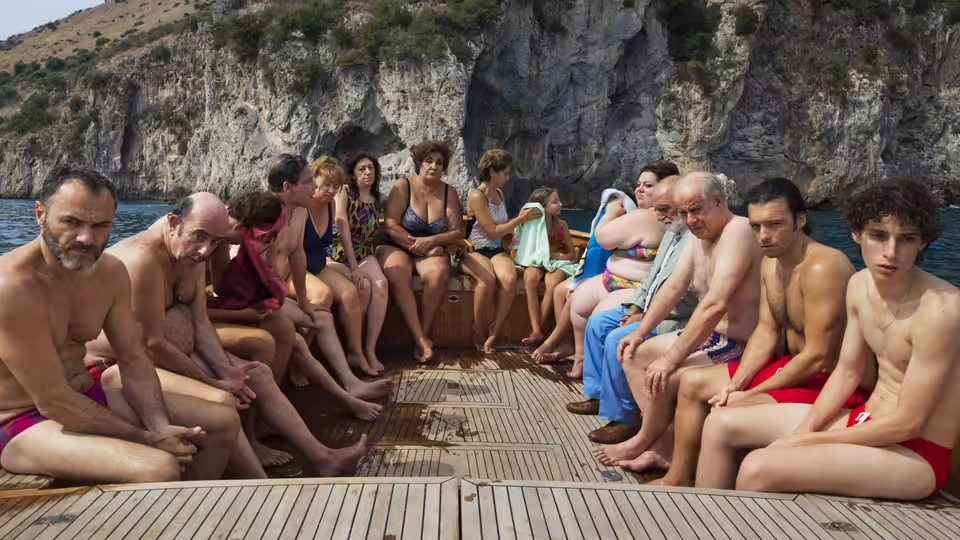
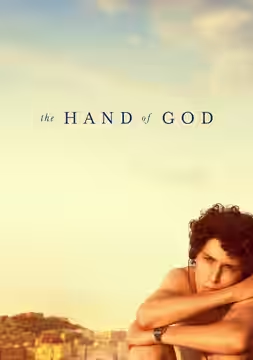
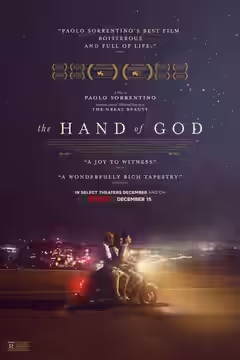
Paolo Sorrentino’s The Hand of God is worth seeing for the company it keeps, especially when the family gathers and the boy at its centre has little to say. This partly fictionalised memoir follows Fabietto Schisa through adolescence in 1980s Naples, with football, sexual curiosity and cinema competing for his attention. It is funny and affecting, although its later episodes do not justify all of their time. The family gives the film enough warmth to survive some increasingly aimless passages.
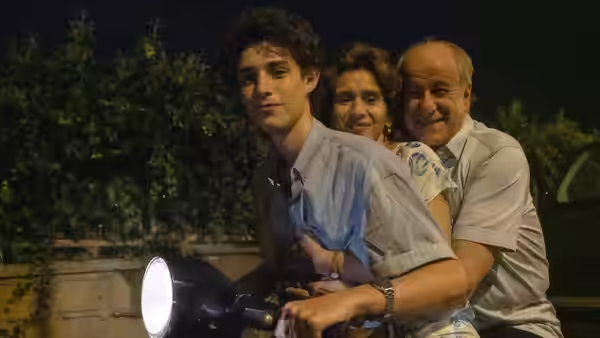
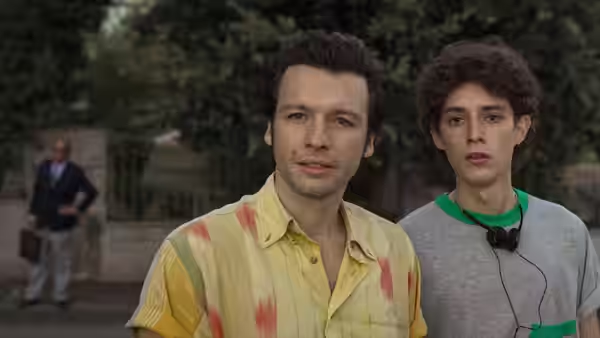
Filippo Scotti gives Fabietto Schisa a watchfulness that suits a boy still working out what the adults around him mean. His relative quiet allows the family to be funny without turning every exchange into a competition between performances. There is a limit to this approach: we sometimes need a stronger sense of what he wants. For much of the film, though, watching him take an interest in other people is absorbing enough.
Toni Servillo and Teresa Saponangelo, as Saverio Schisa and Maria Schisa, supply the comic ease that makes the household convincing. They make affection credible even when the relatives are being difficult. We laughed at the crowded family lunch, then found ourselves reluctant to leave it. The actors’ timing makes the gathering pleasurable; its untidy mixture of warmth and embarrassment makes it familiar.
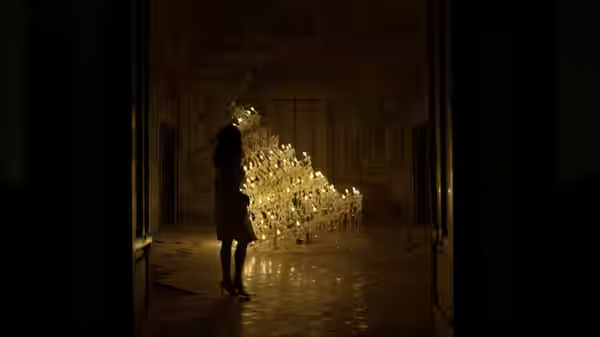
Daria D’Antonio’s cinematography makes sunlit Naples feel like a place someone would keep returning to in memory. The views have a sensual pleasure of their own, without making the people seem incidental. Carmine Guarino’s production design is effective because the family seems at home in it. The crowded lunch is the useful test: we notice how people occupy the space before we notice the space itself. The 1980s setting never has to become a display of period possessions.
The difficulty is that the women do not always receive such patient attention. Patrizia, played by Luisa Ranieri, is too often presented through the boy’s sexual curiosity, and the film does too little to question that view. Remembering adolescence does not oblige a director to keep seeing everyone as he did then. Teresa Saponangelo’s performance suggests how much richer the film can be when a woman is allowed to be funny, troublesome and ordinary.
Cristiano Travaglioli’s editing is at its most assured in the family passages, where a succession of personalities gives the film momentum. Later, the episodes feel less closely connected, and people who seemed important are left with too little to do. Lele Marchitelli’s music is sympathetic to the film’s tenderness, but cannot supply the continuity that these stretches need. At 130 minutes, there is room to develop these people further, and the decision to let some of them recede feels wasteful.
Coming-of-age films can be too quick to make every encounter a lesson for their young hero. Here, the relatives are often interesting enough to make us forget that someone is meant to be learning from them. That is when Paolo Sorrentino’s affection is most convincing, and when his film least needs to explain itself. Choose it for an evening when a difficult family sounds like good company and a tightly plotted story can wait.