Todd Phillips skips the stag night and shows the morning after, which is the better idea. Fast, well built and frequently funny, with Zach Galifianakis stealing it from his co-leads; also lazy with its women and lazier with Mr. Chow.
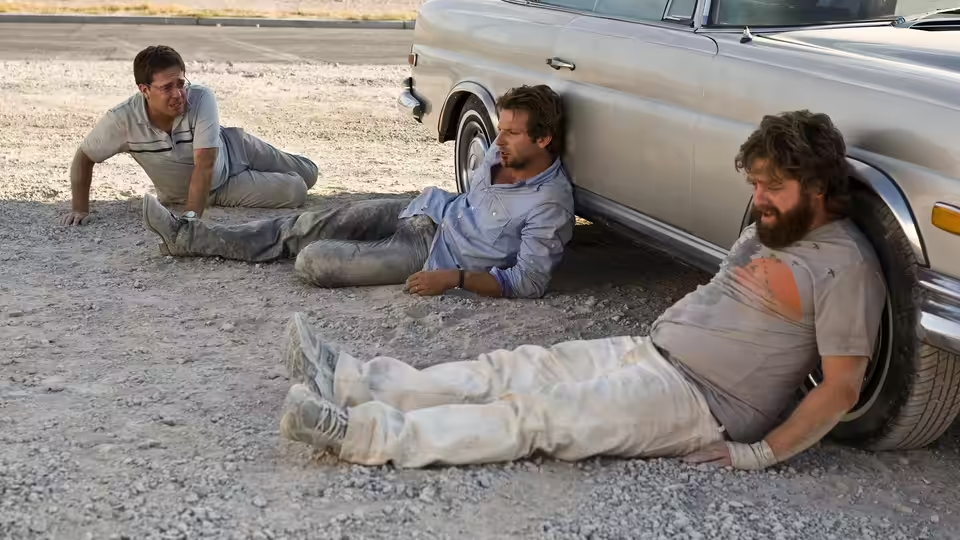
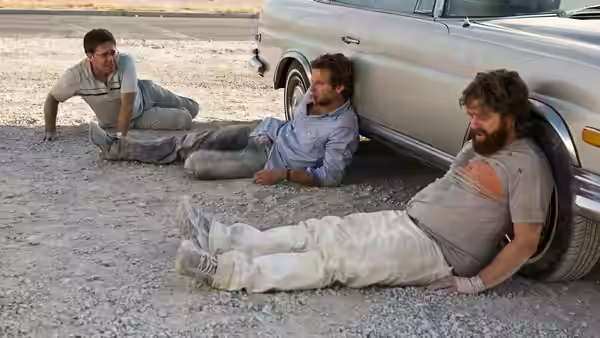
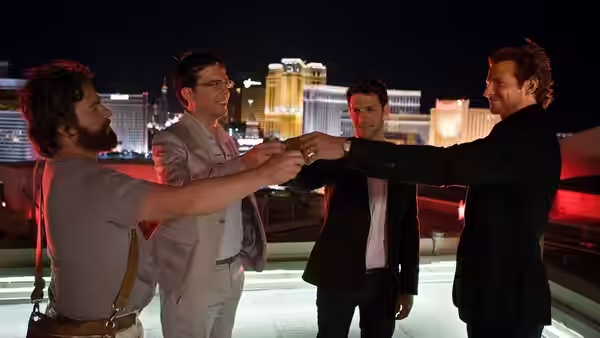
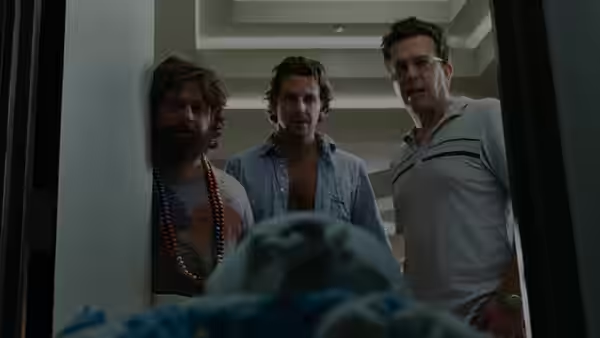
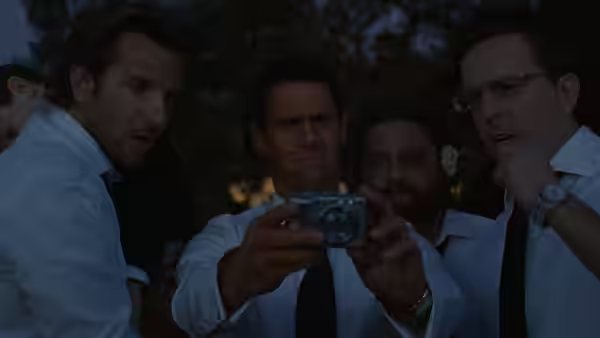
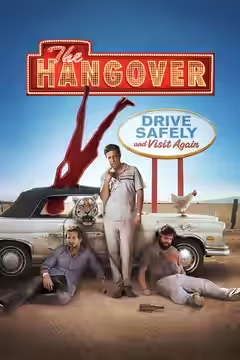
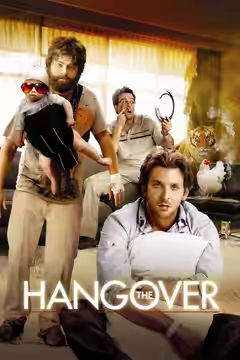
Todd Phillips has found the one structural idea a stag-night comedy needed, which is to cut the stag night out. The Hangover opens with the drive to Las Vegas, a toast on a hotel roof, and then a hard cut to the morning, when three men wake up in a wrecked suite with a tiger, a chicken, a baby and no groom. The rest of the film is the search, and Jon Lucas and Scott Moore’s script turns it into a detective story in which every clue points to something the men did and cannot remember. It is a good idea, cleanly carried out, and the result is fast, frequently funny and worth your evening if the genre is yours. It is also careless with its women and lazy about its one Chinese character, and we will come to that.
Lawrence Sher shoots the morning after in the flat white light of a desert noon, so that the men squint through most of the film and the Strip looks like what it is, a car park with fountains. Bill Brzeski’s suite is the best joke in the design: a wide villa of marble and cream leather, trashed with a thoroughness that makes the tiger seem reasonable. Louise Mingenbach puts Alan in a shirt one size too small and a leather satchel he insists is the sort Indiana Jones wears. The costume does half the character before he speaks.
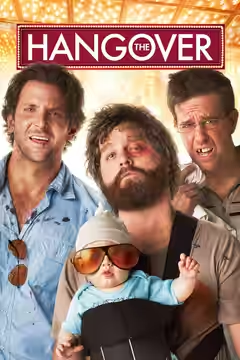
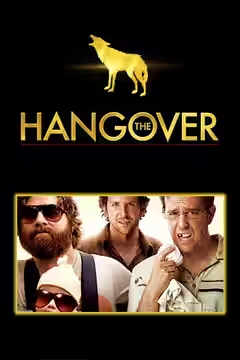
Zach Galifianakis is the reason people talk about this film, and they are right. Alan Garner is the bride’s brother, a bearded man who is not allowed within a certain distance of schools, and Galifianakis plays him without a wink. When he announces on the roof that he is a one-man wolf pack, he means it. We laughed harder at him than at anything else on screen, and we laughed most when he was saying the least. It is a performance built out of pauses and the wrong facial expression.
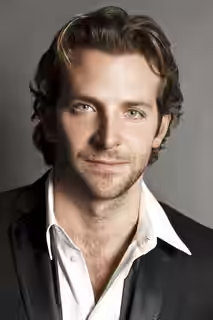
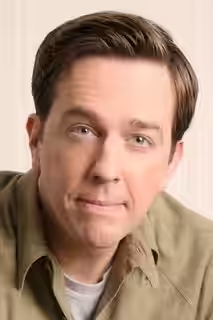
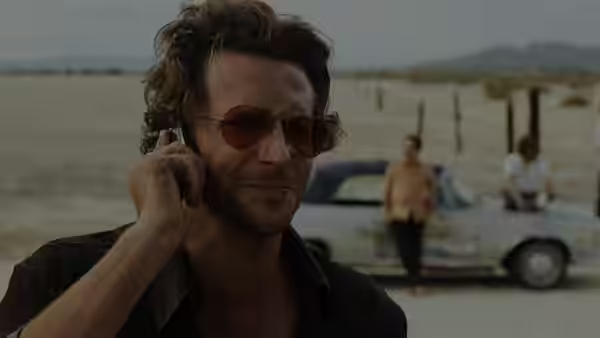
Bradley Cooper’s Phil is the handsome one, a schoolteacher who treats the weekend as a right rather than a treat. Cooper plays him with a grin that never becomes a smile, and he is better than the part. Ed Helms has the harder job and does it well. Stu is a dentist who has lied to his girlfriend about where he is, and Helms plays every discovery, the missing tooth first among them, as a man watching his own life happen from a short distance. His panic is the film’s engine.
Then there are the women. Rachael Harris’s Melissa is the nagging girlfriend drawn in a single stroke, a woman who exists to be escaped from. Heather Graham’s Jade is a stripper with a baby and a heart of gold, and the script gives her nothing a poster could not. Sasha Barrese, as the bride, waits by a phone. Ken Jeong’s Mr. Chow is a different problem. Jeong is quick and completely fearless, and the character he has been handed is a shrieking gangster whose accent is the joke. We laughed, then felt slightly ashamed of ourselves, and the film, unlike Jeong, does not seem to have noticed there was anything to be ashamed of.
Phillips made Road Trip and Old School, and this is tighter than either. Debra Neil-Fisher cuts it to 100 minutes and the search never stalls; each clue leads to the next room, the next car, the next person with a grievance, and the film is over before the formula shows. Christophe Beck’s score stays out of the way of the songs, which is the right call. The plotting is a checklist rather than a story, and by the last third we could feel the boxes being ticked, but they are ticked quickly.
Watch it with people who will shout at the tiger. Alone on a sofa, sober, you will notice how much of it is men being loud, and how little the film has to say about why they wanted this weekend so badly in the first place. It does not care, and for most of the 100 minutes we did not either.