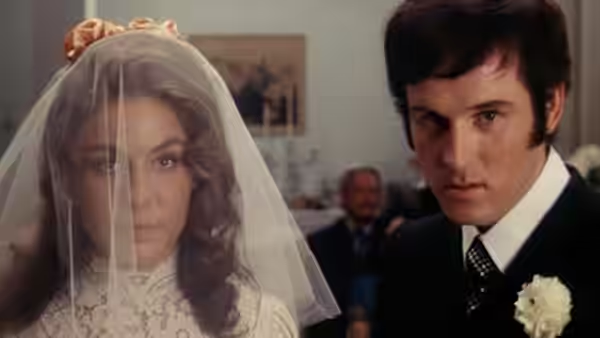
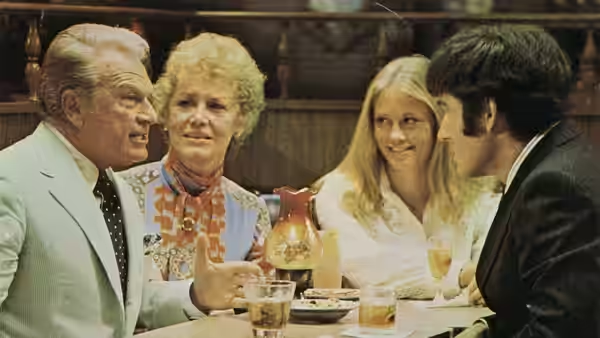
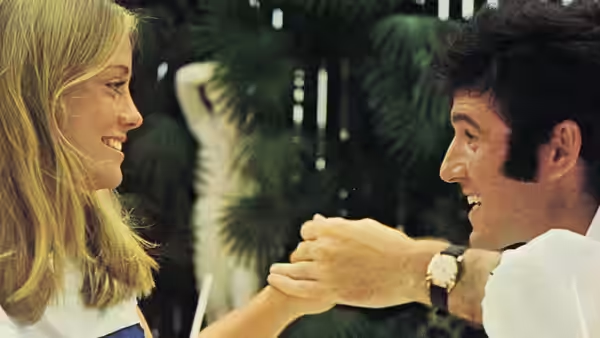
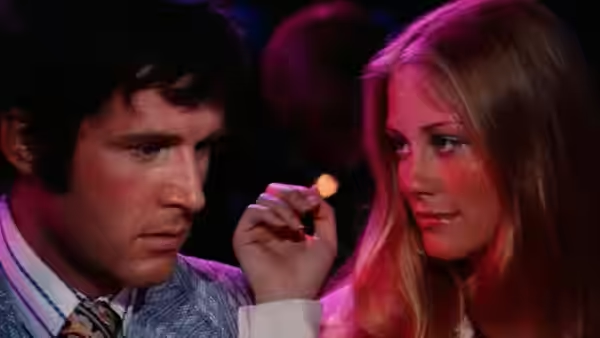
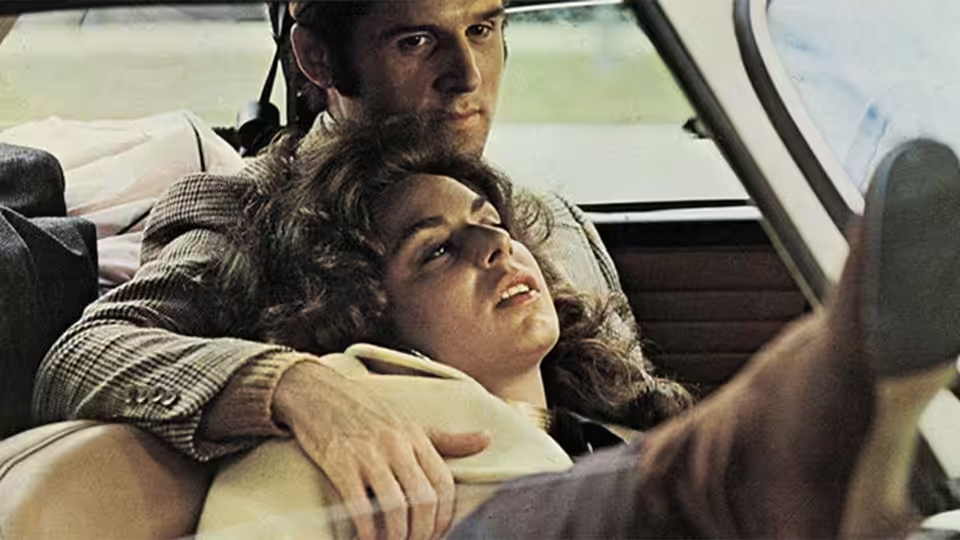
Lenny Cantrow (Charles Grodin) holds Kelly Corcoran (Cybill Shepherd) close in a car
Film review

The Heartbreak Kid

1972 · Directed by Elaine May · 1h 45m

In a sentenceCharles Grodin makes being pleased with yourself look like grounds for divorce

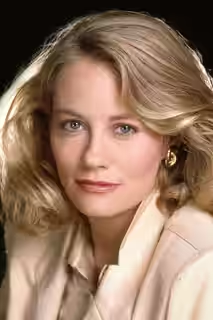
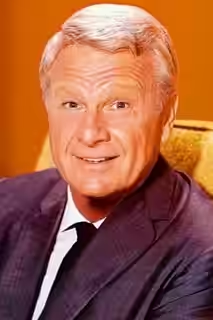
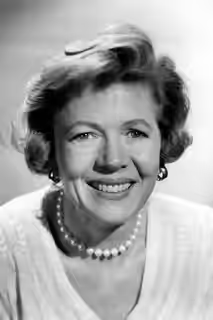
The central characters in this 1972 romantic comedy are Lenny Cantrow (Charles Grodin), Lila Kolodny (Jeannie Berlin) and Kelly Corcoran (Cybill Shepherd). Elaine May directs a screenplay by Neil Simon, with story credit for Bruce Jay Friedman. Eddie Albert plays Duane Corcoran and Audra Lindley plays Mrs. Corcoran, alongside Doris Roberts as Mrs. Cantrow and Jack Hausman as Mr. Kolodny. The film runs 105 minutes, with cinematography by Owen Roizman, editing by John Carter and music by Garry Sherman.

Fi1m review

Elaine May’s romantic comedy finds uncomfortable laughs, with Charles Grodin and Jeannie Berlin doing the hardest work. Its early cruelty proves difficult to sustain, but the performances are worth an evening of embarrassment.

The Heartbreak Kid is a good, sour romantic comedy, worth seeing for Charles Grodin and Jeannie Berlin even when its comic bite begins to soften. Elaine May directs Neil Simon’s screenplay with enough patience to let an unpleasant impression develop before the next laugh arrives. We are allowed to find these people funny without being instructed to find them lovable. That is an awkward bargain for a romantic comedy, and for much of the film it works.

Charles Grodin makes Lenny Cantrow’s self-absorption oddly persuasive, largely because he never seems to question his entitlement to behave this way. There is a steadiness to the performance that makes Lenny’s confidence in his own wishes horribly credible. A more emphatic actor might keep signalling that we should disapprove. Here, the comedy benefits from how long we can keep listening before wanting someone to interrupt him.

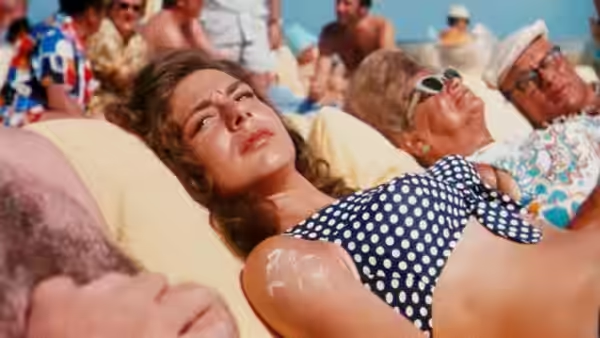
Jeannie Berlin’s Lila Kolodny is where the amusement starts to hurt. We laughed at Charles Grodin’s complacency, then felt ashamed of how easily we had accepted it; her performance makes the hurt on the other side hard to dismiss. She gives Lila an unguarded quality that keeps the comedy from becoming merely a succession of clever lines. Elaine May gives the character enough weight to make our impatience with her feel unpleasantly revealing.

Cybill Shepherd has a harder task as Kelly Corcoran, whose appeal is more clearly established than her individuality. She gives the part a composure that suits the film, but the writing does not make Kelly as interesting as the two other principals. This is a limitation in Neil Simon’s screenplay that the casting cannot entirely solve. There are stretches when we want to understand Kelly better, beyond what Lenny finds appealing about her.

Owen Roizman’s cinematography serves the actors without competing with them, a useful discipline in comedy this dependent on small differences of manner. Its restraint gives us time to study the performances and decide how much sympathy anyone deserves. John Carter’s editing is most effective in the early stretches, where the timing keeps discomfort alive. As that sharpness fades, the film can feel more leisurely than the material warrants.

Garry Sherman’s music contributes to the film’s lightness, though it is the performances that stay with us. That lightness is useful at first, keeping the nastiness from becoming a lecture about bad behaviour. It is less helpful when the comedy needs to press harder and instead seems content to remain amusing. The disappointment matters because the early passages have made us expect closer attention to the damage these people can do.

Against the forgiving habits of romantic comedy, Elaine May’s willingness to let charm become irritating gives the film its distinction. There is no need for every scene to punish somebody, but we miss the early precision once the film relaxes. At 105 minutes, it has enough wit and sufficiently good performances to justify the evening. Keep it for company who can laugh at a selfish man without asking the film to excuse him.
Critical consensus AI synthesised

65
Positive
2
Mixed
3
Negative
0
The New Yorker
8 December 1972 · Pauline Kael
78*

Kael finds the film slight but charming, and praises Elaine May’s distinctive, gently anarchic comic style. She singles out Jeannie Berlin’s vivid performance, while noting that the ending disappoints.

Read the full review →
Variety
31 December 1971 · Variety Staff
70*

The review finds the film bright and amusing, though it faults the abrupt ending for lacking a climax. It praises Elaine May’s deft direction and light-touch characterization.

Read the full review →
RogerEbert.com
65*

The page appears to be RogerEbert.com’s review of the 1972 film, but the review text is inaccessible. Its verdict and any specific praise or criticism cannot be verified.

Read the full review →
Radio Times
★★★ · Tony Sloman
60

Sloman calls it a witty, genuinely disturbing black comedy, though he says its early acid cruelty is not sustained. He particularly praises Charles Grodin’s performance and the casting of Jeannie Berlin as the jilted wife.

Read the full review →
Time Out
· VG
50*

The review presents the marital comedy as restrained in its satirical bite. It singles out the distance from the characters, which keeps the barbs from hitting too close to home.

Read the full review →

Straight answers AI written, from our review

Is The Heartbreak Kid worth watching?
The Heartbreak Kid is worth watching if you enjoy sour romantic comedy and uncomfortable laughs; we score it 78 out of 100. Charles Grodin’s complacency and Jeannie Berlin’s vulnerability make the embarrassment matter, though the early sharpness fades and Cybill Shepherd’s character remains underwritten. We recommend it for company who do not need their romantic leads to be likeable.
How long is The Heartbreak Kid, and what is it rated?
The Heartbreak Kid runs 1h 45m. It is a romance and comedy film.
Where can I watch The Heartbreak Kid in Norway?
The Heartbreak Kid is not on any streaming or rental service in Norway at the moment. Availability is checked daily.
How does The Heartbreak Kid compare to The Apartment?
The Heartbreak Kid is the sourer choice beside The Apartment, which we favour for its more sympathetic treatment of people behaving badly. Elaine May lets Grodin’s self-satisfaction become difficult to stomach, while Billy Wilder gives compromised decency more room. Both lose some pace later on; we recommend The Apartment for romance with sadness, and The Heartbreak Kid for laughs that make us uncomfortable.
What should I watch after The Heartbreak Kid?
After The Heartbreak Kid, try The Apartment (1960, Fi1m 91): Romance and compromised decency share an office, with room for real hurt. Then Force Majeure (2014, Fi1m 84): One man’s self-image becomes a family problem in this patient, uncomfortable comedy.

Cast

Awards

Academy Awards, 1973

Nominated
Best Supporting Actor
Nominated
Best Supporting Actress

If you liked this, try…

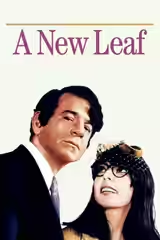
  1. A New Leaf (1971) · not on Fi1m yetAnother dry comedy about selfishness, with affection arriving on decidedly awkward terms.

  2. The Apartment (1960, Fi1m 91)Romance and compromised decency share an office, with room for real hurt.

  3. A Summer's Tale (1996) · not on Fi1m yetA man keeps his romantic options open and makes indecision everybody else’s problem.

  4. Force Majeure (2014, Fi1m 84)One man’s self-image becomes a family problem in this patient, uncomfortable comedy.

  5. The Worst Person in the World (2021) · not on Fi1m yetRomantic dissatisfaction treated with more sympathy, but a comparable interest in self-deception.