Elaine May’s romantic comedy finds uncomfortable laughs, with Charles Grodin and Jeannie Berlin doing the hardest work. Its early cruelty proves difficult to sustain, but the performances are worth an evening of embarrassment.
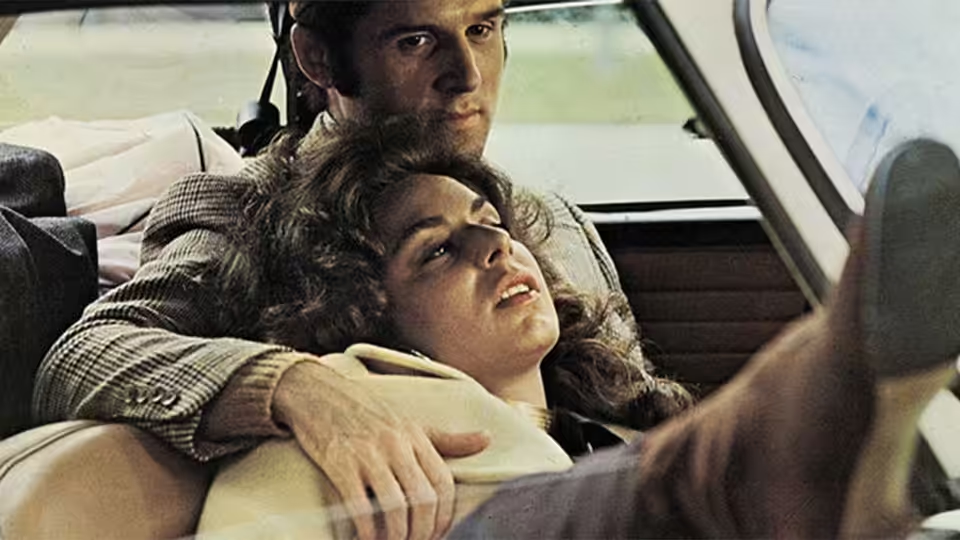
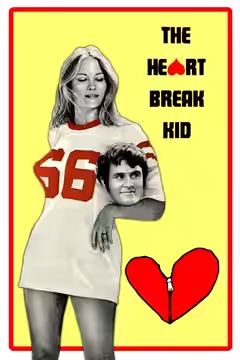
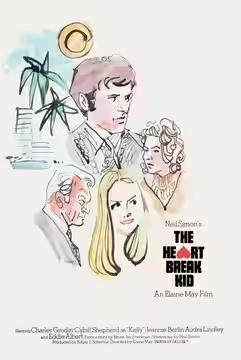
The Heartbreak Kid is a good, sour romantic comedy, worth seeing for Charles Grodin and Jeannie Berlin even when its comic bite begins to soften. Elaine May directs Neil Simon’s screenplay with enough patience to let an unpleasant impression develop before the next laugh arrives. We are allowed to find these people funny without being instructed to find them lovable. That is an awkward bargain for a romantic comedy, and for much of the film it works.
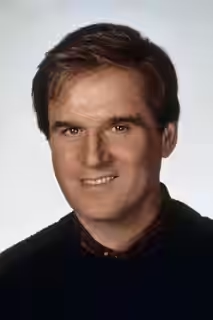
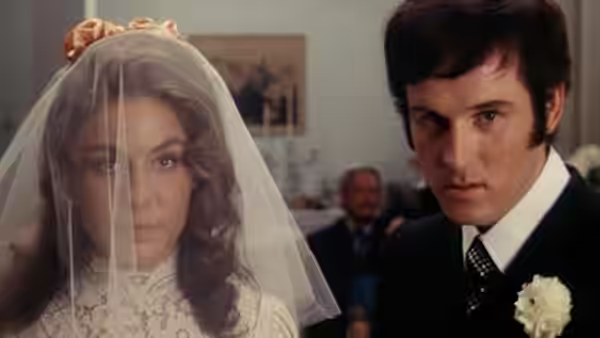
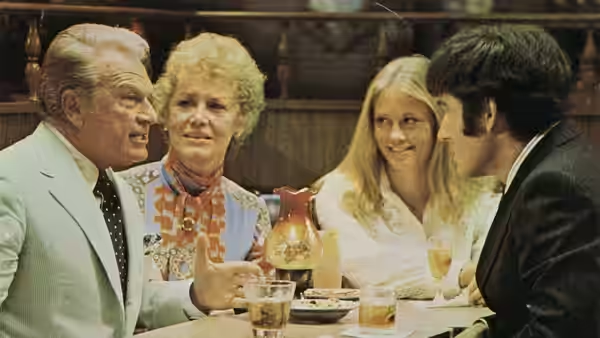
Charles Grodin makes Lenny Cantrow’s self-absorption oddly persuasive, largely because he never seems to question his entitlement to behave this way. There is a steadiness to the performance that makes Lenny’s confidence in his own wishes horribly credible. A more emphatic actor might keep signalling that we should disapprove. Here, the comedy benefits from how long we can keep listening before wanting someone to interrupt him.
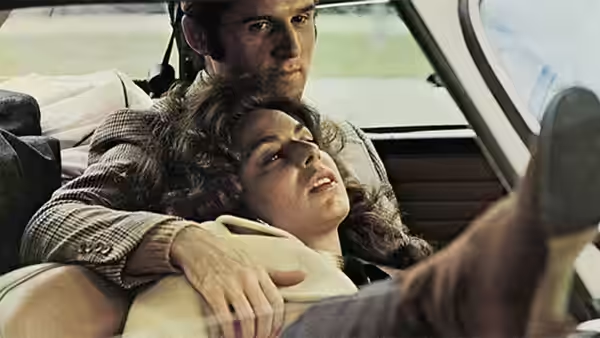
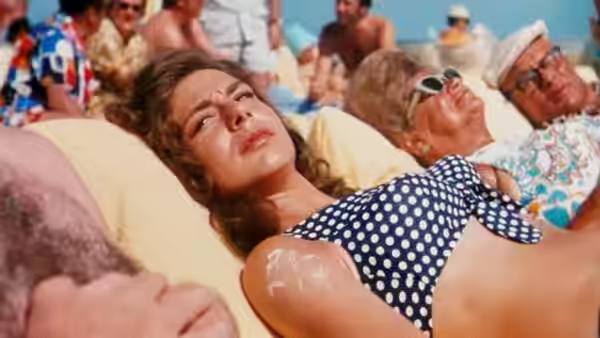
Jeannie Berlin’s Lila Kolodny is where the amusement starts to hurt. We laughed at Charles Grodin’s complacency, then felt ashamed of how easily we had accepted it; her performance makes the hurt on the other side hard to dismiss. She gives Lila an unguarded quality that keeps the comedy from becoming merely a succession of clever lines. Elaine May gives the character enough weight to make our impatience with her feel unpleasantly revealing.
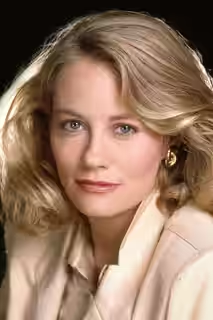
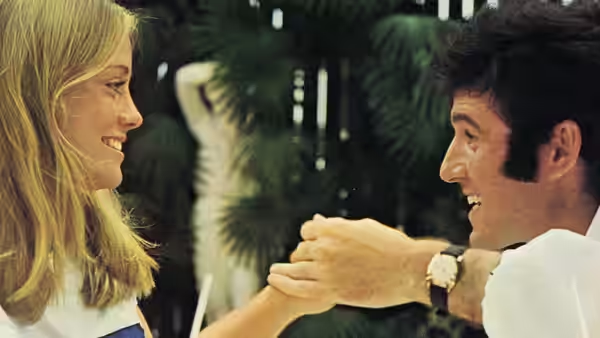
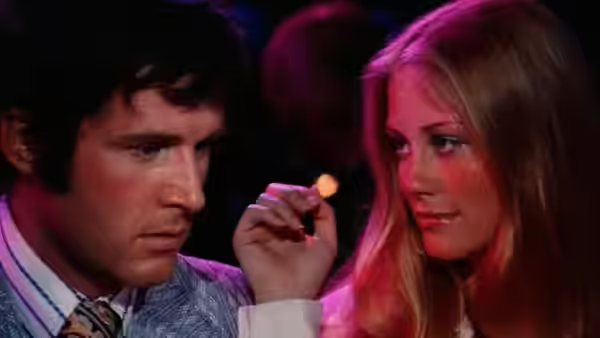
Cybill Shepherd has a harder task as Kelly Corcoran, whose appeal is more clearly established than her individuality. She gives the part a composure that suits the film, but the writing does not make Kelly as interesting as the two other principals. This is a limitation in Neil Simon’s screenplay that the casting cannot entirely solve. There are stretches when we want to understand Kelly better, beyond what Lenny finds appealing about her.
Owen Roizman’s cinematography serves the actors without competing with them, a useful discipline in comedy this dependent on small differences of manner. Its restraint gives us time to study the performances and decide how much sympathy anyone deserves. John Carter’s editing is most effective in the early stretches, where the timing keeps discomfort alive. As that sharpness fades, the film can feel more leisurely than the material warrants.
Garry Sherman’s music contributes to the film’s lightness, though it is the performances that stay with us. That lightness is useful at first, keeping the nastiness from becoming a lecture about bad behaviour. It is less helpful when the comedy needs to press harder and instead seems content to remain amusing. The disappointment matters because the early passages have made us expect closer attention to the damage these people can do.
Against the forgiving habits of romantic comedy, Elaine May’s willingness to let charm become irritating gives the film its distinction. There is no need for every scene to punish somebody, but we miss the early precision once the film relaxes. At 105 minutes, it has enough wit and sufficiently good performances to justify the evening. Keep it for company who can laugh at a selfish man without asking the film to excuse him.