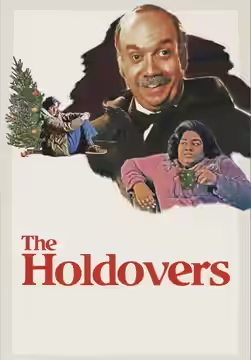
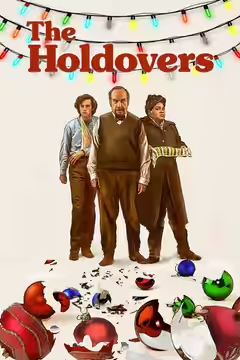
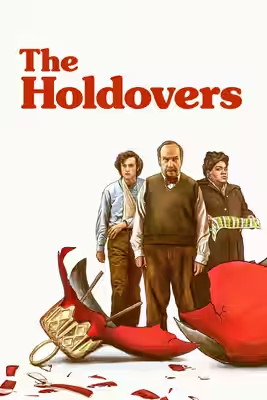
The Holdovers poster

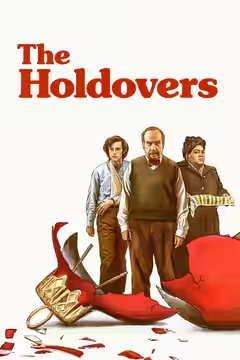
The Holdovers

2023 · Directed by Alexander Payne
2h 13mDramaComedy15
81
Fi1m score
84
Critics · 18
Audience · not yet

Where to watch in the UK

Checked 10 September at 22:28. Prices and availability change; the service’s page is the last word.

Plays from YouTube when you press play; nothing loads from them until then.

Synopsis

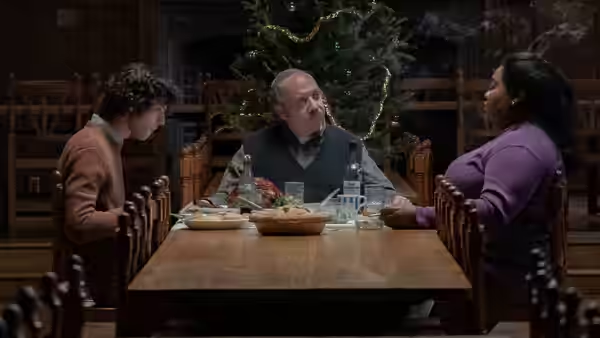
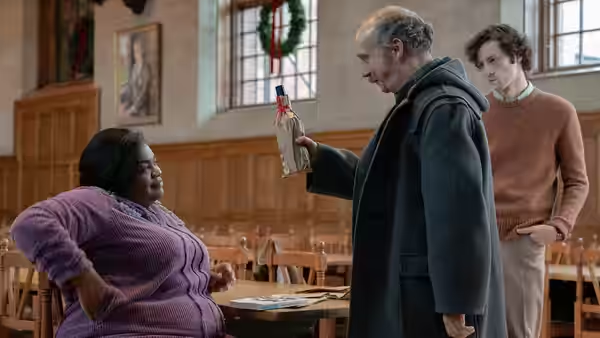
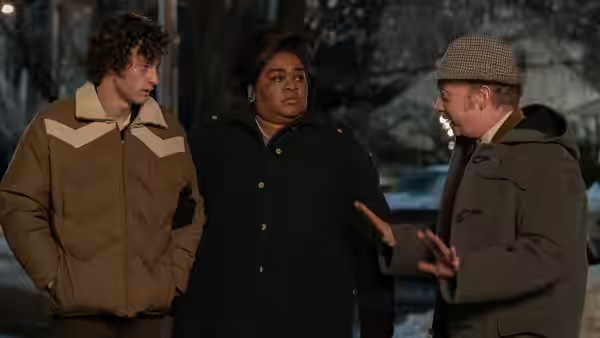
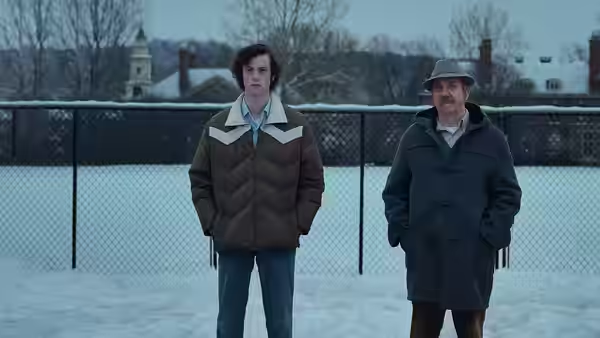
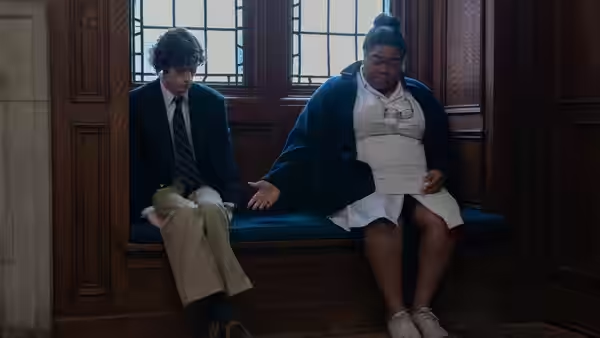
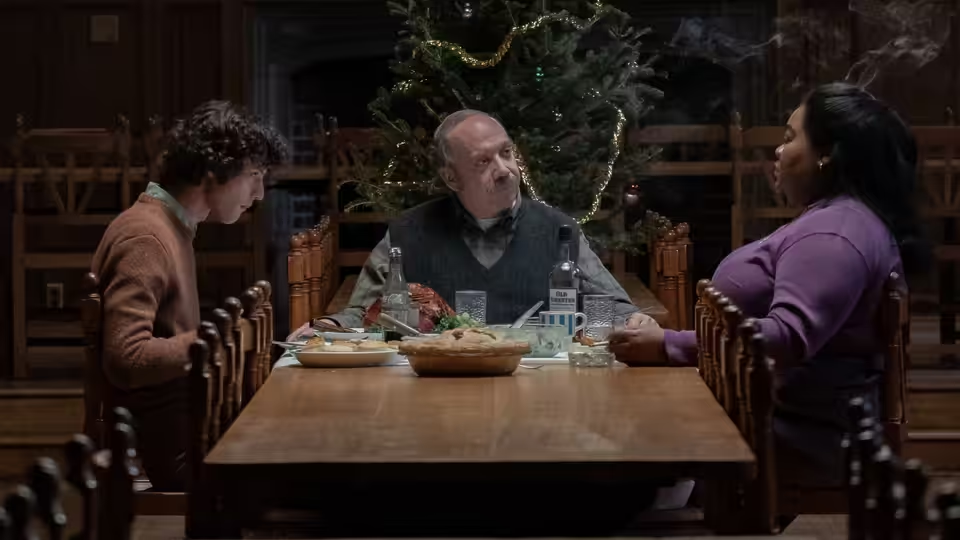
It is December 1970 at a boys’ boarding school, and the term is over. Paul Hunham (Paul Giamatti), a teacher disliked by pupils and staff in roughly equal measure, is told he will stay on to supervise the handful of boys nobody is collecting for Christmas. Among them is Angus Tully (Dominic Sessa), clever, mouthy and furious that his mother has changed her plans at the last minute. The school’s cook, Mary Lamb (Da’Vine Joy Randolph), stays too; her son has recently died and she has nowhere she would rather be. Alexander Payne directs, from a script by David Hemingson, and the three of them are left with the snow, the empty dining hall and each other.

Fi1m review

In a sentenceThe teacher nobody wanted, the boy nobody collected, and the cook who has to feed them both

Alexander Payne’s snowbound school comedy is warm, funny and better acted than it is written. Giamatti and Randolph carry it; David Hemingson’s script says its lesson out loud once or twice too often, and at 133 minutes it dawdles. We recommend it anyway.

Alexander Payne has made this sort of film before: a sour man, a stretch of time he does not want to spend, a small decency arriving late. The Holdovers puts the sour man in a school, gives him Paul Giamatti’s face, and sets the whole thing in the winter of 1970, shot and cut and scored as if it had been sitting in a vault since then. It is a good film, warmer than it first lets on, and it is carried by its actors more than its script. We recommend it, with the caveat that it is a quarter of an hour longer than it needs to be and tells you what it means more than once.

Giamatti plays Paul Hunham as a man who has decided that being right will do instead of being liked. He fails boys for sport, quotes the ancients at them, smells faintly of the drink he keeps in his desk, and cannot look anyone straight in the eye because one of his eyes will not cooperate. It would be an easy part to make hateful. Giamatti does not, and the trick is that Hunham enjoys himself. His first address to the boys in the dormitory, a list of rules delivered as if to a jury, made us laugh out loud, and we went on laughing at him for an hour before we noticed we had started to mind what happened to him.

The boys start as a group and thin out for reasons we will leave to the film. Brady Hepner’s Teddy Kountze is the bully, Ian Dolley, Jim Kaplan and Michael Provost fill out the dormitory, and then it is Angus. Dominic Sessa has a long, wary face that can go from insolent to stricken without a cut, and he uses it sparingly. Angus is rich and clever and has worked out that neither is going to save him from his family. Sessa never asks us to like him. He lets Hunham do that, slowly, and the film is at its best when the two of them are trading insults across an empty refectory and both are enjoying it more than they will admit.

Da’Vine Joy Randolph moved us more than anyone else on screen, and she does it by refusing to perform grief. Mary sits in the kitchen with the television and a drink, snaps at Hunham about his manners, and lets the loss show only at the edges: a pause before she answers, a look at the door when someone comes in who is not her son. Then, in a scene we will not describe, it stops staying at the edges. Randolph plays it with her back half-turned to the camera and it is the moment we will keep.

The period is done properly. Eigil Bryld shoots in soft brown light with visible grain, the snow outside grey rather than white, the corridors lit by whatever comes through the windows. Ryan Warren Smith’s production design and Wendy Chuck’s costumes keep to corduroy, wool and mustard, and nothing looks new. Mark Orton’s score is guitar and piano, quiet enough to forget. Kevin Tent cuts slowly and fades scenes out rather than snapping them shut, which suits the era and does not help the running time.

Hemingson’s script is the weak part. Its shape is a diagram: the man who never left teaches the boy, the boy teaches the man, and Mary is there to remind them both what real trouble looks like. Randolph makes her a person; the writing does not always. And when the film has made a point with a look, it tends to make it again with a speech. The reviews so far have been warm, and we mostly agree with them. We just wish Payne had trusted his cast to say less.

It is his best film since Sideways (2004), which also had Giamatti in it, and it shares that film’s fondness for a man who has wasted himself. Payne has never been sentimental about such men. He is kind to them, which is different, and this time the kindness is spread three ways.

It is a 15. Watch it in the week before Christmas, when the house is quiet and nobody is coming.
Critical consensus AI synthesised

84
Positive
18
Mixed
0
Negative
0

The critics are close to unanimous about The Holdovers, and the spread is narrow: almost every review lands as a warm four stars or thereabouts, with a handful pushing higher and a few festival notices holding back a little. The praise clusters on the acting. Paul Giamatti’s prickly teacher is singled out in nearly every piece, with Da’Vine Joy Randolph’s grieving cook close behind; a few reviews prefer her. Nearly as often mentioned is the period style, which most critics read as a convincing return to mid-1970s American cinema, and many call it Alexander Payne’s strongest work since Sideways. Reservations are mild and mostly about sentiment: The Hollywood Reporter finds it uneven before a strong final third, while The Playlist and The Wrap find it familiar and occasionally schmaltzy. The one real dissent is the Los Angeles Times, where Justin Chang calls the film phony and diagrammatic and objects to its handling of Randolph’s character.

The Telegraph
18 January 2024 · ★★★★★ · Robbie Collin
100

Alexander Payne’s period piece is a profoundly nourishingly funny and moving film, his best since Sideways. The critic praises Paul Giamatti’s awards-worthy performance as the curmudgeonly teacher and the impeccable period style that feels like a dispatch from 1970s cinema.

Read the full review →
Variety
1 September 2023 · Critics Pick · Peter Debruge
85*

The review hails the film as feeling like a lost ’70s classic that reunites Payne with Giamatti for a generous portrait of flawed characters. It singles out the humane exploration of class, race, grief and the lead performances for praise.

Read the full review →
The AV Club
26 October 2023 · B+ · Manuel Betancourt
83

The film is described as a warm, humanist portrait of the need for gentleness that mellows from a grating start into nuanced explorations of trauma, privilege, and connection. The central trio's layered performances and Payne's avoidance of sentimentality are highlighted as strengths.

Read the full review →
Financial Times
18 January 2024 · ★★★★ · Danny Leigh
80

Alexander Payne’s bittersweet nostalgia trip is a highly skilled, sharply intelligent comic drama dressed up as a gooey heartwarmer. The critic singles out Paul Giamatti’s standout performance as the grouchy teacher who makes an old lesson feel new.

Read the full review →
Little White Lies
16 January 2024 · 3/4/4 · Lillian Crawford
80

An excellent Christmassy dramedy with witty repartee and strong turns from the leads in a boarding-school holiday lock-in. It avoids saccharine excess thanks to Randolph’s grounded presence amid the privileged setting.

Read the full review →
Radio Times
★★★★ · Emma Simmonds
80

The spirit of the American New Wave lives on in this curmudgeonly Christmas drama with a big heart. Giamatti, Sessa and Randolph complement each other wonderfully in a slow-burn charmer channeling Hal Ashby and Bob Rafelson.

Read the full review →

Cast

Paul Giamatti
Paul Hunham
Dominic Sessa
Angus Tully
Carrie Preston
Miss Lydia Crane
Brady Hepner
Teddy Kountze
Ian Dolley
Alex Ollerman
Jim Kaplan
Ye-Joon Park
Michael Provost
Jason Smith

Stills

If you liked this, try…

The Last Detail poster

The Last Detail

1973 · Two sailors, one prisoner, a cold road trip; the film this one is dressed as

The Browning Version poster

The Browning Version

1951 · Michael Redgrave as the schoolmaster nobody loved, and the day he finds out

Au revoir les enfants poster

Au revoir les enfants

1987 · A French boarding school in wartime, watched by a boy who does not understand yet

Paper Moon poster

Paper Moon

1973 · A con man and a child who is better at it, in black and white

Election poster

Election

1999 · Payne’s earlier school film, with a teacher who is far less forgivable