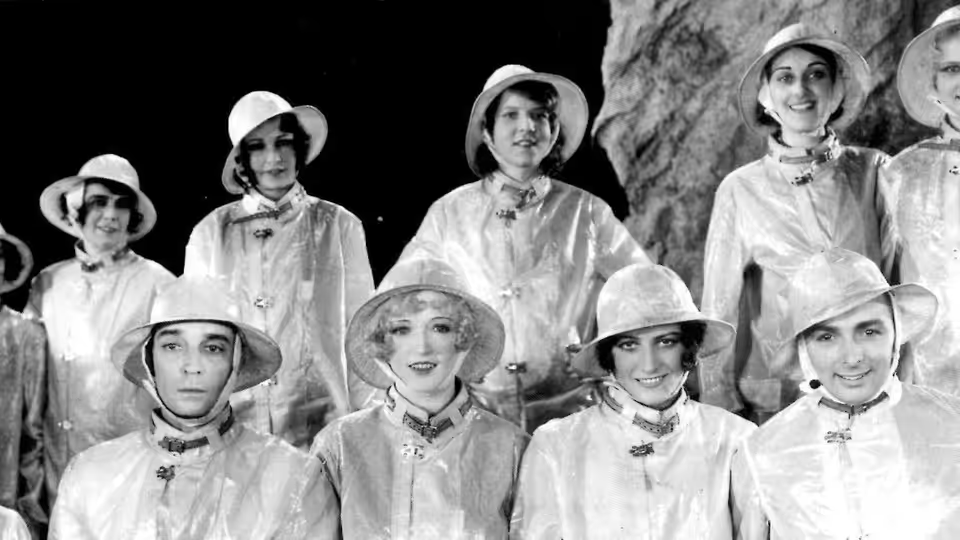
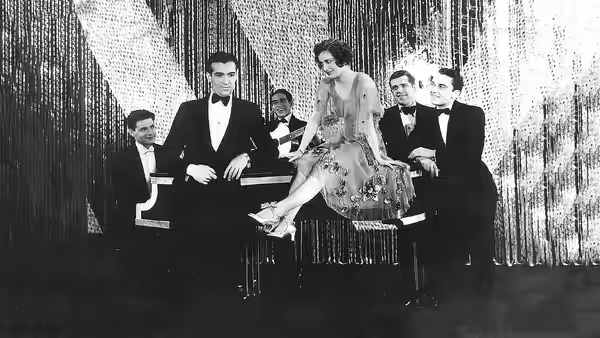
A studio empties its contract list onto a stage and points a microphone at it. As a variety night it is patchy and often slow; as a record of what film stars looked like the week sound arrived, it is hard to put down.
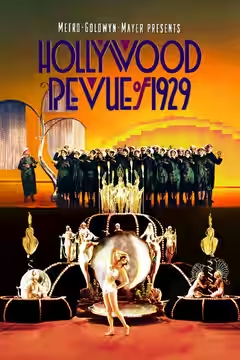
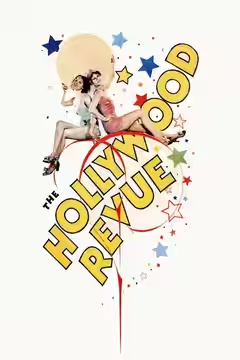
In 1929 the talking picture was new enough that simply hearing a famous face was the attraction, and The Hollywood Revue of 1929 is built on exactly that. Producers Harry Rapf and Irving Thalberg have taken the players under contract, put them on a stage in front of a curtain, and asked each to do a turn. The tagline promises 25 stars and a chorus of 200, which is roughly what you get. There is no plot, and Charles Reisner directs it the way a stage manager runs a benefit: next act, please. It is a curiosity first and an entertainment second, and we would put it at the upper end of curiosities.
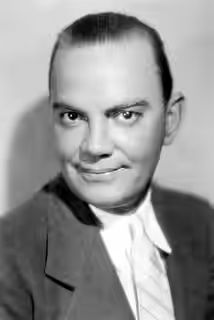
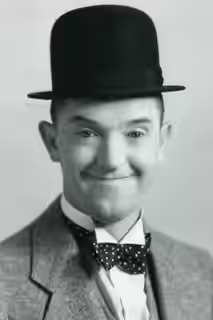
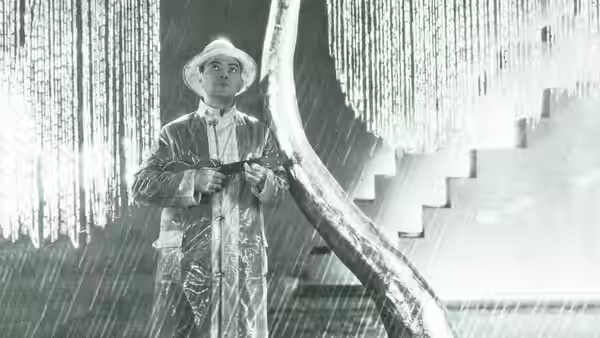
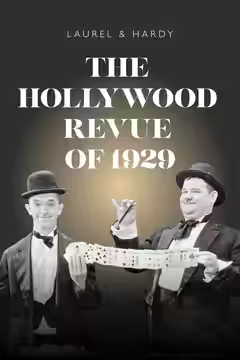
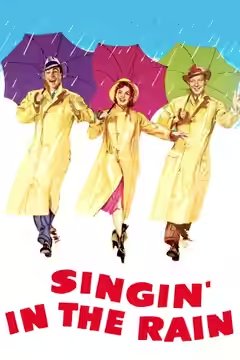
The good turns are good. Stan Laurel and Oliver Hardy do a magic act in which nothing they attempt comes off, and Hardy’s attempts to keep his dignity while the props betray him made us laugh out loud, more than once, ninety-odd years after the fact. It is the one sequence in the film that does not need to be excused by its date. Cliff Edwards, small and cheerful with a ukulele, introduces a song called Singin’ in the Rain that a later and better film would make its own; here it is sung plainly, without a puddle in sight, and is the better for it. The Brox Sisters sing in close harmony and the sound, for once, holds.
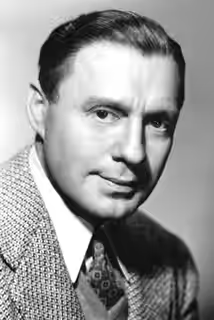
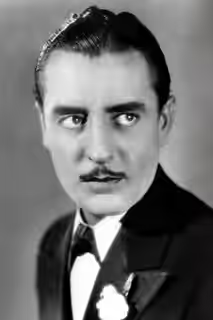
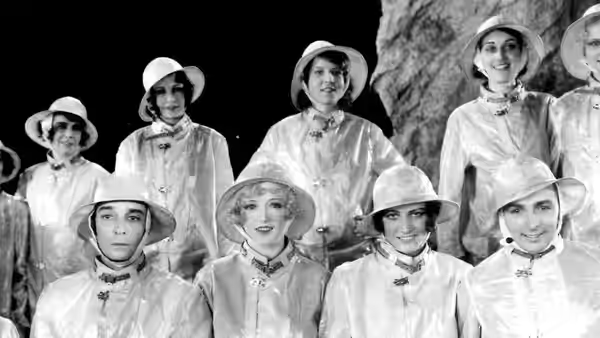
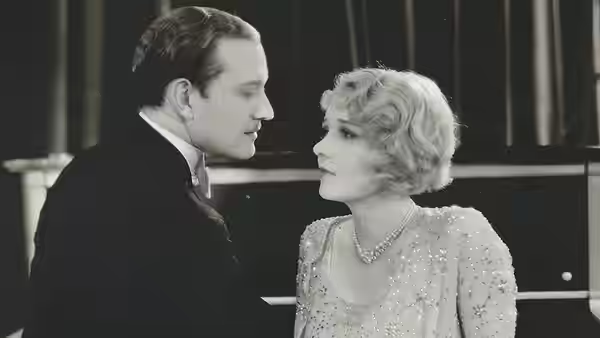
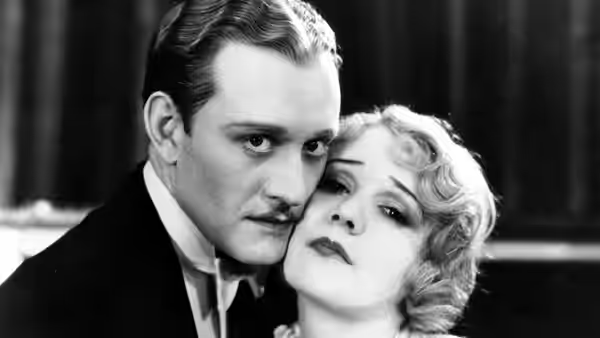
Joan Crawford, young and game, sings and dances early and is plainly delighted to be doing both, which covers for the fact that she is a better dancer than singer. John Gilbert and Norma Shearer play the balcony scene from Romeo and Juliet twice, first straight and then in the slang of the day. We did not expect the straight version to get to us, and it did: two silent stars speaking Shakespeare into a microphone for the first time, a little carefully, as if the words might break. The slang version is the joke and it is a mild one. Jack Benny, as compère, is the driest presence in the film, already the put-upon man he would be for decades, and the picture lifts whenever he wanders back on to complain about something.
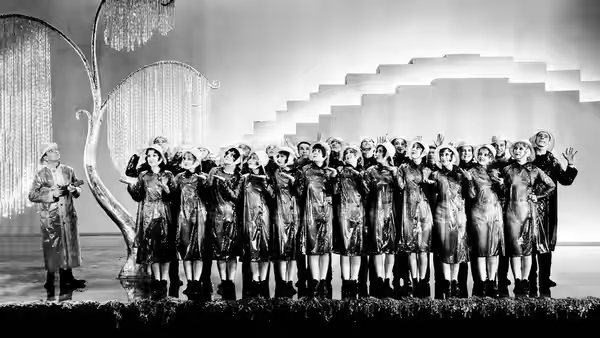
The craft is the craft of its moment, and the moment was awkward. Four cinematographers are credited, Max Fabian, Irving Reis, John Arnold and John M. Nickolaus, and between them the camera mostly sits front-on, at the height of a good seat in the stalls, and watches. The colour sequences are the exception, and the film knows it, saving them for the ensemble spectacle. Arthur Lange’s music is bright and loud and the recording varies from number to number; some voices come through clean and some arrive as if from the next room. Cameron K. Wood, one of two credited editors, cuts between acts rather than within them, so each number runs as long as it ran on the day.
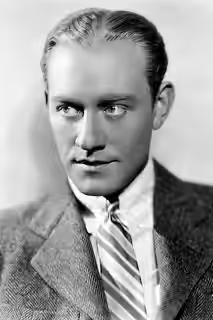
That is where the film loses us. The chorus routines, which the studio was clearly proudest of, go on well past the point where the drill is impressive, and there are stretches in the middle where we were bored, then slightly cross about being bored by two hundred people working so hard. Joseph Farnham’s patter for the two hosts is thin, and Conrad Nagel, earnest and handsome, has been given the straight-man half and very little else. Bessie Love and Anita Page are here to be looked at and are not given much more to do. Some of the comedy has not travelled; some of it never left the lot.
Judged as a musical, it is a poor one, because it does not know yet what a film musical is. Judged as what it says it is, a revue, it is a long evening with perhaps five acts you would keep. Watch it at home, where you can let the chorus go by and come back for Hardy, for Edwards, and for Gilbert on his balcony. It runs 118 minutes and none of the people in it knew what was about to happen to them, which is most of the reason to look.