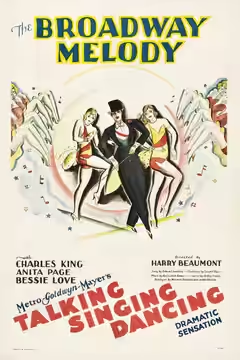
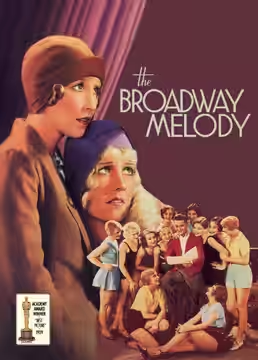
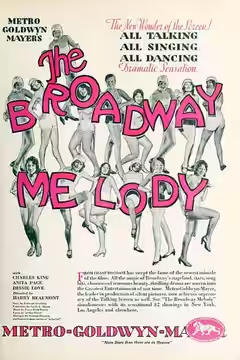
The first all-talking musical is a museum piece with a pulse. The numbers are flat and the camera cannot move, but Bessie Love gives a performance so alive it makes the surrounding stiffness look almost deliberate. For the curious, not the casual.
This is the film that taught Hollywood the musical could talk, and it shows its age in every frame. Irving Thalberg’s studio put a vaudeville story, a handful of Nacio Herb Brown songs and a full stage revue in front of microphones and sold the result under the promise ‘All talking. All singing. All dancing.’ It does all three, none of them well, and it did them first. We recommend it to the curious, with the warning that curiosity will have to carry you through the long stretches when nothing else does.
Edmund Goulding’s story is the backstage plot that musicals would borrow for the next twenty years. Two sisters from the circuit come to New York; the man engaged to the first falls for the second; a revue needs filling. It is told in slang so thick that some lines need a second hearing, and the dialogue scenes are played at the pace of a stage play, actors standing where the microphone can find them and waiting for each other to finish.
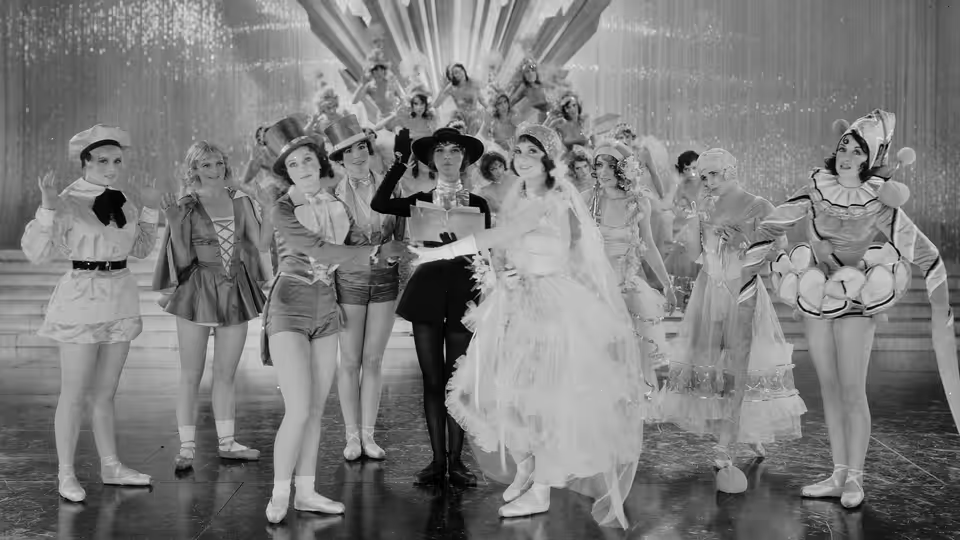
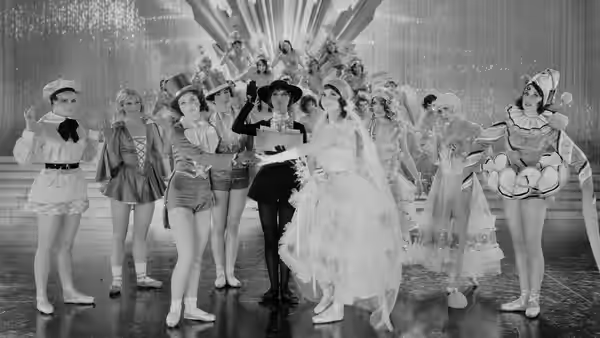
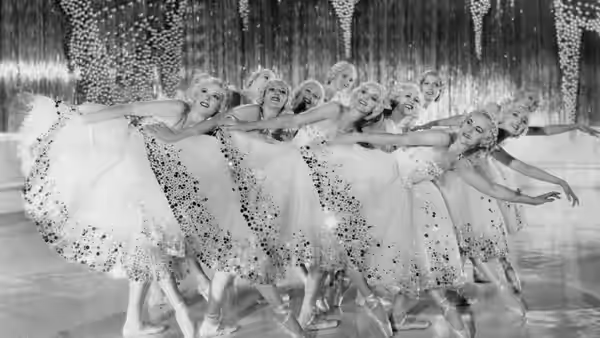
John Arnold’s camera is the biggest casualty. In 1929 the camera lived in a soundproof booth so its whirring would not reach the microphone, and it could barely move, so it does not. Scenes are shot straight on from the middle distance, and the dance numbers are filmed as if we had a seat in the stalls: a full stage, a proscenium and a chorus line whose kicks do not quite agree with one another. Sam Zimbalist cuts when he can, but there is little to cut to. The exception is ‘The Wedding of the Painted Doll’, filmed to a recording made beforehand rather than with the singers live, and the number has a rhythm the rest of the film never finds.
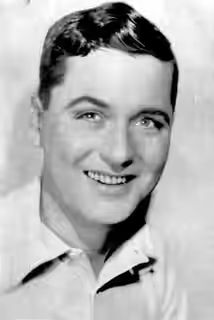
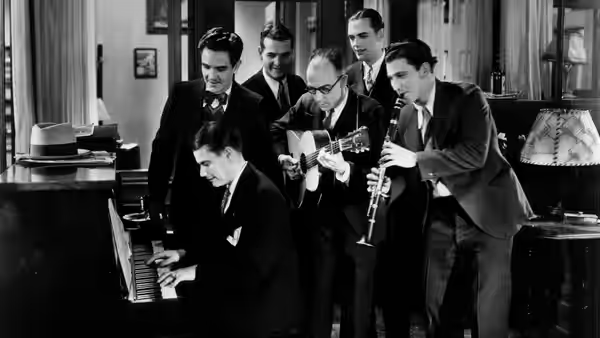
Brown’s songs are the reason the title still means something. ‘Broadway Melody’ is sung, sold and reprised until it wears a groove. ‘You Were Meant for Me’ is a plain, pretty tune that Charles King sings to Anita Page in a hotel room with the earnestness of a man who knows he is on the wrong side of it. King is a stage performer to his bones, a big voice and a small face for the camera, and he never works out where to put his hands.
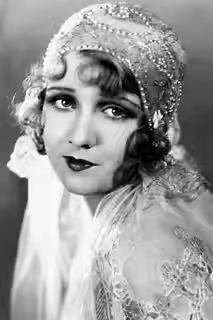
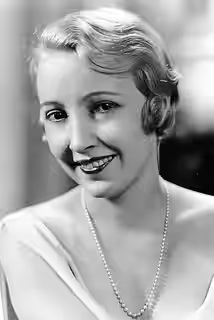
Then there is Bessie Love. She plays Hank, the plain sister who does the sums and loves a man who is looking past her at Queenie, and she is the only person on screen who seems to know the camera can see a thought. She talks fast, cracks wise and keeps busy, and every so often the busyness stops and the face underneath shows. There is a scene in the second half, alone in a room, that we will not describe, except to say it moved us more than we expected anything in a 1929 talkie to, because Love does it without music and almost without words. Page has the harder part, the beauty everyone wants, and she plays Queenie as a girl who has worked out too late that being wanted is not the same as being asked.
We were also, for a good half hour in the middle, bored. The stage numbers arrive, sit there and leave, and no amount of period goodwill turns a static chorus into entertainment. Harry Beaumont directs the talk well and the spectacle hardly at all. The film is at its best when it forgets it is a musical and remembers it is about two sisters in a hotel room with one bed and one man between them.
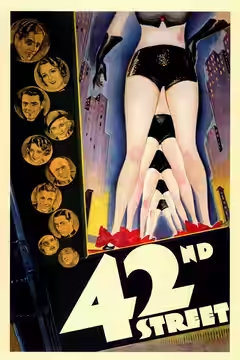
Four years later 42nd Street would take a camera up into the flies, and Singin’ in the Rain would later turn the making of films exactly like this one into a joke. This is where they came from, and at 101 minutes it does not ask much of you. Watch it for Love, for the sound of a studio finding out what a microphone was for, and for the odd pleasure of seeing a form on its first day at work. It carries a U.