Film review

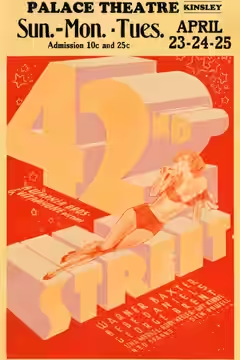
42nd Street

1933 · Directed by Lloyd Bacon · 1h 29m · MPA NR

In a sentenceThe dancing turns up twenty minutes before the end and behaves as though it built the place

ComedyDramaRomance

New York, 1932, three years into the Depression. Julian Marsh (Warner Baxter), a Broadway director who lost his money in the crash and has been told by his doctor that another show will finish him, agrees to stage one more. The money comes from Abner Dillon (Guy Kibbee), a rich man besotted with the star, Dorothy Brock (Bebe Daniels), who takes his gifts and keeps seeing her old vaudeville partner Pat Denning (George Brent). At the open audition, chorus veterans Lorraine Fleming (Una Merkel) and Ann (Ginger Rogers) take a newcomer, Peggy (Ruby Keeler), under their wing, and the juvenile lead Billy Lawler (Dick Powell) takes to her at once. Marsh has five weeks of rehearsal to get the show open, and the backer will not keep his hands off the leading lady.

Fi1m review

Ninety years on, the film that set the pattern for every backstage musical is still fast, funny and unexpectedly hard about money. Warner Baxter carries the first hour, and the dance numbers, held back until the very end, are worth the wait.

Broadway in 1932 was a business in trouble, and 42nd Street treats it as one. Rian James and James Seymour, working from Bradford Ropes’s novel, write a musical in which nobody puts on a show for love. Julian Marsh needs the money because the crash took his. Abner Dillon pays because he wants the star. The chorus girls turn up because the alternative is the breadline. Lloyd Bacon directs the backstage hour as a comedy with its teeth showing, and it is still one of the best of its kind.

Warner Baxter is the reason the first hour works. Marsh is a director with a bad heart, no savings and a temper, and Baxter plays him as a man who is frightened and takes it out on everyone within earshot. He bullies the chorus through five weeks of rehearsal, sacks a girl for being late, and stands in the stalls with his hat on while the dancers drop. His face, grey under the work lights, tells you how much is riding on the show.

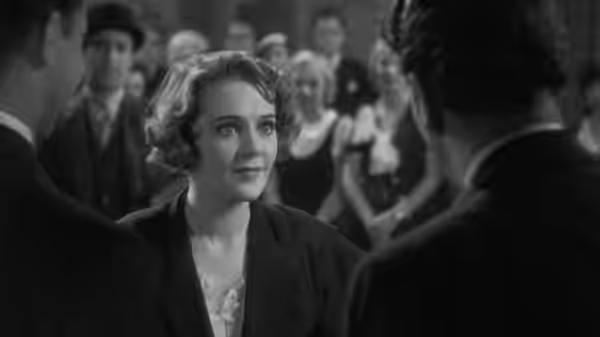
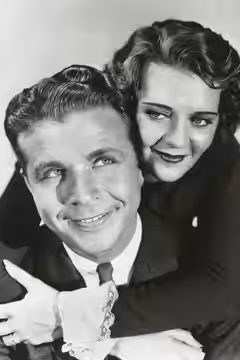
The women are better company. Bebe Daniels plays Dorothy Brock as a star who knows exactly what Dillon’s bracelets cost her and is still sneaking off to see Pat Denning (George Brent, doing a good deal with a raincoat and a shrug). Una Merkel and Ginger Rogers, as Lorraine and Ann, are the chorus veterans who do the talking, and Rogers, in a monocle and a borrowed accent, gets the sharpest lines. Ruby Keeler is the newcomer Peggy. She reads her lines as if they had been handed to her a minute before, and her tap is loud and flat-footed. The part asks only for freshness, which she has, and Dick Powell’s Billy Lawler, grinning at her over a piano, supplies the warmth for both of them.

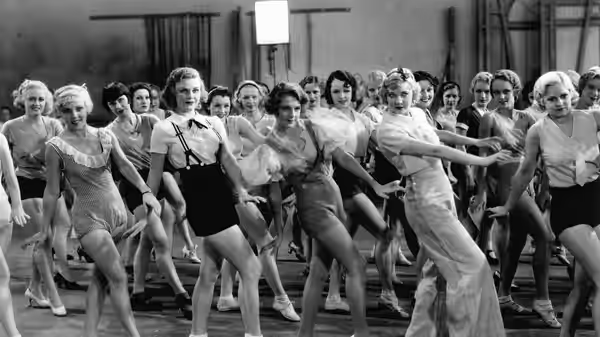
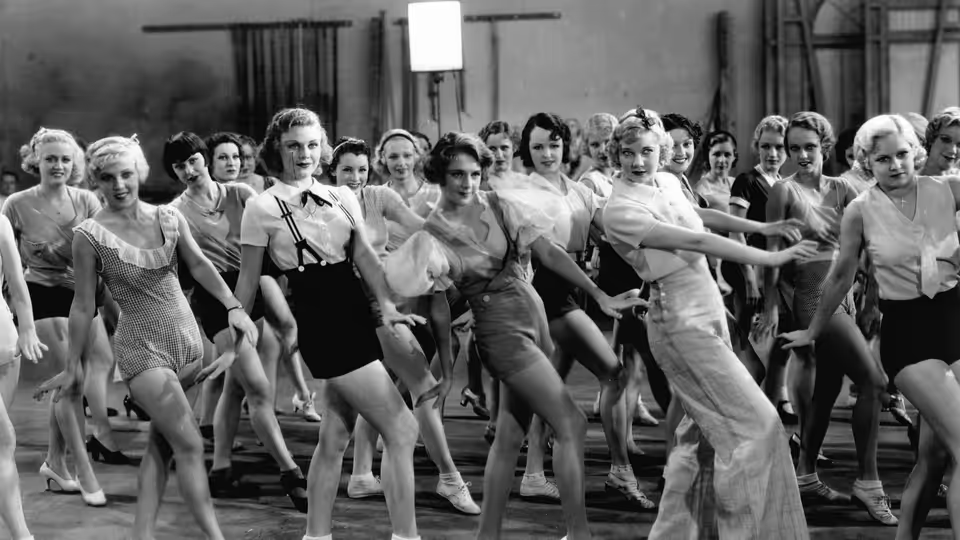
Sol Polito shoots the rehearsal hall with a hard top light that throws the dancers’ shadows onto a bare floor, so the place looks like a factory, which is the point. Orry-Kelly keeps the chorus in practice shorts and vests and saves the satin for the end. Thomas Pratt and Frank Ware cut the rehearsals into short, overlapping bursts of shouting, counting and taps, and there is no slack stretch anywhere. Harry Warren and Al Dubin’s songs stay in the head for days, though for an hour you hear only scraps of them.

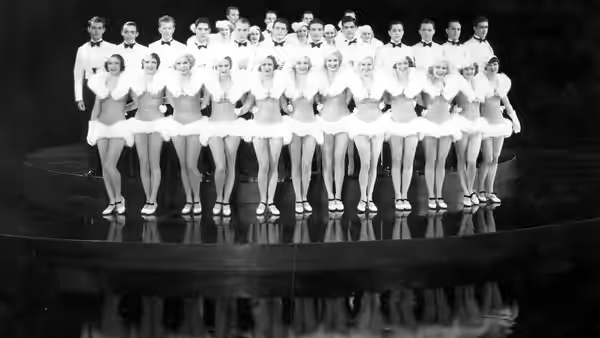
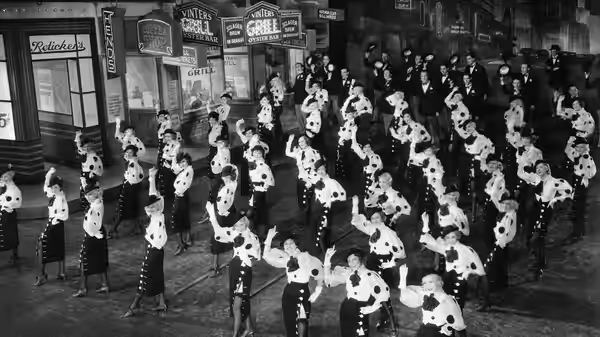
Nearly all of the dancing is held back until the show opens, twenty minutes from the end, and for an hour a musical has almost nothing to sing. When the numbers come, staged by Busby Berkeley, they arrive all at once. Shuffle Off to Buffalo takes place on a sleeper train that splits down the middle to show the berths. Young and Healthy sends the camera crawling along the floor between the legs of a turning chorus. The title number builds a New York street on the stage, with a stabbing in a window, a drunk on the kerb and dancers climbing a staircase holding painted boards that turn, at the top, into a skyline. We sat up. This was what the hour of rehearsal had been for, and it was larger and stranger than the plot had promised.

The plot is thin and knows it. It turns on a piece of bad luck we will not describe, though anyone who knows the phrase backstage musical will guess it. Guy Kibbee’s Dillon is a one-gag character, the rich man who cannot keep his hands to himself, and the film is franker about what a chorus girl owes an investor than Hollywood would be allowed for years afterwards. We laughed at most of it, and then felt slightly grubby about which bits.

Watch it knowing that the first hour is talk and the last twenty minutes are the dancing. The talk is good, and the dancing is the reason people still know the title.

Critical consensus AI synthesised

84
Positive
7
Mixed
0
Negative
0

Every one of the seven reviews is favourable, and the praise gathers in the same place: Busby Berkeley’s dance numbers, which most critics treat as the reason the film is still watched. Several credit it with setting the pattern for the backstage musical, and the 1933 notices note how far its staging had moved on from earlier Hollywood musicals. Warner Baxter’s harried director and Ruby Keeler’s understudy are singled out repeatedly, Keeler for a screen debut the critics find winning.

The reservations are mild and cluster on the plot. Time Out and The New Yorker both call the story thin or conventional, a chorus novice saving the show being no surprise, and say the dialogue, songs and visuals carry it. Empire is the least effusive, granting the film its energy without claiming much more for it. The spread is narrow and nobody dissents; the only disagreement is over how much the familiar story matters when the numbers are this good.

Radio Times
★★★★★ · Tony Sloman
100

This is one of the most important and enjoyable musicals ever made, a beloved early talkie and recognised masterpiece from Warner Bros. It excels through its racy dialogue, lavish production and especially Busby Berkeley's spectacular dance sequences.

Read the full review →
The New York Times
10 March 1933 · Mordaunt Hall
90*

The critic calls it one of the liveliest and most tuneful screen musical comedies to come out of Hollywood, a merry affair with catchy songs and imaginative staging of the show-within-the-film. Ruby Keeler makes an ingratiating screen debut, and the film reveals forward strides in the medium.

Read the full review →
Variety
90*

The review praises the authentic production that rings true in every detail, with strong performances from Warner Baxter as the neurotic showman, Ruby Keeler as the unknown who triumphs, and effective direction by Lloyd Bacon aided by Busby Berkeley's dance numbers. Everything about the musical comedy is seen as believable and well-handled.

Read the full review →
Time Out
10 September 2012 · GA
80*

The film revives the musical genre by setting the standard for backstage stories, relying on witty dialogue, songs and striking visuals rather than its thin plot. A strong cast delivers standout numbers while Busby Berkeley's inventive choreography stands out.

Read the full review →
Empire
1 January 2000
70*

The definitive backstage musical still has plenty of pizzazz. Warner Baxter's putting everything he can into his show when the leading lady takes a tumble, but plucky little understudy Keeler is made of the kind of stuff that can take over the role and make it her own.

Read the full review →
The New Yorker
11 March 1933 · John C. Mosher
70*

The critic finds the film a bright and cheerful musical about backstage life with gay tunes and rowdy energy that expands into a pretty Broadway fantasy in its finale. The conventional plot about a chorus novice saving the show is noted, along with strong performances especially from Warner Baxter as the director.

Read the full review →

Cast

If you liked this, try…

Gold Diggers of 1933 poster

Gold Diggers of 1933

1933 · The same studio, the same year, and the Depression sung straight to your face.

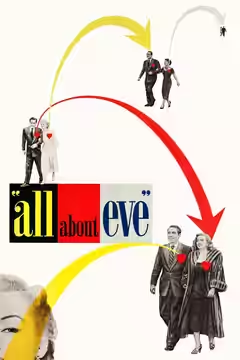
All About Eve poster90

All About Eve

1950 · The understudy story told again, with the knives out and the songs removed.

The Red Shoes poster92

The Red Shoes

1948 · A rehearsal-room tyrant, a girl who wants it, and colour where Polito had shadow.

Topsy-Turvy poster88

Topsy-Turvy

1999 · Mike Leigh on putting a show together: the money, the sulks, the sore feet.

Les Demoiselles de Rochefort poster

Les Demoiselles de Rochefort

1967 · Jacques Demy’s small-town musical, where everyone is broke and dancing regardless.