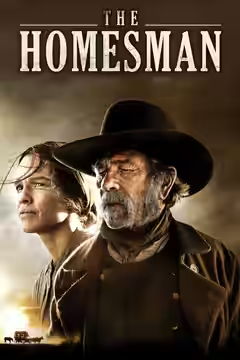
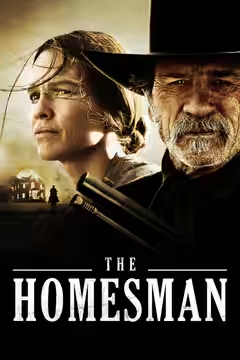
Hilary Swank makes this uneven Western worth watching, giving frontier loneliness a painful immediacy. Tommy Lee Jones directs with feeling, but pushes the comedy too hard and gives three of his women too little to play.
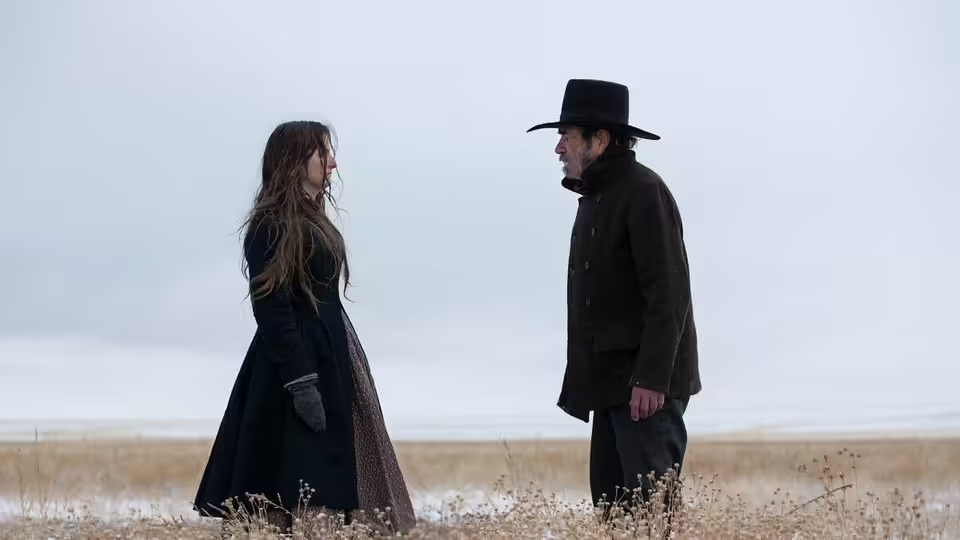
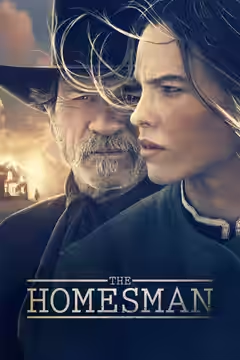
The Homesman is a worthwhile, uneven Western whose strongest reason for watching is Hilary Swank. Director Tommy Lee Jones wants us to consider what frontier life asks of women, and who is expected to care when they can no longer bear it. That is a good subject for a Western, and he approaches it with seriousness and flashes of rough humour. The trouble comes when the humour grows too broad, or the women become difficult to distinguish from their suffering.
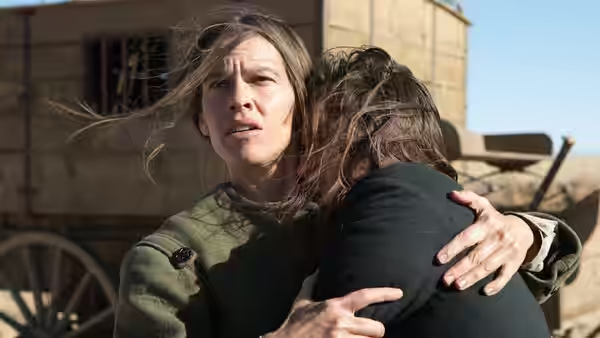
Hilary Swank makes Mary Bee Cuddy’s self-reliance look exhausting. Her firmness leaves room for need, so vulnerability never arrives as a conveniently timed change of character. We found her loneliness painful to watch, because the performance makes the effort of remaining capable so apparent. The film gives her an existence beyond the practical demands of the journey, and she makes us resent the assumption that someone who can cope should be left to get on with it.
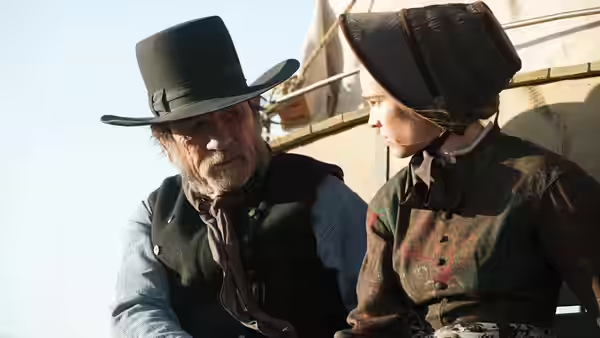
Tommy Lee Jones plays George Briggs with enough restraint to keep his more comic passages from taking over entirely. Even so, the early humour is sometimes pushed too hard, as though the film is worried that its bleakness needs compensating for. The screenplay, by Tommy Lee Jones, Kieran Fitzgerald and Wesley Oliver, adapts Glendon Swarthout’s novel and moves between sentiment, cruelty and comedy. The jokes can help us bear the hardship, but several arrive before the preceding distress has had time to register.
The more serious limitation concerns Arabella Sours, Theoline Belknap and Gro Svendsen, played by Grace Gummer, Miranda Otto and Sonja Richter. Their suffering is central to the journey, but their separate personalities receive much less attention. The actresses have too little room to make these women more than people in need of help. We are asked to feel for them before we know much about them. In a film so concerned with women’s experience, that shortage of attention matters.
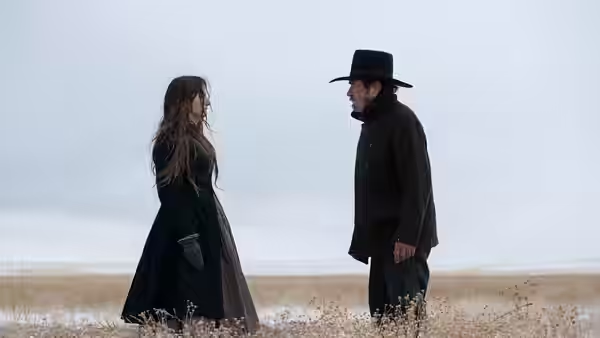
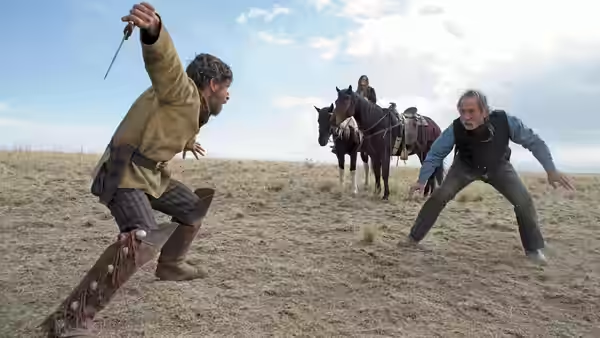
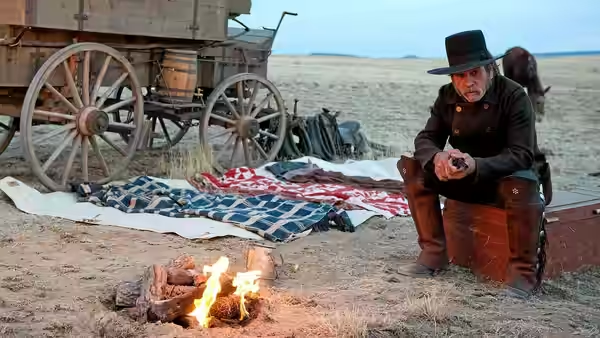
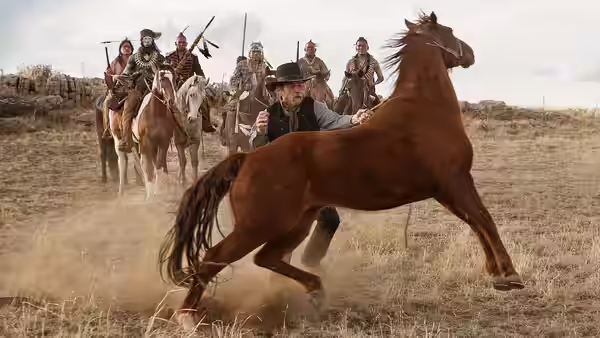
Rodrigo Prieto’s wide prairie photography gives the journey a discouraging scale. Those expanses make the travellers look exposed, and the beauty of the country offers little reassurance about crossing it. Merideth Boswell’s production design gives the frontier a convincing roughness, supporting the film’s insistence that living here takes labour. The physical setting feels credible even when the writing becomes awkward, although the landscape occasionally draws our attention away from the people whose difficulties should be keeping us occupied.
Roberto Silvi’s editing is less persuasive when it has to bring the film’s different moods together. Individual passages hold us, then a change of tone makes the next one feel as though it belongs to another telling of the story. Marco Beltrami’s music supports the melancholy more comfortably than the humour, and the performances do more to keep the emotion credible. The journey consequently feels uneven in a way that goes beyond the deliberate discomfort of watching people who have been badly treated.
At 122 minutes, this asks for patience, and some of its awkwardness is simply clumsiness. Yet it also gives a familiar genre a difficult subject without pretending the difficulties have been tidied away. If Hilary Swank interests you more than a reassuring tale of frontier courage, give it the evening.