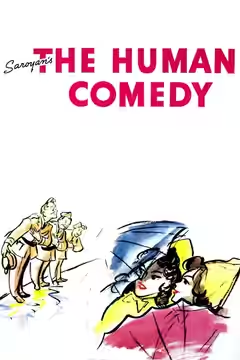
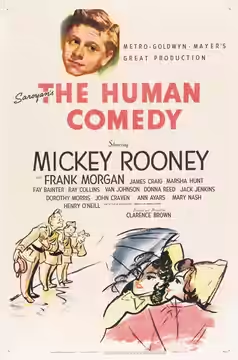
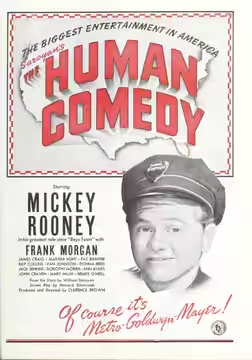
Clarence Brown’s wartime picture is decent, warm and far too sure of it. When it simply watches Mickey Rooney carry a telegram to a door it is quietly devastating; the rest of the time it is telling us what to think.
Clarence Brown’s film, from a William Saroyan story with a screenplay by Howard Estabrook, sets out to put a whole American town on screen in the middle of the war and to say what the war is for. The answer, given often and at length, is decency: mothers, hymns, libraries, small boys, a telegraph office that stays open all night. Sincerity gets it a long way. But it does not trust its own pictures, so it explains them, and the explaining is what stops it being the small classic it could have been.
Mickey Rooney is the reason to watch. Homer Macauley has to grow up in a hurry, and Rooney, who could mug for a living, mostly declines to. He rides his bicycle through Ithaca at night, learns the office from the ground up, and delivers the wires from the War Department. He plays those deliveries with his face closed and his hands busy, and it is the best work of his we have seen. Frank Morgan’s Willie Grogan, the old operator who drinks at the key and needs coffee poured into him before he can take a message, is a stock figure played with small, exact choices, and he lands.
Harry Stradling photographs the town as if the sun had been asked to be kind. Streets at dusk, porches with the light behind them, the office lit by one desk lamp with the dark pressing on the window. It is lovely and it is soft, and after an hour the softness begins to feel like policy. Herbert Stothart’s score reaches for hymn tunes and choir at every turn and does not know how to be quiet.
The trouble is the talking. Ray Collins plays Homer’s dead father and narrates from somewhere above the town, and once a film has let the dead speak it tends to let everyone else make speeches too. A teacher lectures a classroom about equality. The librarian lectures two small boys about books. Herman J. Mankiewicz also has a writing credit, and we could not tell you which of these were his, but somebody should have taken half of them out. Conrad A. Nervig is asked to cut a dozen loosely joined episodes into a story, and there is no spine to cut them onto; the film simply stops when the war reaches the family.
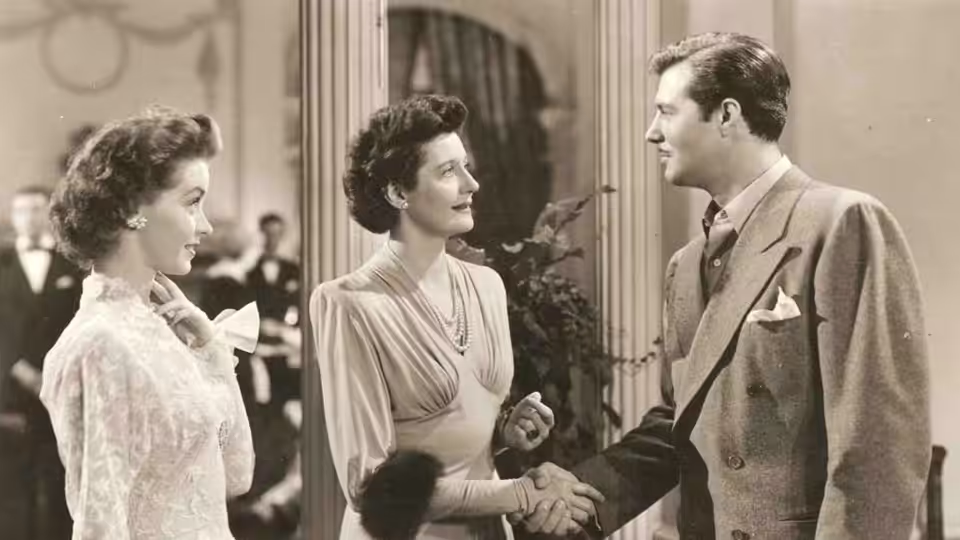
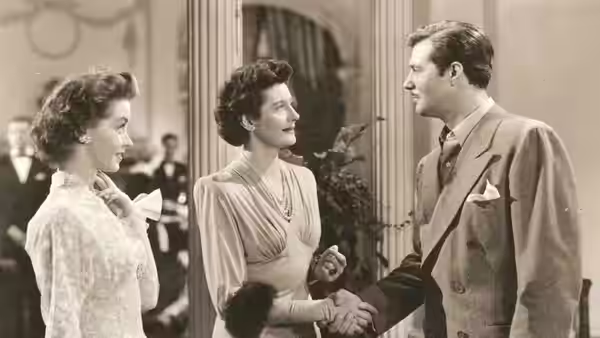
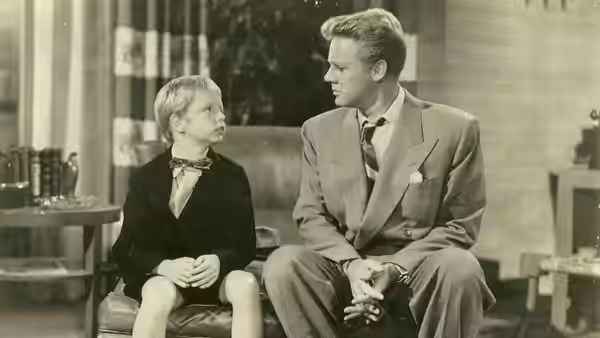
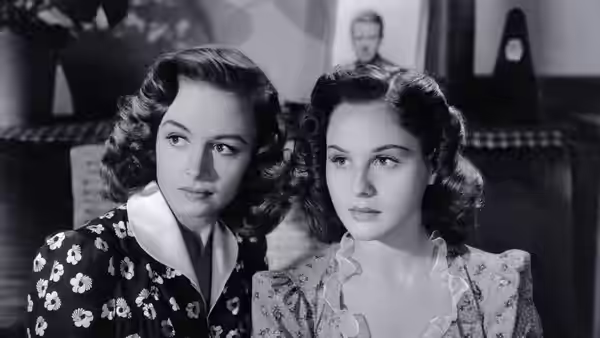
James Craig’s Tom Spangler, the manager, is a decent man given a courtship with Marsha Hunt’s Diana Steed that adds nothing but running time. Van Johnson’s Marcus and John Craven’s Tobey George have an army-camp scene about home that is written as a hymn to Ithaca and played as one. Donna Reed’s Bess and Dorothy Morris’s Mary walk to the cinema and are wholesome. Jackie ‘Butch’ Jenkins, as small Ulysses, is the exception: freckled and puzzled, waving at a passing train, and Brown lets him be a child rather than a symbol for whole minutes at a time.
Here is what got us. Homer’s first death telegram goes to Mrs. Sandoval, played by Ann Ayars, who does not understand what the boy has brought and offers him a sweet because he looks tired. He eats it. She reads the wire. We had a lump in the throat we did not expect from a studio picture of this vintage, and it came from what the scene leaves out: Ayars keeps her voice ordinary, and Rooney cannot find a way to get back out through the door. It is over in three minutes and it is the best thing in the film. Then the score arrives to tell us how to feel about it, and we felt it a little less.
Brown would go on to National Velvet (1944) and The Yearling (1946), where the same warmth suits the material, because a horse and a fawn can bear that much light. A town waiting for casualty lists cannot, quite. The Best Years of Our Lives (1946) let the war be hard on people and trusted the audience to love them anyway; this film softens each blow before it lands.
It runs 118 minutes and a fair third of them are sermons. Watch it for Rooney, for Morgan and for that doorway, and watch it at home, where you can sit through the speeches with a cup of tea and the film’s kindness looks less like a sales pitch.