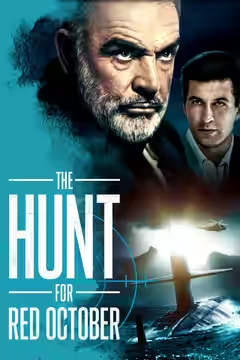
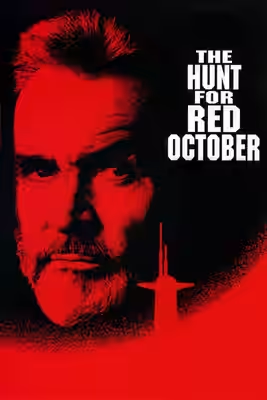
John McTiernan makes a patient, absorbing submarine thriller out of people trying to understand one another under pressure. Sean Connery and Alec Baldwin make the thinking compelling; the explanations and thin character writing occasionally test our patience.
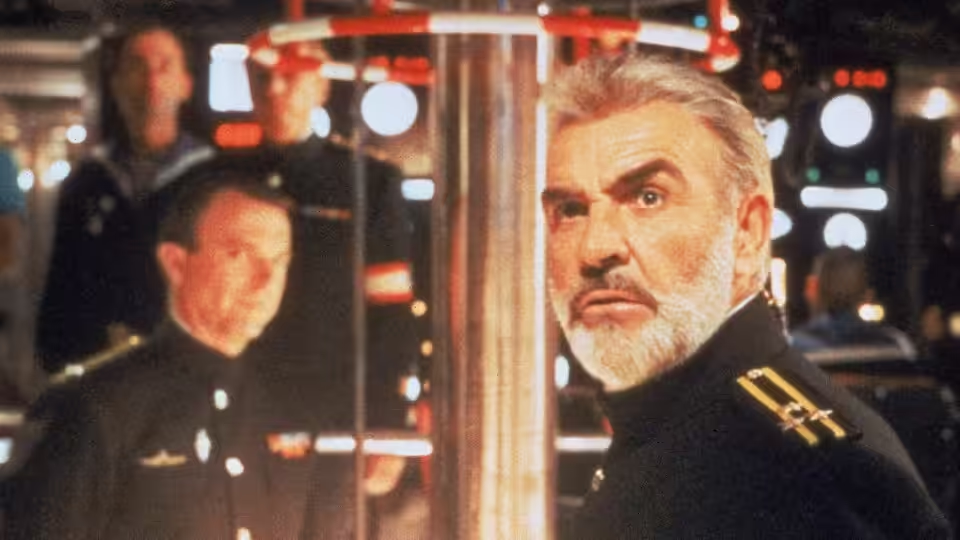
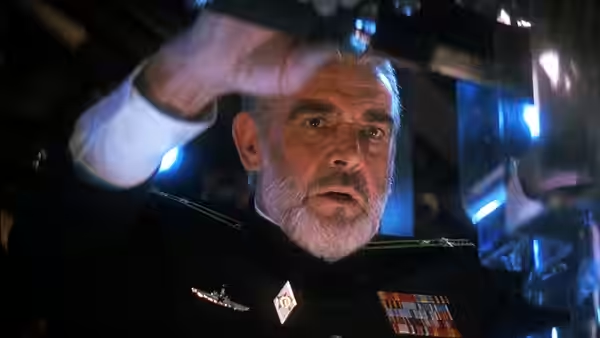
The Hunt for Red October trusts us to find a military problem interesting before anyone starts solving it by force. John McTiernan makes that trust worthwhile: this is a tense, satisfying thriller, held back a little by its appetite for explanation. A Soviet submarine commander has provoked an international crisis, and understanding what he wants becomes urgent work. Sean Connery’s Ramius is a useful man to put at the centre of such a story. Connery can make other people seem rash simply by taking his time.
Alec Baldwin’s Jack Ryan gives the film someone whose thinking we want to follow. Baldwin makes intelligence convincing: his assurance feels worked for, and he leaves enough uncertainty in it to keep the problem alive. We were gripped by his attempts to make sense of Ramius, because Baldwin makes getting the interpretation right feel as urgent as any physical feat. McTiernan lets that performance carry stretches another thriller might fill with movement.
Jan de Bont’s cinematography makes the submarine interiors feel confined without making the people difficult to follow. Terence Marsh’s production design is convincing as a place where trained crews work, and never becomes the main attraction. We can attend to faces and decisions instead of admiring the equipment. The surroundings persuade us that these people belong here, which matters in a film so dependent on our belief in their professional judgement.
Editors John Wright and Dennis Virkler keep the competing groups and decisions legible, even when the screenplay supplies more information than the moment needs. We can follow the pressure being passed from one person to another without having to stop and reconstruct the plot. Basil Poledouris’s music gives the military drama weight, though its solemnity occasionally presses harder than the performances need. The tension is often strongest when the film gives someone time to listen and decide.
The supporting cast helps sustain that feeling of people being paid to do difficult jobs. Scott Glenn’s Commander Bart Mancuso and James Earl Jones’s Vice Admiral James Greer have an authority that does not need much underlining, while Sam Neill’s Vasily Borodin brings welcome warmth. Yet Larry Ferguson and Donald E. Stewart’s screenplay struggles when it tries to give these men lives beyond their duties. Those passages can feel dutiful, and some of the sentiment arrives without enough preparation.
The adaptation of Tom Clancy’s novel also retains more explanation than a 135-minute film needs. There are stretches when Ferguson and Stewart seem determined to leave no possible misunderstanding uncorrected, and McTiernan indulges them for too long. Even these actors cannot keep every explanation equally interesting. A shorter film would sacrifice some technical detail and gain some urgency, particularly where the dialogue repeats what the performances have already made clear.
Submarine thrillers have cramped quarters to help them create tension, and McTiernan makes equally good use of the people giving the orders. The pleasure lies in following skilled men as they make consequential choices with incomplete knowledge. Their private lives may be thinly written, but the work holds our attention. Give it an evening without interruptions; these people have enough misunderstandings to manage already.