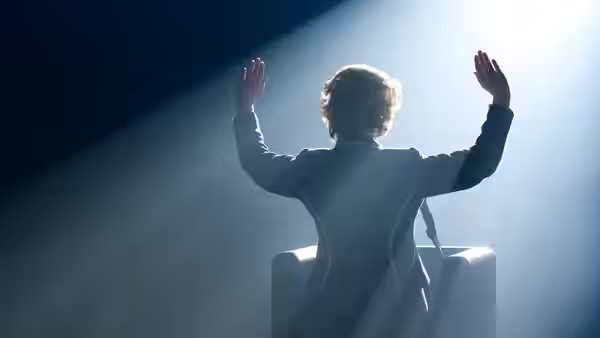
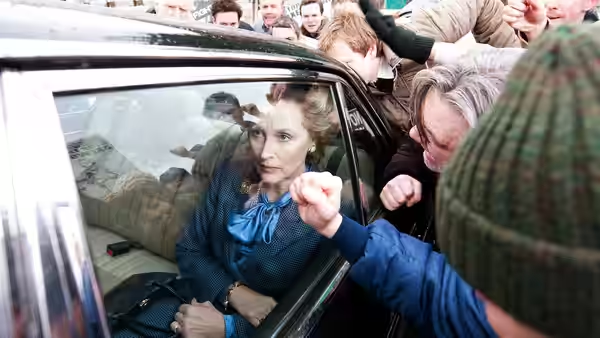
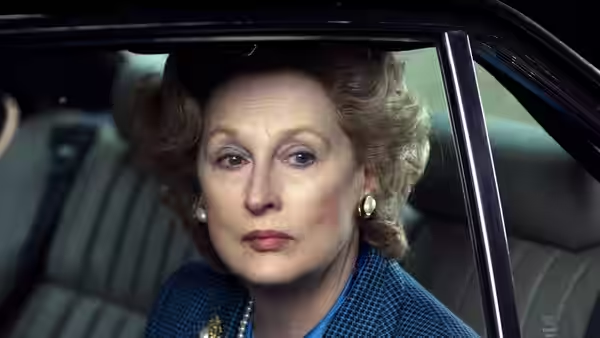
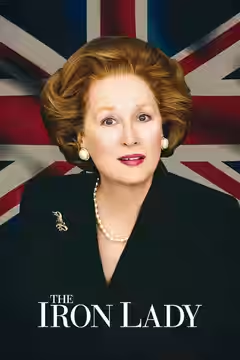
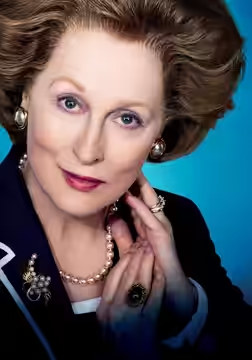
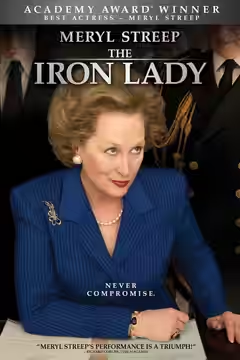
Meryl Streep gives Margaret Thatcher wit, precision and a troubling vulnerability. Phyllida Lloyd’s otherwise disappointing biography rushes through the politics and leaves the marriage too thinly drawn to compensate.
Meryl Streep is persuasive as Margaret Thatcher, but The Iron Lady is too evasive about politics to work as a biography. Phyllida Lloyd directs a film that finds its strongest material in the ageing woman’s private distress. Abi Morgan’s screenplay concentrates on dementia and the loss of self-command, then repeatedly turns to a political career it seems reluctant to investigate. The changes of subject keep weakening a domestic drama that might have worked with more time and fewer obligations.
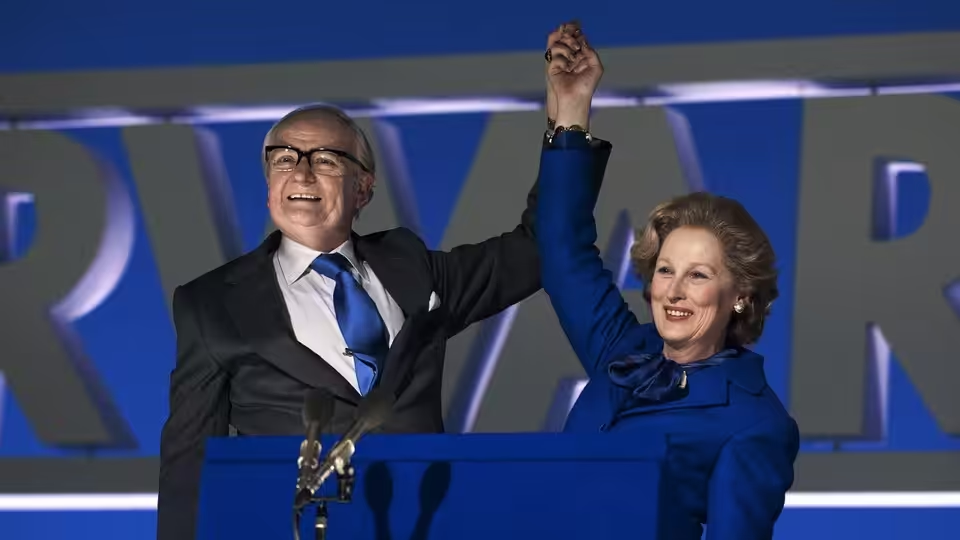
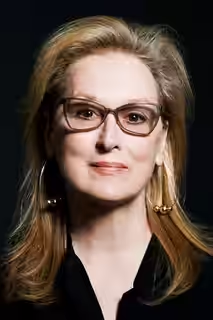
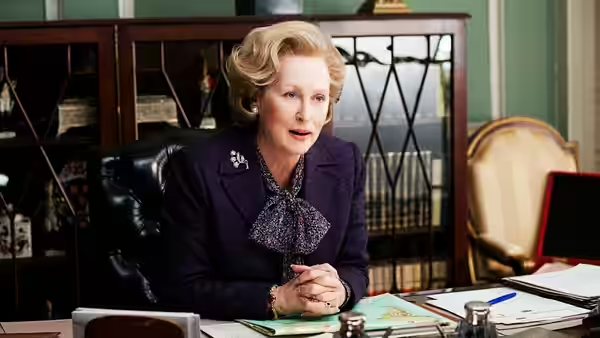
Streep’s changing voice is the most persuasive piece of storytelling: the impression is exact enough to recognise, but it also allows frailty and humour into a formidable public manner. We were moved by her portrayal of Thatcher’s fear of losing her mind. She makes Thatcher’s uncertainty clear without inviting us to laugh at it, and that care matters in a film so dependent on vulnerability. The trouble begins when the sympathy she earns is asked to do the work of explaining the woman.
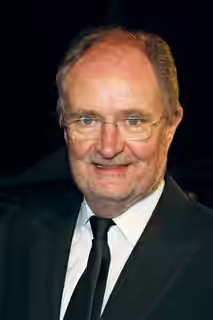
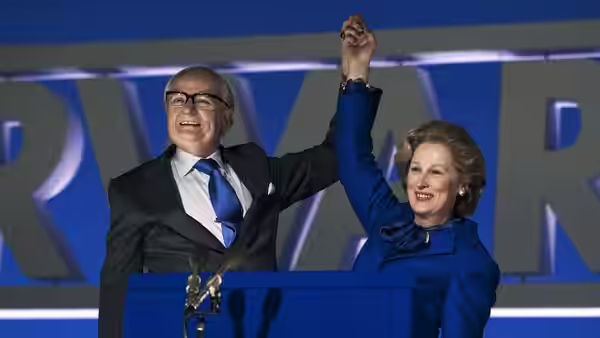
Jim Broadbent, as Denis Thatcher, gives the private scenes a welcome tenderness. His rapport with Streep suggests the more concentrated domestic film Lloyd might have made, although Morgan does not develop the relationship enough to make it fully convincing. The affection is easier to understand than the marriage, because the film gives their relationship too little room. Broadbent is especially frustrating to watch in that respect: his warmth makes us want more time with a character the writing keeps pushing aside.
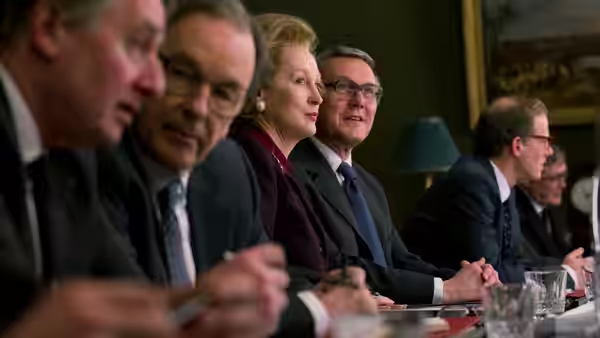
The political passages expose the cost of trying to fit so much into 105 minutes. Justine Wright’s editing carries us through the career at a pace that leaves events insufficiently examined; Morgan’s script supplies too little political detail to make that haste worthwhile. The film asks us to take Thatcher’s public importance for granted while concentrating its attention on her private distress. We need to understand the decisions as well as recognise the person making them, and the hurried treatment leaves too much unexplained.
Elliot Davis’s cinematography serves Streep’s impersonation well, keeping her portrayal of Thatcher the principal visual interest. Simon Elliott’s production design contributes to the sense of a life convincingly reconstructed, although the film’s polished appearance can conceal how little is being explained. Thomas Newman’s music is most at home with the private sorrow, where the performances already give it something to support. These contributions help the film remain watchable, but they cannot make its treatment of history convincing.
A political biography does not have to condemn its subject. Nor is there anything suspect about showing a person with dementia compassion, and Streep makes that compassion feel earned. But Morgan gives us too little understanding of Thatcher’s beliefs or their consequences, leaving the audience to supply whatever it already knows. Anyone hoping the film will test their view of her is likely to leave with it unchanged.
There is enough humour and tenderness here to make the film’s caution frustrating. Streep deserves attention, and Broadbent makes us wish the domestic scenes had been given more time to develop. We would choose it only for Streep.