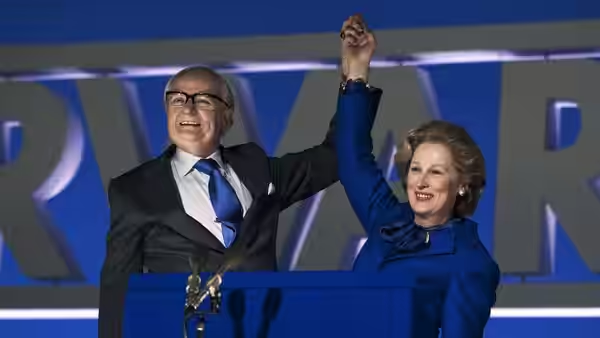
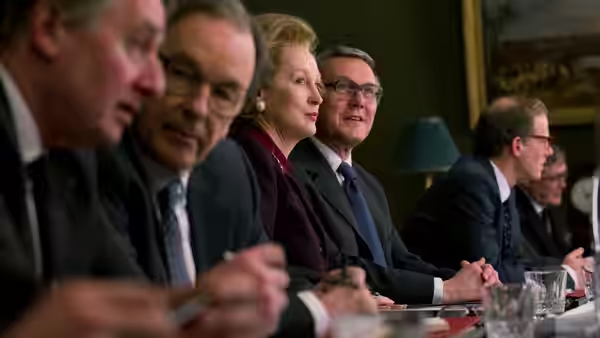
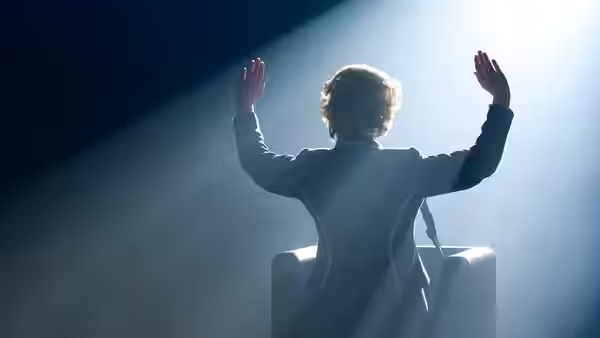
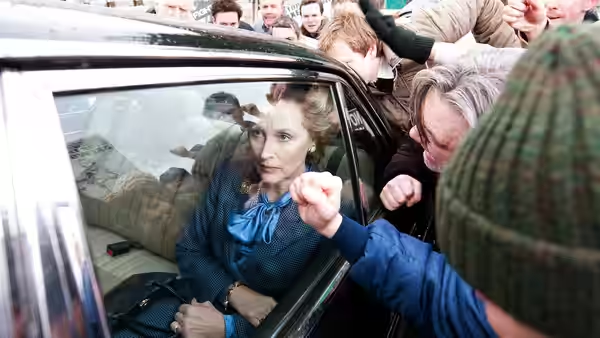
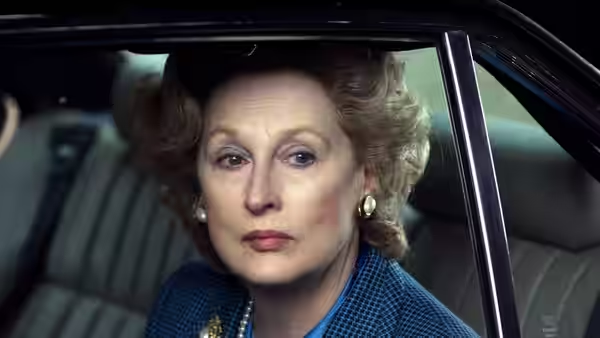
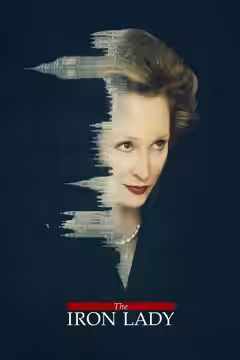
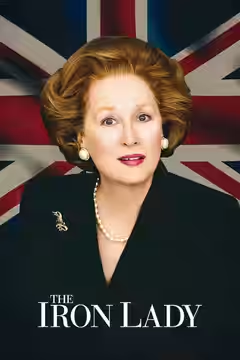
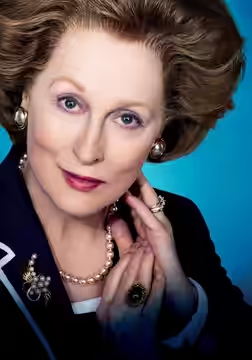
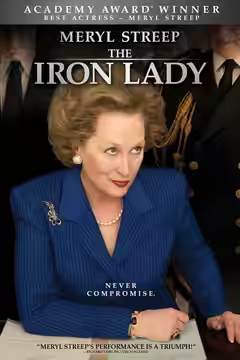
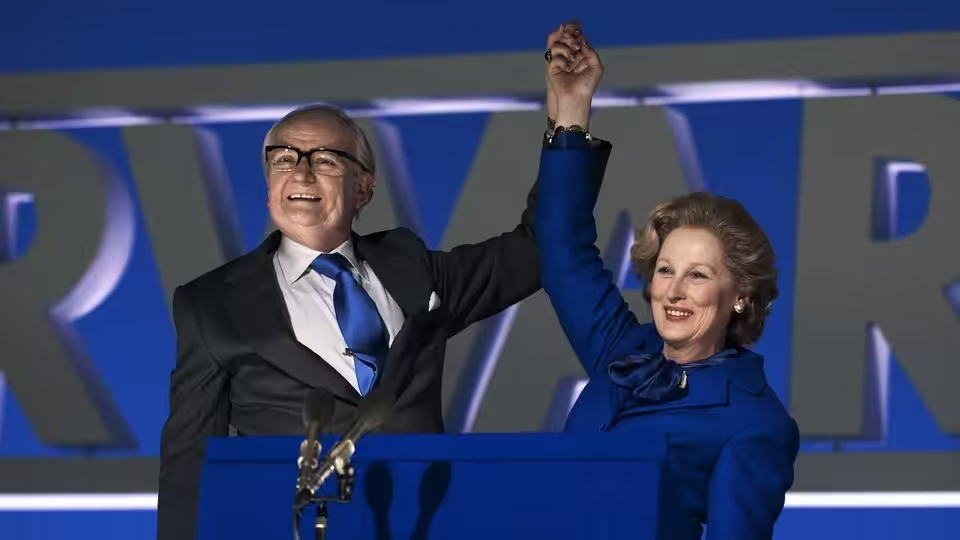
Margaret Thatcher (Meryl Streep) raises a clasped hand beside a suited man at a campaign podium
Film review

The Iron Lady

2011 · Directed by Phyllida Lloyd · 1h 45m · IFCO 16

In a sentenceMeryl Streep gets the voice right; the script would prefer not to discuss politics

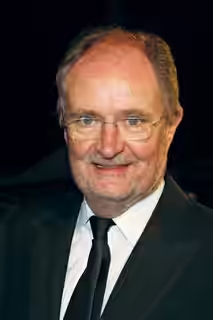
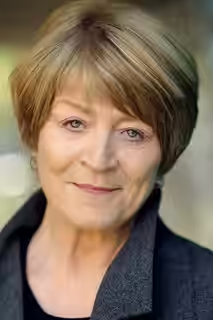
Margaret Thatcher (Meryl Streep) faces dementia in old age, while the film returns to the political career that made her a public figure. Denis Thatcher (Jim Broadbent) is central to the account of her marriage; Carol Thatcher (Olivia Colman) also appears in this portrait of her private life. Margaret struggles to hold on to the certainty and authority associated with her earlier years. Her marriage and her years in politics unfold alongside the later struggle to retain her sense of herself.

Fi1m review

Meryl Streep gives Margaret Thatcher wit, precision and a troubling vulnerability. Phyllida Lloyd’s otherwise disappointing biography rushes through the politics and leaves the marriage too thinly drawn to compensate.

Meryl Streep is persuasive as Margaret Thatcher, but The Iron Lady is too evasive about politics to work as a biography. Phyllida Lloyd directs a film that finds its strongest material in the ageing woman’s private distress. Abi Morgan’s screenplay concentrates on dementia and the loss of self-command, then repeatedly turns to a political career it seems reluctant to investigate. The changes of subject keep weakening a domestic drama that might have worked with more time and fewer obligations.

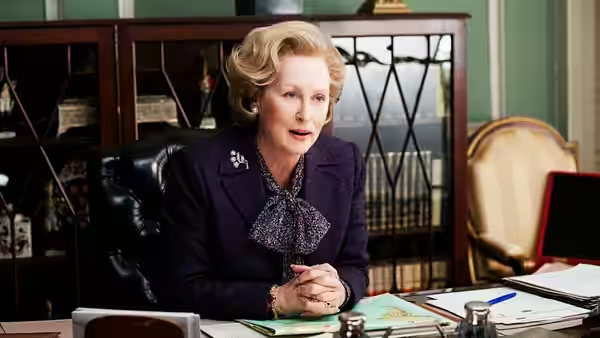
Streep’s changing voice is the most persuasive piece of storytelling: the impression is exact enough to recognise, but it also allows frailty and humour into a formidable public manner. We were moved by her portrayal of Thatcher’s fear of losing her mind. She makes Thatcher’s uncertainty clear without inviting us to laugh at it, and that care matters in a film so dependent on vulnerability. The trouble begins when the sympathy she earns is asked to do the work of explaining the woman.

Jim Broadbent, as Denis Thatcher, gives the private scenes a welcome tenderness. His rapport with Streep suggests the more concentrated domestic film Lloyd might have made, although Morgan does not develop the relationship enough to make it fully convincing. The affection is easier to understand than the marriage, because the film gives their relationship too little room. Broadbent is especially frustrating to watch in that respect: his warmth makes us want more time with a character the writing keeps pushing aside.

The political passages expose the cost of trying to fit so much into 105 minutes. Justine Wright’s editing carries us through the career at a pace that leaves events insufficiently examined; Morgan’s script supplies too little political detail to make that haste worthwhile. The film asks us to take Thatcher’s public importance for granted while concentrating its attention on her private distress. We need to understand the decisions as well as recognise the person making them, and the hurried treatment leaves too much unexplained.

Elliot Davis’s cinematography serves Streep’s impersonation well, keeping her portrayal of Thatcher the principal visual interest. Simon Elliott’s production design contributes to the sense of a life convincingly reconstructed, although the film’s polished appearance can conceal how little is being explained. Thomas Newman’s music is most at home with the private sorrow, where the performances already give it something to support. These contributions help the film remain watchable, but they cannot make its treatment of history convincing.

A political biography does not have to condemn its subject. Nor is there anything suspect about showing a person with dementia compassion, and Streep makes that compassion feel earned. But Morgan gives us too little understanding of Thatcher’s beliefs or their consequences, leaving the audience to supply whatever it already knows. Anyone hoping the film will test their view of her is likely to leave with it unchanged.

There is enough humour and tenderness here to make the film’s caution frustrating. Streep deserves attention, and Broadbent makes us wish the domestic scenes had been given more time to develop. We would choose it only for Streep.

Critical consensus AI synthesised

53
Positive
2
Mixed
12
Negative
6

The consensus is mixed, with praise concentrated on Meryl Streep rather than the film around her. Most critics admire the precision of her voice and mannerisms, and many find emotional depth in her portrayal of Thatcher’s old age and vulnerability. Even several negative reviews consider her compelling. The personal drama tends to fare better than the political biography, though the tenderness that moves some critics leaves others questioning the film’s priorities.

Reservations cluster around the evasive treatment of Thatcher’s politics, the rushed account of her career and the clumsy framing devices. The verdicts range from warm approval to outright rejection, despite broad agreement about Streep’s technical skill. Paste embraces the film as a moving love story while acknowledging its hurried political history. IndieWire offers a sharper dissent on the central performance, finding Streep’s meticulous imitation hollow, and regards the surrounding biography as clichéd and poorly structured.

Evening Standard
4 July 2012
65*

The critic calls the film compelling viewing but faults its treatment of Thatcher’s political legacy and dementia. Meryl Streep’s performance is singled out as brilliant and worth seeing the film for alone.

Read the full review →
The Hollywood Reporter
23 November 2011 · David Rooney
65*

Rooney finds the film thoughtful and emotionally engaging, though its political portrait is too soft-focus and deferential. He especially praises Streep’s meticulously detailed, moving performance as the aging Thatcher.

Read the full review →
Vulture
29 December 2011 · David Edelstein
65*

Edelstein finds the film shallow but satisfying, with its politics carefully held at arm’s length. He especially praises Meryl Streep’s mimicry for conveying Thatcher’s inner life and the tenderness of her scenes with Denis.

Read the full review →
Screen Daily
23 November 2011 · Mark Adams, chief film critic
64*

The page identifies this as a review, but the review text is hidden behind a paywall. Its verdict and any specific praise or complaint cannot be determined.

Read the full review →
Slant Magazine
13 December 2011 · ★★½/4 · R. Kurt Osenlund
62

The critic finds the film fascinating but uneven, with Meryl Streep’s performance making it unmissable despite clumsy filmmaking. Streep’s fierce, brilliantly overacted mimicry is singled out for praise, while the film’s cluttered biopic devices draw complaint.

Read the full review →
Empire
8 February 2011 · ★★★ · Dan Jolin
60

The review finds the film’s attempt to sidestep Thatcher’s politics weakens it, leaving a myth-enshrining portrait. It praises Meryl Streep’s remarkably convincing performance, while faulting the sidelining of Jim Broadbent and the underdeveloped relationship between their characters.

Read the full review →

Straight answers AI written, from our review

Is The Iron Lady worth watching?
The Iron Lady is worth considering only for Meryl Streep’s performance as Margaret Thatcher; we score it 52 out of 100. We were moved by her portrayal of dementia and the fear of losing control, but the hurried politics and underdeveloped marriage make this a disappointing choice for anyone seeking an illuminating biography.
How long is The Iron Lady, and what is it rated?
The Iron Lady runs 1h 45m and is rated 16 by the IFCO in Ireland. It is a history and drama film.
Where can I watch The Iron Lady in Ireland?
The Iron Lady is available to rent from Amazon Prime Video from €3.99. Availability is checked daily; the links above go straight to each service.
How violent or frightening is The Iron Lady, and is it suitable for children?
The Iron Lady carries a UK 12A certificate, meaning children under 12 need an accompanying adult at the cinema. Its portrayal of dementia and the fear of losing control may distress viewers sensitive to those subjects; we would steer younger children away and suggest it chiefly for teenagers interested in adult drama.
How does The Iron Lady compare to The Queen?
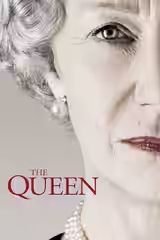
The Iron Lady is the weaker choice beside The Queen, which we recommend for its fuller treatment of a public woman’s private difficulties and political responsibilities. Streep gives Thatcher persuasive vulnerability, but her film rushes through the politics; The Queen allows more room for judgement, humour and the struggle between duty and public feeling, even when its disagreements seem too tidy.
What should I watch after The Iron Lady?
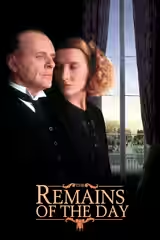
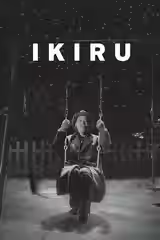
After The Iron Lady, try The Queen (2006, Fi1m 84): Another public woman in private difficulty, with more room for political judgement. Then The Remains of the Day (1993, Fi1m 88): Political loyalties and private regrets emerge through performances that trust small details; and Ikiru (1952, Fi1m 92): A public servant confronting mortality finds purpose beyond the habits of office.

Cast

Awards

Academy Awards, 2012

Won
Best Actress
Won
Best Makeup and Hairstyling

European Film Award – People's Choice Award for Best European Film, 2012

Nominated
European Film Award – People's Choice Award for Best European Film

If you liked this, try…

  1. The Queen (2006, Fi1m 84)Another public woman in private difficulty, with more room for political judgement.

  2. The Last Mitterrand (2005) · not on Fi1m yetAn ageing leader faces mortality in a more searching account of political power.

  3. The Remains of the Day (1993, Fi1m 88)Political loyalties and private regrets emerge through performances that trust small details.

  4. Ikiru (1952, Fi1m 92)A public servant confronting mortality finds purpose beyond the habits of office.

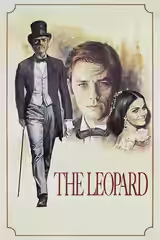
  5. The Leopard (1963, Fi1m 88)Political change becomes personal through an ageing aristocrat watching his authority ebb.