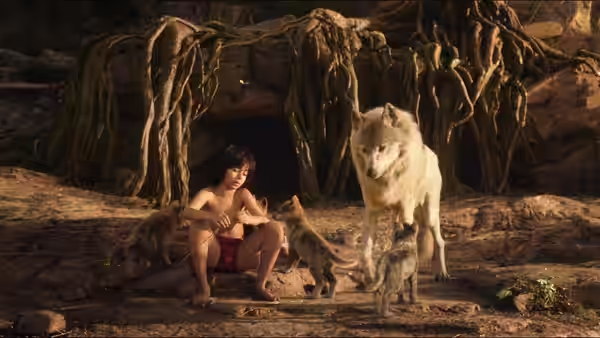
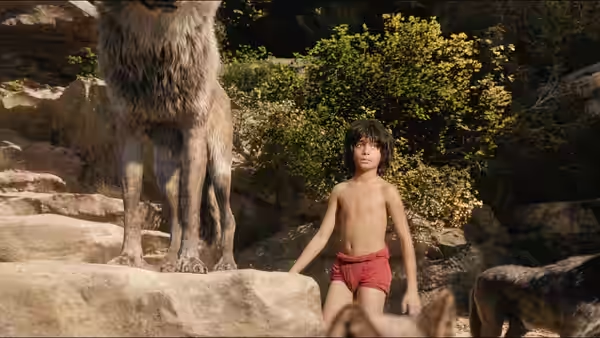
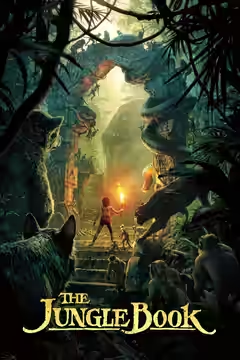
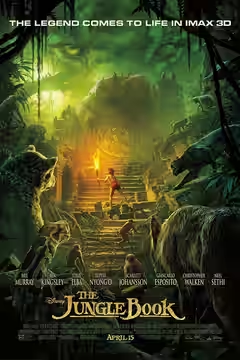
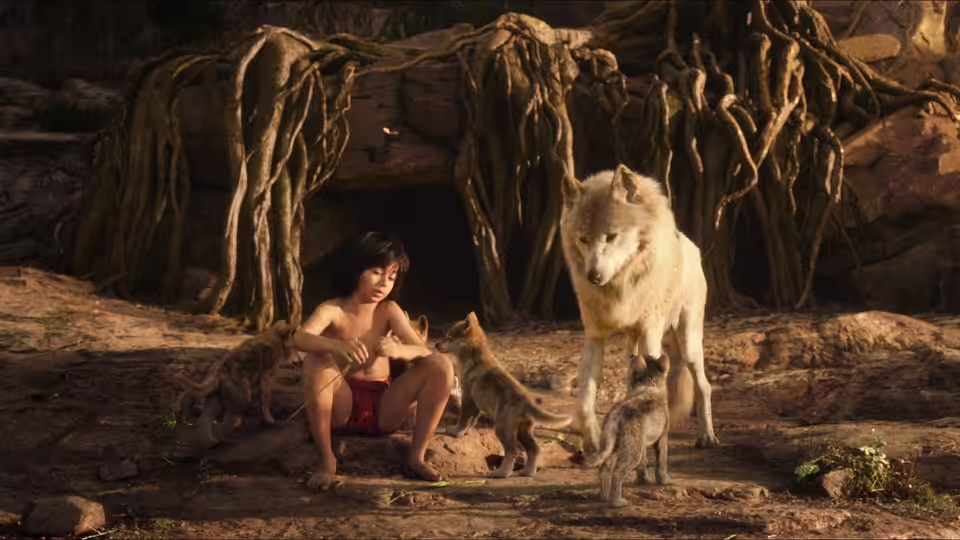
Mowgli (Neel Sethi) sits among wolves outside a root-covered den
Film review

The Jungle Book

2016 · Directed by Jon Favreau · 1h 46m · MPA PG

In a sentenceThe tiger is frightening, the bear is Bill Murray, and the giant ape appears to think he is in a musical

Mowgli (Neel Sethi), a boy raised by a wolf pack in the Indian jungle, is being trained by the panther Bagheera (Ben Kingsley) to run like a wolf and to stop using the tricks his hands can do. The dry season brings the Water Truce, when every animal drinks at the Peace Rock without killing, and with it the tiger Shere Khan (Idris Elba), his face burnt by man’s fire, who tells the pack that when the rains return the man-cub is his. Akela (Giancarlo Esposito), the pack leader, and Raksha (Lupita Nyong’o), the wolf who raised him, argue over what to do. Mowgli chooses to leave for the man village with Bagheera as his guide, a journey that will bring him to the python Kaa (Scarlett Johansson) and the bear Baloo (Bill Murray).

Plays from YouTube when you press play; nothing loads from them until then.

Fi1m review

Favreau’s remake builds a whole jungle out of nothing and puts a frightening tiger in it, and for long stretches that is enough. The boy at the centre is not always up to his company, and the songs sit awkwardly.

Jon Favreau has remade the 1967 cartoon as a chase. Mowgli (Neel Sethi), a boy raised by wolves, is wanted dead by a tiger, and the film is the business of getting him out of reach, with stops for a snake, a bear and an ape the size of a lorry. Justin Marks’s screenplay keeps Rudyard Kipling’s Law of the Jungle, keeps the Disney songs, and adds an argument about whether a boy should use his hands. Almost nothing on screen existed when Sethi stood in front of the camera. That is the achievement and also the problem.

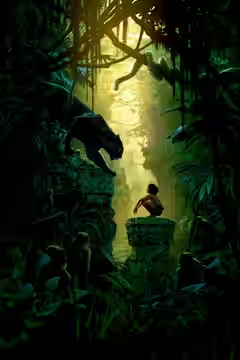
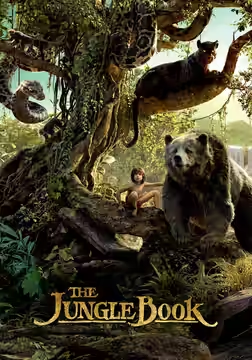
The jungle is the reason to see it. Christopher Glass has designed India as a child remembers it: banyan roots you could walk down, a river with a flat grey rock where every animal drinks in the dry season, a temple half-eaten by trees. Bill Pope shoots it low, at a boy’s height, the camera running behind Mowgli as if a second child were trying to keep up, and the light comes through the canopy in dusty shafts that catch the wolves’ fur. We stopped noticing the animals were digital within ten minutes. The elephants, who pass through in silence while the jungle bows, are the best thing in it.

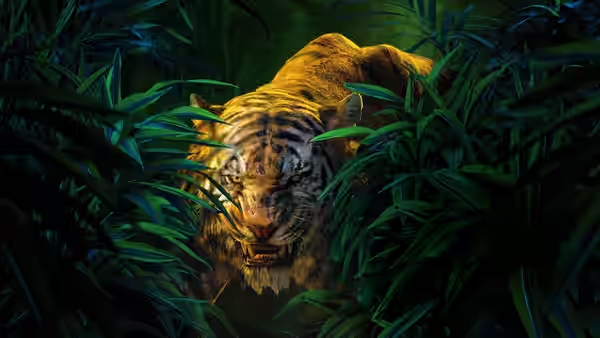
Shere Khan’s arrival at the water hole is where the film decided us. Idris Elba’s voice comes out of the tiger low and unhurried, one side of the face scarred smooth, and the jungle goes quiet while he sets out his terms to the pack. We were frightened, in a PG film, and we stayed frightened whenever he came back. John Debney’s score does the right thing here, which is almost nothing. In a scene with the wolf cubs we will not describe, Elba turns the tiger into a bedtime storyteller, and that is worse.

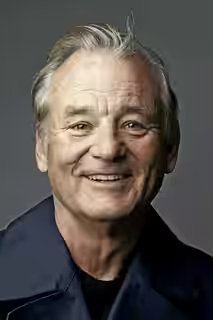
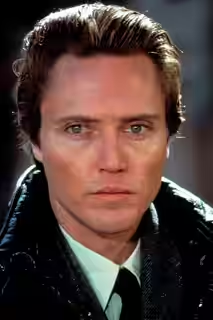
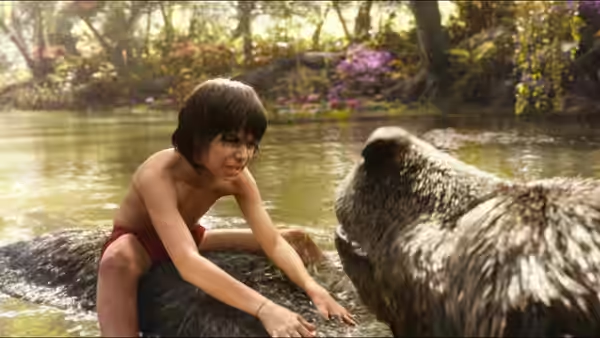
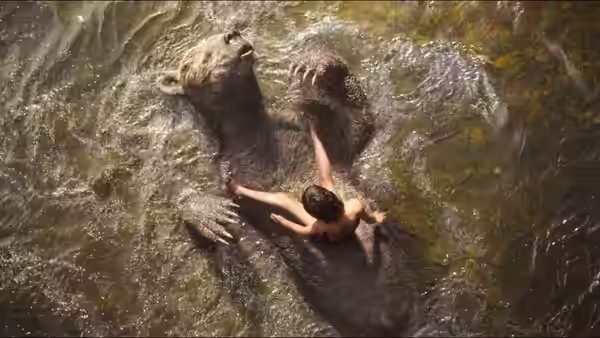
Bill Murray’s Baloo arrives when the film needs him and the film relaxes. Murray plays the bear as a man who has talked his way out of every job he has ever had. Floating downriver on the bear’s stomach is the warmest passage in the film, and it is where Favreau reaches for The Bare Necessities. Murray half-sings it, half-talks it, and it is fine, because the scene already feels like a song. I Wan’na Be Like You is another matter. Christopher Walken’s King Louie is a huge ape in a dark temple, played straight and menacing, and then he begins a jazz number, and the film has to choose whether he is a monster or a floor show. It does not choose. We laughed, and then we were not sure we had been meant to.

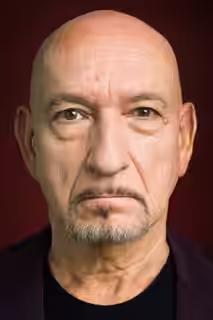
Neel Sethi is a likeable boy with an impossible job. Every creature he speaks to was put in afterwards, and it shows in his eyes: he is often looking at where a wolf will be rather than at a wolf. In the talking scenes, especially with Ben Kingsley’s Bagheera, who does most of the work, his lines land a half-beat late, and Mark Livolsi’s cut leaves even pauses around him that nobody fills. The shape does not help. Each stop, snake, bear, ape, is a self-contained act with its own villain and its own escape, so 106 minutes feels episodic even at speed. Scarlett Johansson’s Kaa gets one scene, coiled and murmuring, and then she is gone.

The 1967 film was loose and jazzy. Favreau has gone towards Kipling’s harder jungle, where a man-cub is a problem the pack must solve, and Lupita Nyong’o’s Raksha and Giancarlo Esposito’s Akela give the wolf scenes a weight the cartoon never had. Then he keeps the songs anyway, and the danger from one version and the tunes from the other do not always fit in the same scene. It is still better than most of Disney’s remakes, because the danger is real and the boy’s wish to belong is the story rather than a slogan.

Take a child of about eight. Under six is a gamble; the tiger is a real tiger to a small person in the dark. And when the ape starts to sing, do not catch each other’s eye. It passes.

Critical consensus AI synthesised

75
Positive
25
Mixed
3
Negative
1

Most critics like it. The praise clusters almost entirely on the digital jungle and the animals in it, which reviewers repeatedly call convincing enough that you stop noticing they are not real. Favreau’s light touch gets credit for keeping the story buoyant rather than solemn, and Bill Murray’s Baloo is the performance named most often, with Neel Sethi’s Mowgli a regular second.

The reservations are consistent and mostly minor. Several reviews find the songs sit awkwardly in a film built as a chase, and a few think it thin on theme and loose in structure. The 1967 film hovers over everything, and some critics find the remake colder and further from Kipling than they would like. The spread is narrow: only one review is outright negative, The New Yorker’s, which calls the film controlled and flat and short on real peril, and Slant Magazine alone finds the chase and the musical pulling against each other.

Los Angeles Times
14 April 2016 · Kenneth Turan
85*

Turan finds the film a sweet, scary triumph and a model of crowd-pleasing entertainment. He particularly praises its photorealistic jungle world and the balance between family-friendly fun and genuine peril.

Read the full review →
Little White Lies
11 April 2016 · 3/4/4 · Adam Woodward
80

The review calls the film an astonishing, immersive triumph. It especially praises the richly textured digital jungle and its photorealistic creatures.

Read the full review →
Radio Times
★★★★ · Victoria Luxford
80

Luxford finds the film a gorgeous adventure that successfully brings magic and wonder to the story. She singles out Favreau’s jaw-dropping, CGI-enabled action for praise.

Read the full review →
The Guardian
12 April 2016 · ★★★★ · Peter Bradshaw
80

Bradshaw calls the remake a tremendous success and an unexpectedly enjoyable piece of old-fashioned storytelling. He particularly praises the persuasive digital rendering of the animals and Bill Murray’s amusing performance as Baloo.

Read the full review →
Time Out
5 April 2016 · ★★★★ · Cath Clarke
80

Clarke calls the remake a winner. The available excerpt does not identify a specific element singled out for praise or criticism.

Read the full review →
Variety
3 April 2016 · Andrew Barker
80*

Barker finds this a successful, buoyant adventure that avoids the po-faced seriousness of many modernized fairy tales. He especially praises Favreau’s light touch and the strikingly convincing animal effects.

Read the full review →

Straight answers AI written, from our review

Is The Jungle Book worth watching?
The Jungle Book (2016) is worth watching for families with a child of about eight, and we scored it 72. The digital jungle is convincing within minutes and Idris Elba's Shere Khan is properly frightening, but Neel Sethi's Mowgli is often left stranded by his unseen co-stars and the Disney songs sit awkwardly beside the danger.
How long is The Jungle Book, and what is it rated?
The Jungle Book runs 1h 46m and is rated PG by the MPA in the US. It is an adventure and family film.
Where can I watch The Jungle Book in the US?
The Jungle Book is streaming on Disney+ in the US, and it is also available to rent from Amazon Prime Video and Apple TV from $3.99. Availability is checked daily; the links above go straight to each service.
How does The Jungle Book compare to The Jungle Book?
The Jungle Book (2016) is a darker, more dangerous film than the 1967 cartoon, and the earlier film is the more relaxed and funnier of the two. Favreau's version has a real tiger and a real jungle but keeps the songs half-heartedly; the cartoon knows the songs are the point. Small children will be happier with 1967.
Is The Jungle Book based on a true story or a book?
The Jungle Book (2016) is based on Rudyard Kipling's book and is also a remake of Disney's 1967 cartoon. It leans closer to Kipling's harder jungle, keeping his Law of the Jungle and treating the man-cub as a problem the wolf pack must solve, while borrowing the Disney songs. Knowing the book is not needed to follow it.
What should I watch after The Jungle Book?
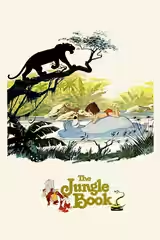
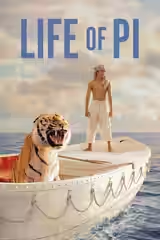
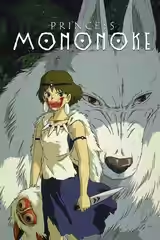
After The Jungle Book, try The Jungle Book (1967, Fi1m 80): The cartoon this one is answering: looser, funnier, and it knows the songs are the point. Then Life of Pi (2012, Fi1m 78): A boy and a digital tiger in a very small boat; the tiger never softens; and Princess Mononoke (1997, Fi1m 88): Miyazaki’s forest gods and wolves, for children who found Shere Khan the best bit.

Cast

Awards

Academy Awards, 2017

Won
Best Visual Effects

BAFTA Film Awards, 2016

Nominated
BAFTA's Children & Young People Award - Feature Film

Teen Choice Award for Choice Movie - Action, 2016

Nominated
Teen Choice Award for Choice Movie - Action

Teen Choice Award for Choice Movie Actor – Action, 2016

Nominated
Teen Choice Award for Choice Movie Actor – Action

Teen Choice Award for Choice Movie Breakout Star, 2016

Nominated
Teen Choice Award for Choice Movie Breakout Star

TV Krant Filmposter Award, 2016

Won
TV Krant Filmposter Award

If you liked this, try…

  1. The Jungle Book (1967, Fi1m 80)The cartoon this one is answering: looser, funnier, and it knows the songs are the point.

  2. Life of Pi (2012, Fi1m 78)A boy and a digital tiger in a very small boat; the tiger never softens.

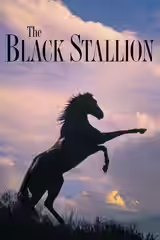
  3. The Black Stallion (1979) · not on Fi1m yetA boy and an animal on an island, half an hour with barely a word spoken.

  4. Princess Mononoke (1997, Fi1m 88)Miyazaki’s forest gods and wolves, for children who found Shere Khan the best bit.

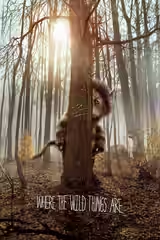
  5. Where the Wild Things Are (2009, Fi1m 80)Another lonely boy adopted by large creatures, sadder and stranger than it looks.