Favreau’s remake builds a whole jungle out of nothing and puts a frightening tiger in it, and for long stretches that is enough. The boy at the centre is not always up to his company, and the songs sit awkwardly.
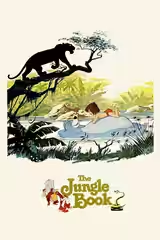
Jon Favreau has remade the 1967 cartoon as a chase. Mowgli (Neel Sethi), a boy raised by wolves, is wanted dead by a tiger, and the film is the business of getting him out of reach, with stops for a snake, a bear and an ape the size of a lorry. Justin Marks’s screenplay keeps Rudyard Kipling’s Law of the Jungle, keeps the Disney songs, and adds an argument about whether a boy should use his hands. Almost nothing on screen existed when Sethi stood in front of the camera. That is the achievement and also the problem.
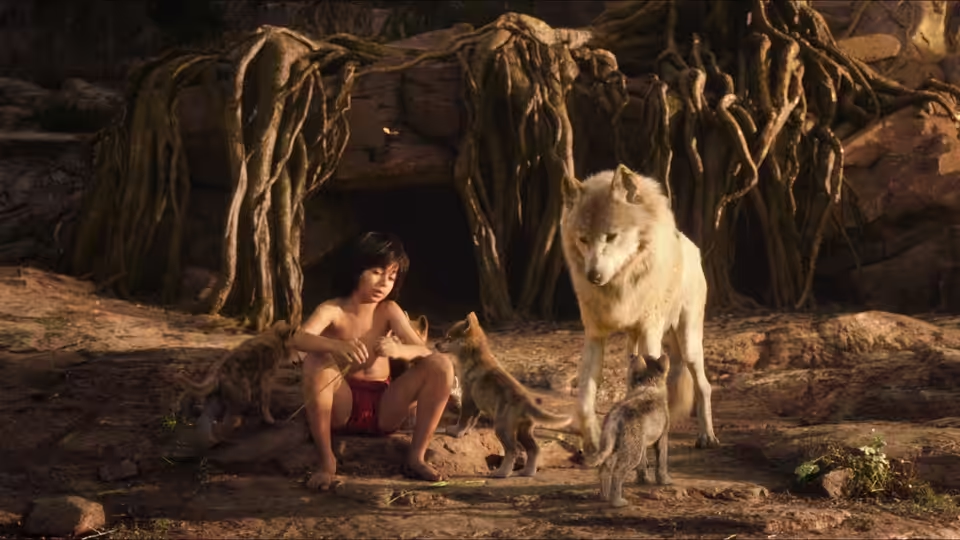
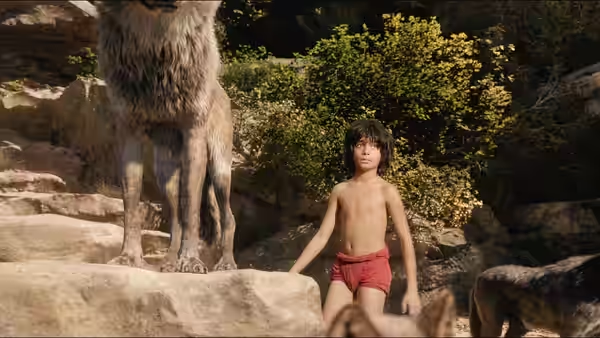
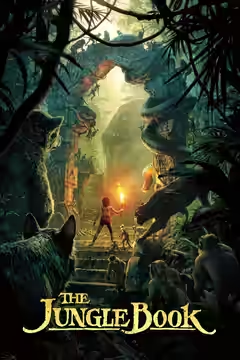
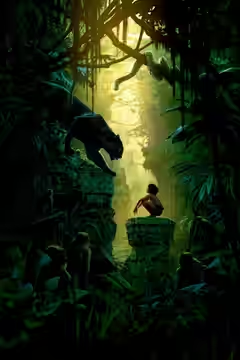
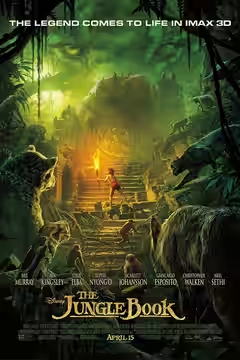
The jungle is the reason to see it. Christopher Glass has designed India as a child remembers it: banyan roots you could walk down, a river with a flat grey rock where every animal drinks in the dry season, a temple half-eaten by trees. Bill Pope shoots it low, at a boy’s height, the camera running behind Mowgli as if a second child were trying to keep up, and the light comes through the canopy in dusty shafts that catch the wolves’ fur. We stopped noticing the animals were digital within ten minutes. The elephants, who pass through in silence while the jungle bows, are the best thing in it.
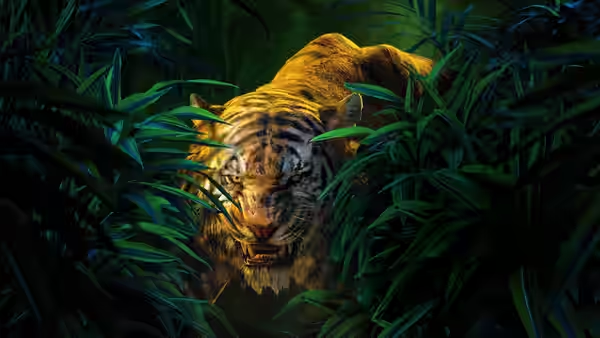
Shere Khan’s arrival at the water hole is where the film decided us. Idris Elba’s voice comes out of the tiger low and unhurried, one side of the face scarred smooth, and the jungle goes quiet while he sets out his terms to the pack. We were frightened, in a PG film, and we stayed frightened whenever he came back. John Debney’s score does the right thing here, which is almost nothing. In a scene with the wolf cubs we will not describe, Elba turns the tiger into a bedtime storyteller, and that is worse.
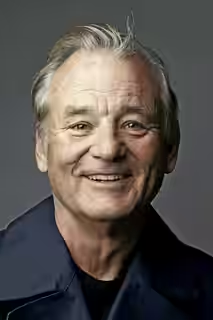
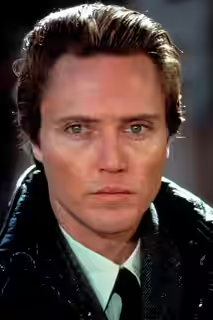
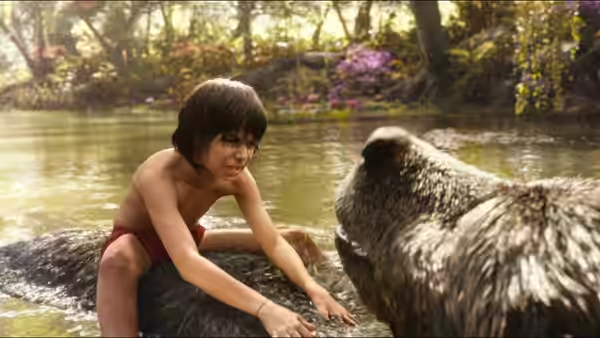
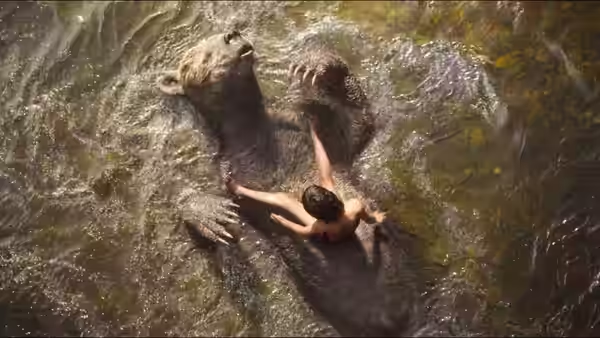
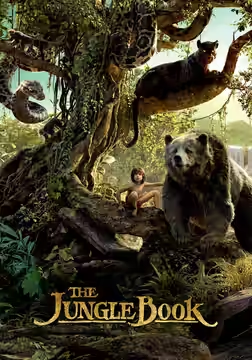
Bill Murray’s Baloo arrives when the film needs him and the film relaxes. Murray plays the bear as a man who has talked his way out of every job he has ever had. Floating downriver on the bear’s stomach is the warmest passage in the film, and it is where Favreau reaches for The Bare Necessities. Murray half-sings it, half-talks it, and it is fine, because the scene already feels like a song. I Wan’na Be Like You is another matter. Christopher Walken’s King Louie is a huge ape in a dark temple, played straight and menacing, and then he begins a jazz number, and the film has to choose whether he is a monster or a floor show. It does not choose. We laughed, and then we were not sure we had been meant to.
Neel Sethi is a likeable boy with an impossible job. Every creature he speaks to was put in afterwards, and it shows in his eyes: he is often looking at where a wolf will be rather than at a wolf. In the talking scenes, especially with Ben Kingsley’s Bagheera, who does most of the work, his lines land a half-beat late, and Mark Livolsi’s cut leaves even pauses around him that nobody fills. The shape does not help. Each stop, snake, bear, ape, is a self-contained act with its own villain and its own escape, so 106 minutes feels episodic even at speed. Scarlett Johansson’s Kaa gets one scene, coiled and murmuring, and then she is gone.
The 1967 film was loose and jazzy. Favreau has gone towards Kipling’s harder jungle, where a man-cub is a problem the pack must solve, and Lupita Nyong’o’s Raksha and Giancarlo Esposito’s Akela give the wolf scenes a weight the cartoon never had. Then he keeps the songs anyway, and the danger from one version and the tunes from the other do not always fit in the same scene. It is still better than most of Disney’s remakes, because the danger is real and the boy’s wish to belong is the story rather than a slogan.
Take a child of about eight. Under six is a gamble; the tiger is a real tiger to a small person in the dark. And when the ape starts to sing, do not catch each other’s eye. It passes.