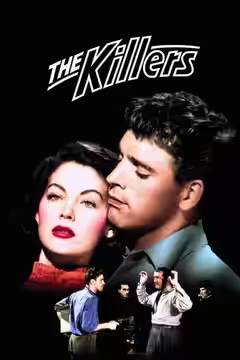
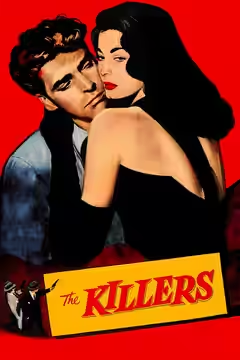
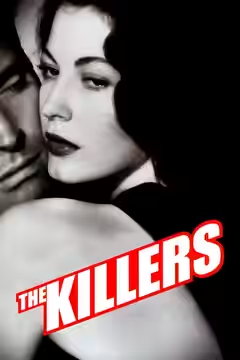
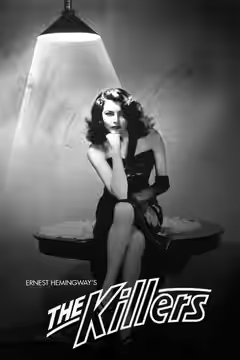
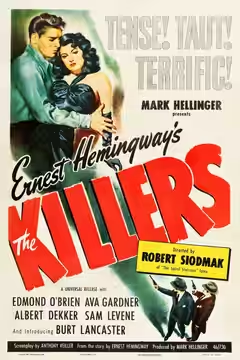
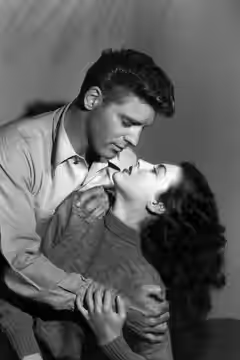
Robert Siodmak’s noir thriller is tense, bleak and well worth the evening. Burt Lancaster and Ava Gardner hold our attention even when the flashbacks make the story more laborious than it needs to be.
Robert Siodmak’s The Killers is a gripping noir thriller that occasionally gets bogged down in telling us how everything happened. Its bleakness is persuasive, and the performances give us ample reason to stay with a story that takes the long way round. The reservation matters: the flashbacks can make a tense film feel laborious. Even so, the direction has enough authority to make an evening spent in this company worthwhile.
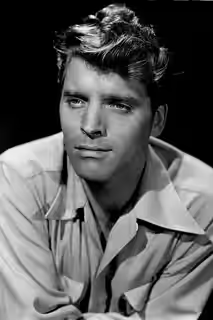
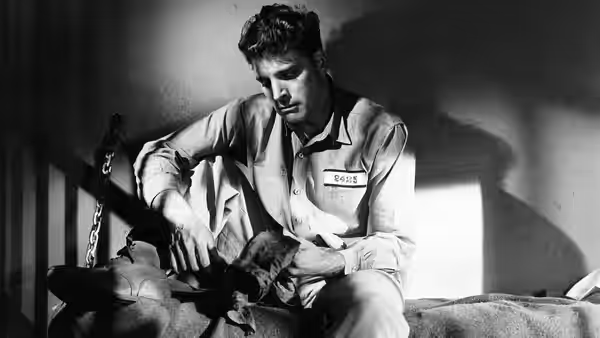
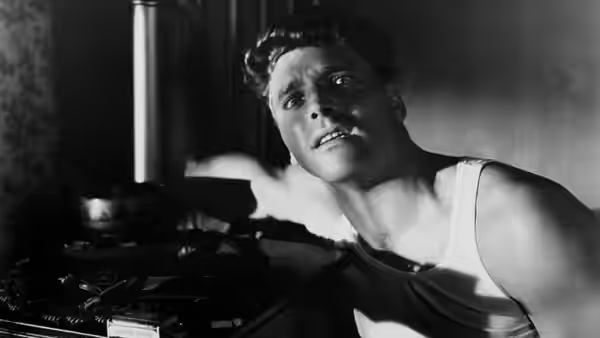
We were unnerved by Burt Lancaster’s first appearance; he seems to have reached a depth of unhappiness from which ordinary reassurance would be useless. As ‘Swede’ Andersen, he gives the film’s fatalism a human weight. He holds our attention so completely that we are prepared to wait for the explanations, though the film occasionally overestimates that patience. His performance remains compelling through the complications, and makes some of them seem unnecessary.
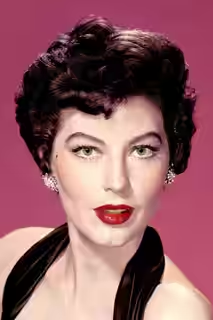
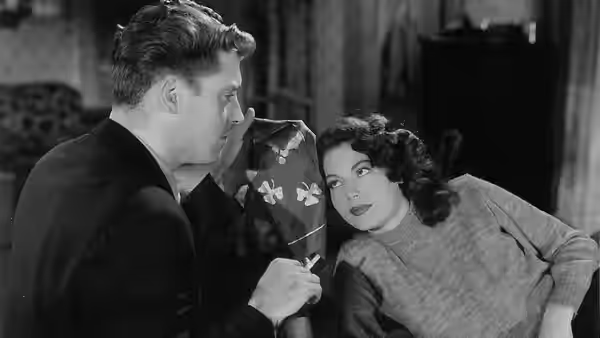
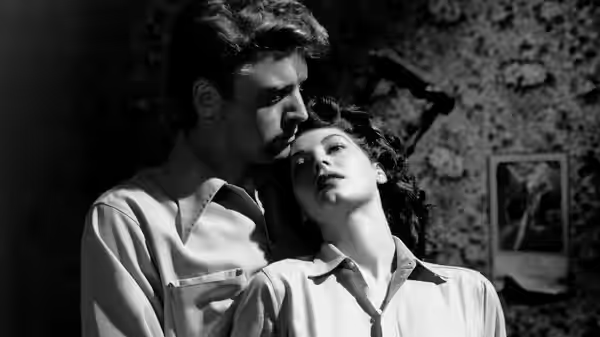
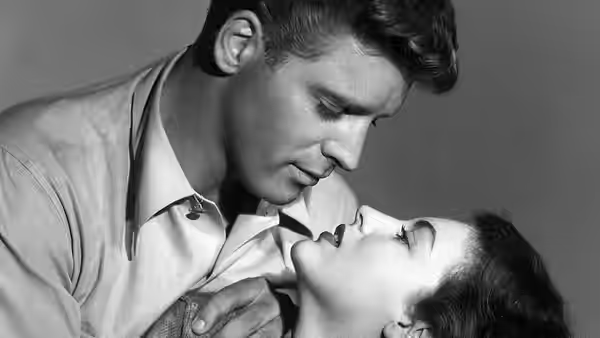
Ava Gardner’s Kitty Collins has a comparable hold on the screen. Her presence makes the film feel more dangerous, which is useful when so much of its storytelling is occupied with explanation. The screenplay does not always give her language as arresting as the performance, and we sometimes find ourselves watching her more closely than we are following the words. She makes those passages worth our attention without disguising their shortcomings.
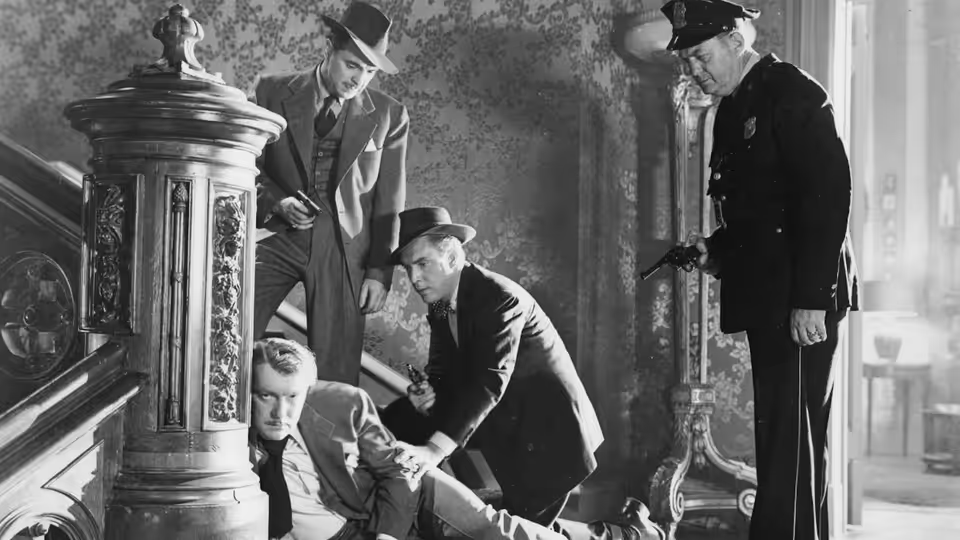
Elwood Bredell’s black-and-white photography sustains much of the tension. The darkness feels oppressive, and the expressive lighting gives the despair a force that the dialogue cannot always supply. Robert Siodmak’s Expressionist direction is certainly conspicuous, but it suits a thriller that wants unease to persist even when nothing much is moving. The images are handsome without making this seem an agreeable place to spend time, and that discomfort is useful.
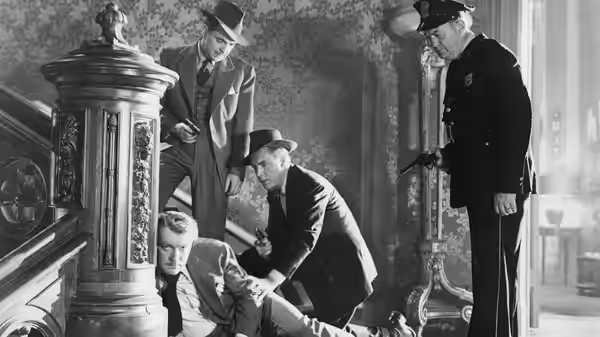
The heist, staged in one long master shot, demonstrates how confidently the film can handle action. Holding the shot gives the sequence time to develop, and the sustained attention is more exciting than a rush of fragments would have been. Arthur Hilton’s editing has a harder task elsewhere, managing the repeated moves into the past without letting the present lose its urgency. The structure sometimes defeats that effort: the accumulation of explanations slows a film whose individual scenes can be so taut.
Miklós Rózsa’s score helps keep the unease present during those slower passages. It supplies a dramatic pressure that the screenplay, credited to Anthony Veiller, does not consistently achieve through words. The flashbacks are the substantial caveat, rather than evidence that the whole enterprise has gone wrong; there is still plenty here to hold us. We would happily lose some explanation before losing any of the time spent watching either lead.
For a noir thriller, its willingness to linger with despair is a strength, though anyone chiefly seeking brisk investigation may find the pace frustrating. At 103 minutes, the delays register without exhausting our patience. Give it an uninterrupted evening: the faces and the photography deserve better than being glanced at between other things.