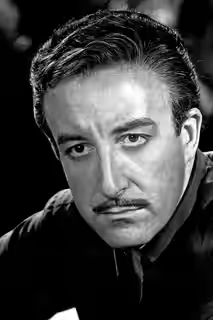
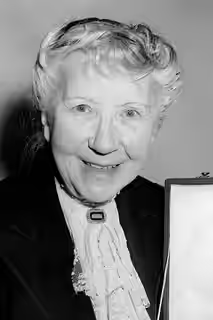
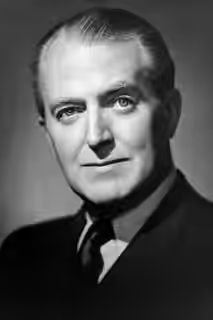
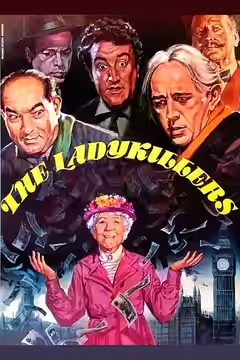
The Ladykillers is a sharply timed crime comedy whose nastiness makes Katie Johnson’s stubborn landlady all the funnier. Alec Guinness sometimes pushes too hard, but Alexander Mackendrick keeps the threat close enough to make the laughter uncomfortable.
Alexander Mackendrick’s The Ladykillers gets a great deal of pleasure from making criminals observe the social rules they would rather ignore. It is a richly funny crime comedy, and its nastiness is essential to the joke. William Rose’s screenplay gives the gang a landlady whose insistence on proper conduct cannot simply be brushed aside. The men may consider themselves equipped to handle her, but the film keeps finding comedy in the effort required to remain civil.
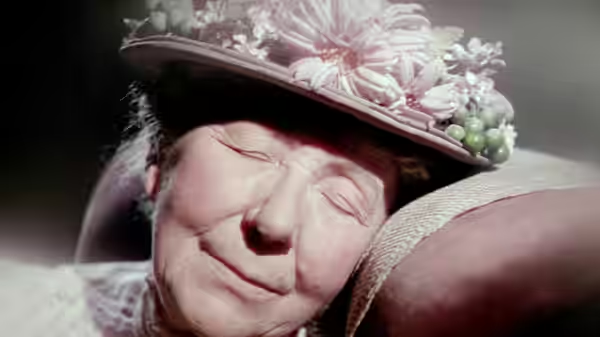
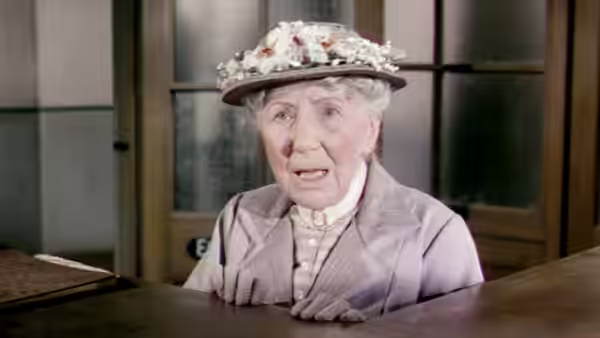
Katie Johnson makes Mrs. Wilberforce stubborn without making her a mechanical obstacle to everyone else’s amusement. Her propriety feels settled, ordinary and quite independent of whatever the men happen to want. She does not ask for affection, and the film is better for leaving her awkwardness intact. The gang’s frustration becomes funny because she has no reason to regard their convenience as more important than her own standards of behaviour.
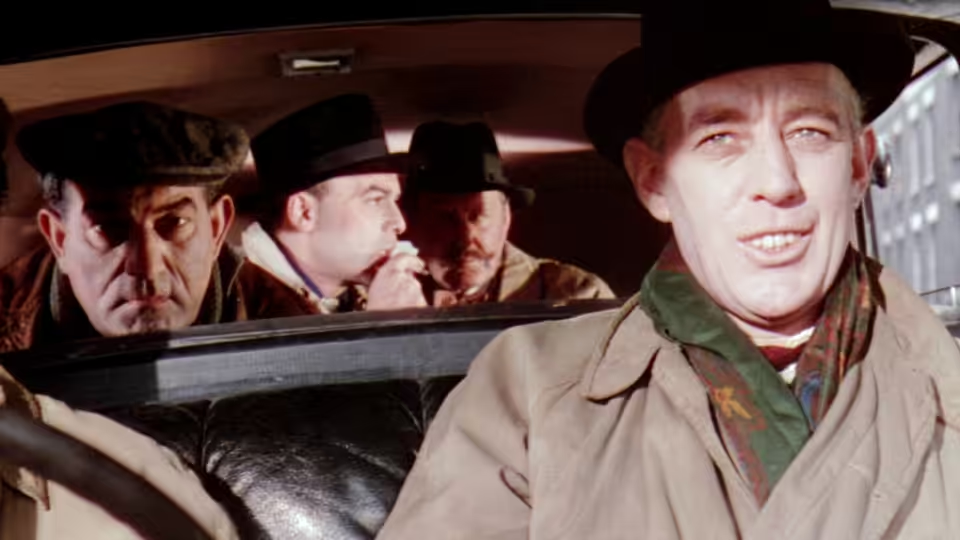
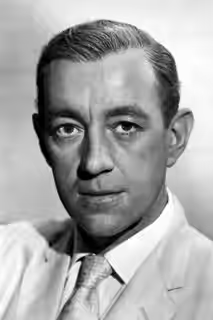
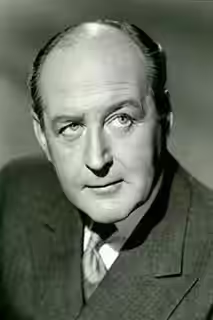
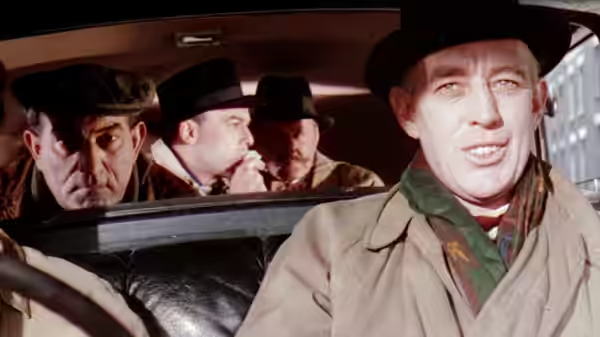
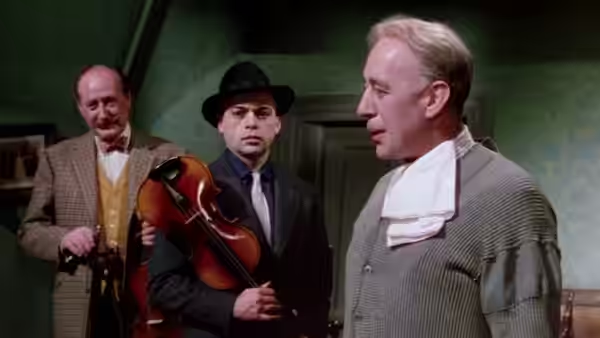
Alec Guinness gives Professor Marcus a grotesque appearance that makes his attempts at respectability funny before he has said much. We laughed at his false teeth, then felt faintly repelled by the smile. That discomfort matters: the landlady is dealing with criminals, however diligently they keep up appearances. The performance can be overworked, with the disguise threatening to become more interesting than the person inside it. Cecil Parker provides a useful contrast, suggesting the absurdity of his character’s pretensions without seeming quite so determined to make an impression.
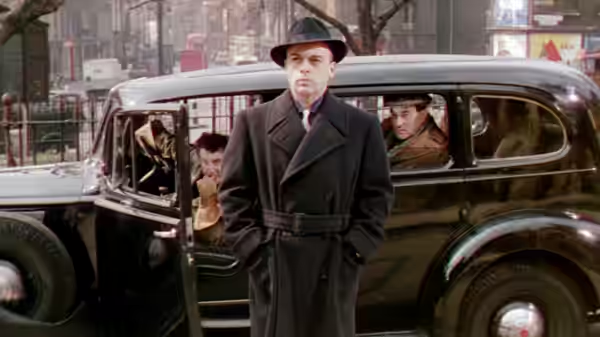
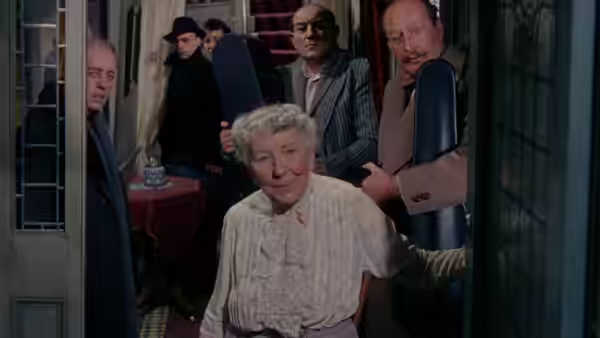
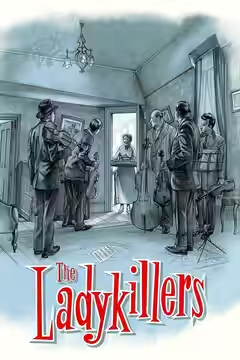
Otto Heller’s cinematography uses light and shadow to make the gang look more dangerous than their competence warrants. The faces can be funny and still look unpleasant; the comedy does not depend on making these men harmless. The architecture helps, making the characters look awkward in their surroundings rather than comfortably at home. Alexander Mackendrick can let a joke become uncomfortable without changing how everyone behaves, because the pictures have already given us reasons to be uneasy.
Jack Harris’s editing helps those shifts land without making the comedy feel like a series of separate turns. An exchange has time to be uncomfortable, but the next complication is not kept waiting merely to show off a performance. Tristram Cary’s music adds unease without making the film heavy. Across 91 minutes, the cutting and the score help Alexander Mackendrick keep the criminals ridiculous while allowing the prospect of violence to remain troubling.
The weakness is that the central situation occasionally needs more encouragement than it should. William Rose sometimes makes us wait for another demonstration of just how difficult this particular landlady can be, and the joke briefly feels laboured. We understand the men’s predicament before the film has finished underlining it. This is a small but noticeable drag in a comedy whose stronger passages depend on the speed with which civility turns into exasperation.
There is no need to enjoy criminal ingenuity to enjoy The Ladykillers. Against the usual pleasures of a crime farce, Alexander Mackendrick makes the gang’s inability to manage an ordinary social encounter unusually satisfying. The threat stops their embarrassment from becoming merely cosy, and Katie Johnson never has to plead for our sympathy. Watch it with someone who believes a polite voice is evidence of good character.