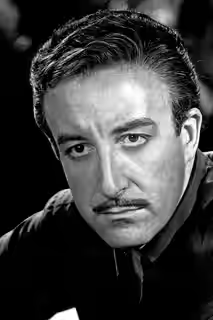
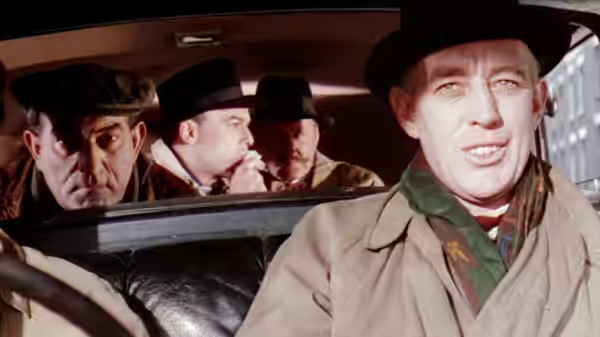
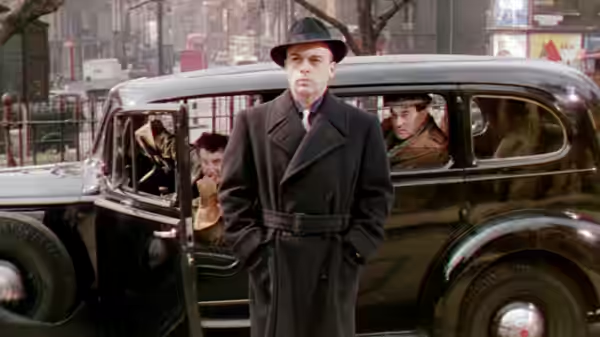
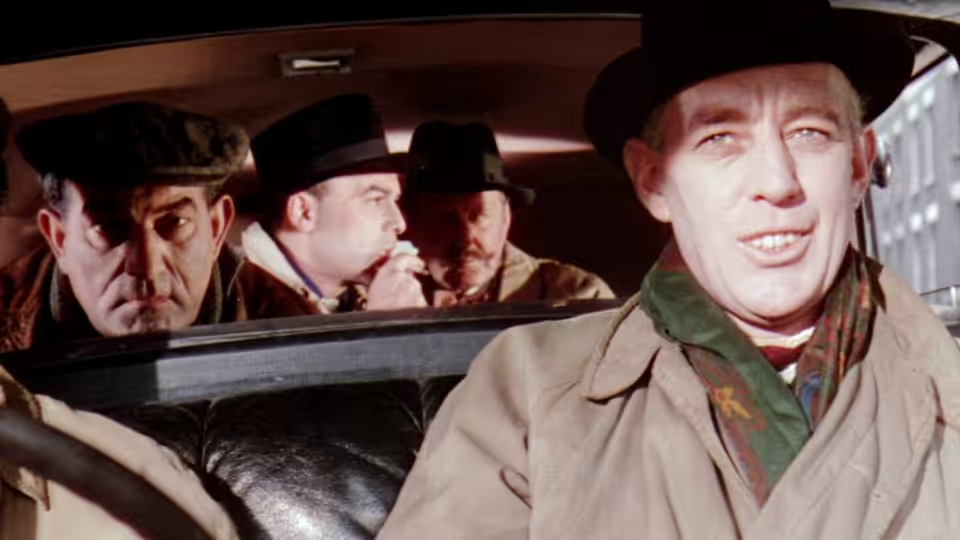
Harry (Peter Sellers) and the gang ride in a car, with Harry leaning out the window
Film review

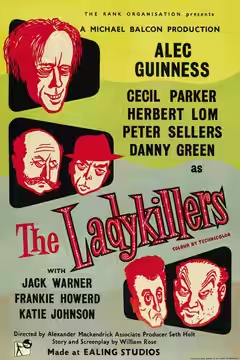
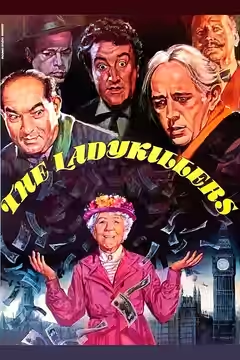
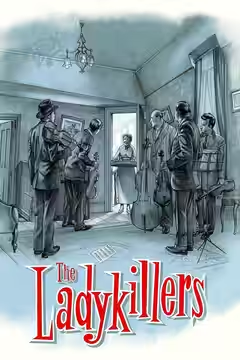
The Ladykillers

1955 · Directed by Alexander Mackendrick · 1h 31m · MPA NR

In a sentenceAll those criminals, and nobody thought to practise disagreeing with the landlady

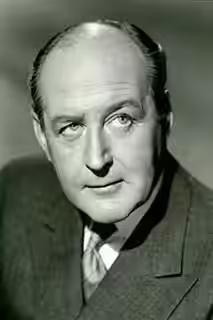
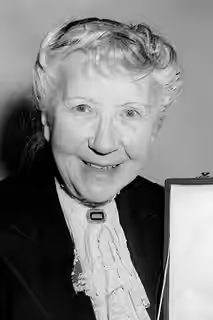
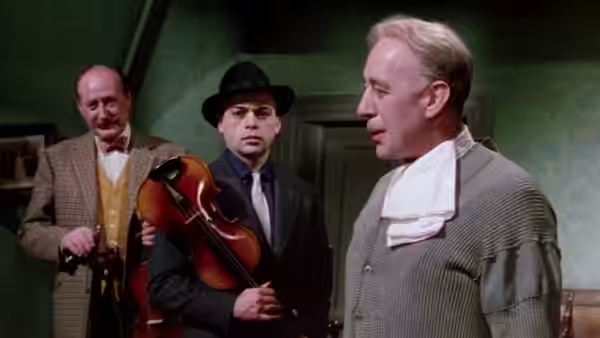
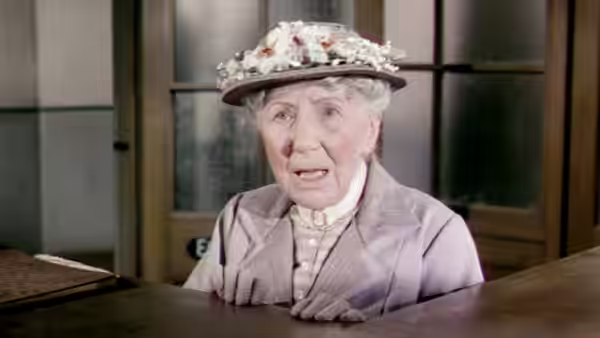
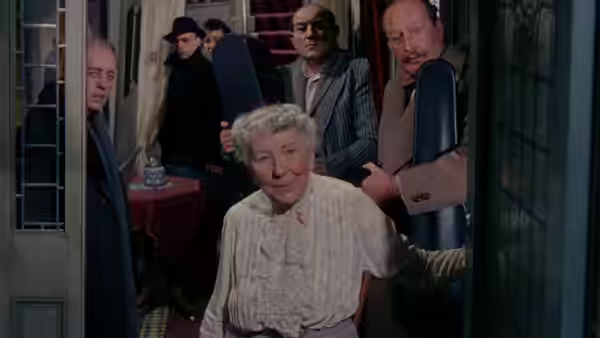
Mrs. Wilberforce (Katie Johnson) is a widow and landlady with firm ideas about how people ought to behave. Professor Marcus (Alec Guinness) and his criminal associates have reasons to keep up a respectable appearance. Among them is Claude, alias ‘Major Courtney’ (Cecil Parker), another man presenting himself as a gentleman. Marcus wants the group to get on with its business without interference from the landlady. Mrs. Wilberforce expects proper conduct from the men, and she is not inclined to alter her standards for their convenience. Their dealings depend on maintaining appearances before a woman who keeps getting in the way.

Plays from YouTube when you press play; nothing loads from them until then.

Fi1m review

The Ladykillers is a sharply timed crime comedy whose nastiness makes Katie Johnson’s stubborn landlady all the funnier. Alec Guinness sometimes pushes too hard, but Alexander Mackendrick keeps the threat close enough to make the laughter uncomfortable.

Alexander Mackendrick’s The Ladykillers gets a great deal of pleasure from making criminals observe the social rules they would rather ignore. It is a richly funny crime comedy, and its nastiness is essential to the joke. William Rose’s screenplay gives the gang a landlady whose insistence on proper conduct cannot simply be brushed aside. The men may consider themselves equipped to handle her, but the film keeps finding comedy in the effort required to remain civil.

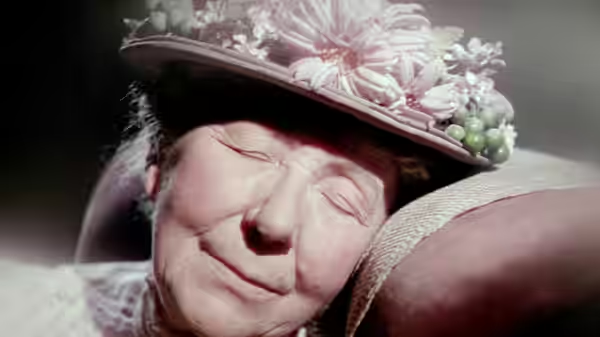
Katie Johnson makes Mrs. Wilberforce stubborn without making her a mechanical obstacle to everyone else’s amusement. Her propriety feels settled, ordinary and quite independent of whatever the men happen to want. She does not ask for affection, and the film is better for leaving her awkwardness intact. The gang’s frustration becomes funny because she has no reason to regard their convenience as more important than her own standards of behaviour.

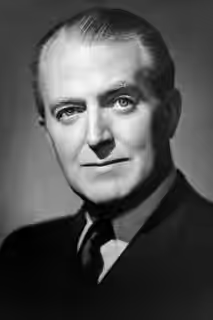
Alec Guinness gives Professor Marcus a grotesque appearance that makes his attempts at respectability funny before he has said much. We laughed at his false teeth, then felt faintly repelled by the smile. That discomfort matters: the landlady is dealing with criminals, however diligently they keep up appearances. The performance can be overworked, with the disguise threatening to become more interesting than the person inside it. Cecil Parker provides a useful contrast, suggesting the absurdity of his character’s pretensions without seeming quite so determined to make an impression.

Otto Heller’s cinematography uses light and shadow to make the gang look more dangerous than their competence warrants. The faces can be funny and still look unpleasant; the comedy does not depend on making these men harmless. The architecture helps, making the characters look awkward in their surroundings rather than comfortably at home. Alexander Mackendrick can let a joke become uncomfortable without changing how everyone behaves, because the pictures have already given us reasons to be uneasy.

Jack Harris’s editing helps those shifts land without making the comedy feel like a series of separate turns. An exchange has time to be uncomfortable, but the next complication is not kept waiting merely to show off a performance. Tristram Cary’s music adds unease without making the film heavy. Across 91 minutes, the cutting and the score help Alexander Mackendrick keep the criminals ridiculous while allowing the prospect of violence to remain troubling.

The weakness is that the central situation occasionally needs more encouragement than it should. William Rose sometimes makes us wait for another demonstration of just how difficult this particular landlady can be, and the joke briefly feels laboured. We understand the men’s predicament before the film has finished underlining it. This is a small but noticeable drag in a comedy whose stronger passages depend on the speed with which civility turns into exasperation.

There is no need to enjoy criminal ingenuity to enjoy The Ladykillers. Against the usual pleasures of a crime farce, Alexander Mackendrick makes the gang’s inability to manage an ordinary social encounter unusually satisfying. The threat stops their embarrassment from becoming merely cosy, and Katie Johnson never has to plead for our sympathy. Watch it with someone who believes a polite voice is evidence of good character.
Critical consensus AI synthesised

83
Positive
8
Mixed
1
Negative
0

Most critics find The Ladykillers a sharply constructed black comedy, with praise centred on its balance of genteel manners and threatened violence. The reviews repeatedly credit the handling of shifts between sweetness, absurdity and menace. Katie Johnson’s proper, stubborn landlady draws particular admiration, while Alec Guinness’s grotesque characterisation and comic timing attract substantial praise. Several reviews also single out the pacing and visual style, including the expressive use of architecture, light and shadow.

The spread is largely between enthusiasm and qualified approval, rather than outright dissent. The New York Times finds the premise slightly laboured but still regards the comedy as sprightly and successful. Variety is less persuaded by Guinness, finding that he overacts, while praising Cecil Parker. These reservations concern particular performances and the strain of the premise; they do not amount to a broader rejection of the film’s macabre humour.

Radio Times
★★★★★ · David Parkinson
100

The critic praises the film as British comedy at its best, blending the seedy with the sinister. He singles out Katie Johnson’s eccentric landlady and the gang of memorable misfits.

Read the full review →
The Guardian
23 October 2020 · ★★★★★ · Peter Bradshaw
100

Bradshaw finds the film still subversive, hilarious and superbly effective as a comedy. He praises its precise construction and tonal balance between genteel Englishness and impending violence.

Read the full review →
Los Angeles Times
2 July 2021 · Robert Abele
90*

Abele celebrates the restored original as a brilliantly macabre, genteel farce. He especially praises Alec Guinness’s grotesque false teeth and the film’s deft blend of character humor, cinematic style, and tonal audacity.

Read the full review →
Empire
28 July 2006 · Ian Nathan
85*

Nathan praises the film as one of the finest Ealing comedies, balancing sweetness with comic horror. He singles out Mackendrick’s handling of that contrast and the gang’s hapless confrontation with their diminutive landlady.

Read the full review →
The New York Times
27 February 1956 · Bosley Crowther
70*

Crowther finds the film an easy, sprightly comic success, though its premise can feel slightly labored. He especially praises Katie Johnson’s portrayal of the proper, stubborn widow who throws the villains into disarray.

Read the full review →
Variety
31 December 1954 · Variety Staff
70*

The review finds the film amusing hokum, a macabre farce blending gangster parody with whimsy. It praises Cecil Parker’s performance but says Alec Guinness overacts and nearly disappears into the role.

Read the full review →

Straight answers AI written, from our review

Is The Ladykillers worth watching?
The Ladykillers is well worth watching for its sharply timed, distinctly nasty crime comedy, and we score it 86. Katie Johnson’s stubborn landlady makes the criminals’ strained politeness richly funny; we find Alec Guinness occasionally overworks his grotesque disguise, but the threat beneath the laughter keeps the film from becoming cosy.
How long is The Ladykillers, and what is it rated?
The Ladykillers runs 1h 31m and is rated NR by the MPA in the US. It is a comedy and crime film.
Where can I watch The Ladykillers in the US?
The Ladykillers is not on any streaming or rental service in the US at the moment. It is available in 5 other countries; change your country at the top of the page to see where. Availability is checked daily.
How violent or frightening is The Ladykillers, and is it suitable for children?
The Ladykillers has a UK U certificate, but its criminals and troubling prospect of violence make it less cosy than that classification might suggest. We find the threatening faces, shadows and uneasy music unsettling rather than harmlessly comic, so its general-audience certificate need not make it a comfortable choice for every sensitive child.
How does The Ladykillers compare to Kind Hearts and Coronets?
The Ladykillers makes criminals’ enforced politeness funny, while Kind Hearts and Coronets finds its cruelty in killing for social advancement. We favour Kind Hearts and Coronets for precision, though its fascination with scheming leaves some characters underexplored; The Ladykillers occasionally labours its central joke, but suits those who prefer the friction between a stubborn landlady and increasingly exasperated men.
What should I watch after The Ladykillers?
After The Ladykillers, try Kind Hearts and Coronets (1949, Fi1m 91): More polite wickedness, with social climbing taken to thoroughly unreasonable lengths. Then Fargo (1996, Fi1m 91): Criminal incompetence grows frightening without losing its capacity to make us laugh; and Parasite (2019, Fi1m 91): A house, concealed motives and comic discomfort that becomes harder to dismiss.

Cast

Awards

Academy Awards, 1957

Nominated
Best Writing, Original Screenplay

If you liked this, try…

  1. Kind Hearts and Coronets (1949, Fi1m 91)More polite wickedness, with social climbing taken to thoroughly unreasonable lengths.

  2. The Firemen's Ball (1967) · not on Fi1m yetAnother gathering of men whose confidence exceeds their ability to organise anything.

  3. The Dinner Game (1998) · not on Fi1m yetA cruel social game encounters someone its organisers have badly underestimated.

  4. Fargo (1996, Fi1m 91)Criminal incompetence grows frightening without losing its capacity to make us laugh.

  5. Parasite (2019, Fi1m 91)A house, concealed motives and comic discomfort that becomes harder to dismiss.