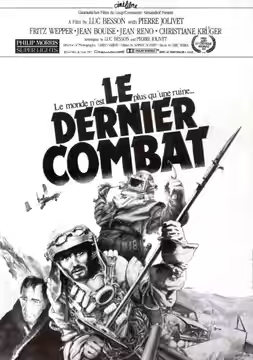
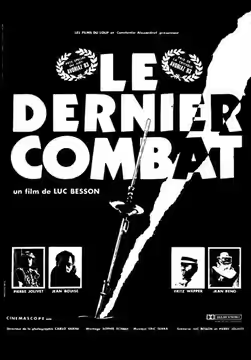
Luc Besson’s first feature is a post-apocalypse film in black and white with no dialogue at all, and it is far better than that sentence sounds. Small, dry and oddly tender, it runs out of story before it runs out of minutes.
Luc Besson’s first feature is a science fiction film about the end of the world, shot in black and white and with no dialogue. That is a description, not a warning. The Last Battle is a small, strange, frequently funny 90 minutes that does more with a wrecked office and three men than most films of its kind manage with a fleet of cars. It is worth your evening if you have any patience for silence.
The idea, written by Besson with his lead, Pierre Jolivet, is that whatever finished civilisation also finished speech. Nobody explains this. Nobody can, which is the point, and the film simply has its people grunt, point, nod and hit each other. It took us about five minutes to stop noticing. What is left when the talking goes is behaviour: how a man makes a bed in a ruin, how he lays a table, how he decides whether the stranger at the door is a threat.
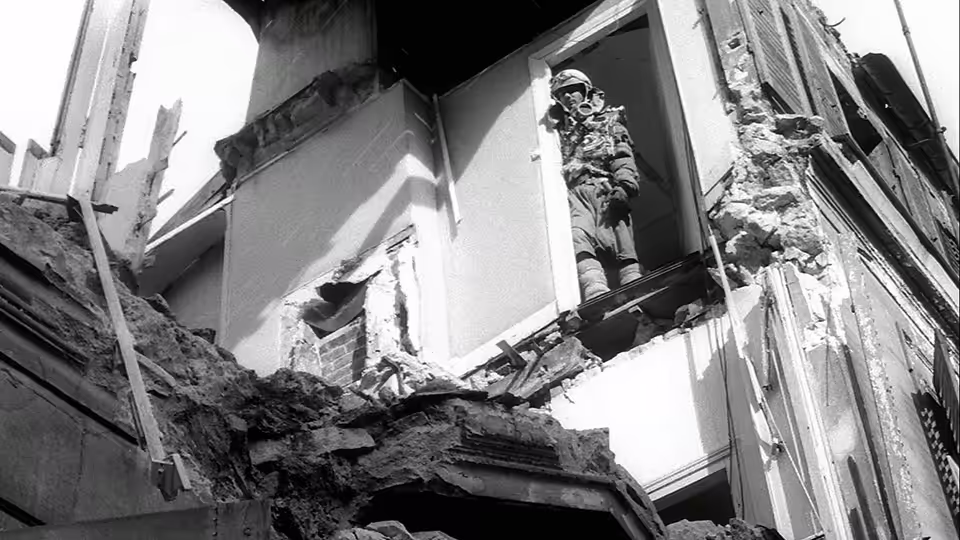
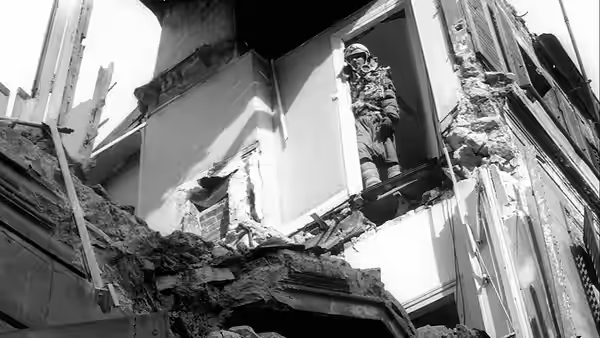
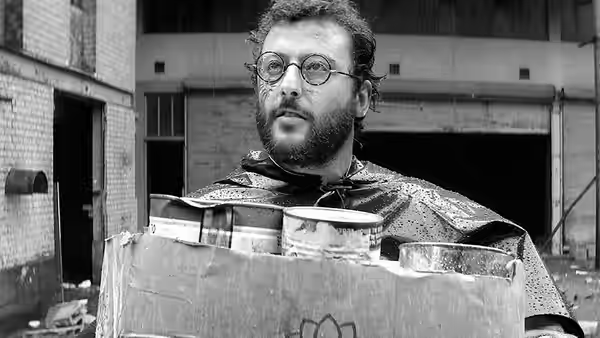
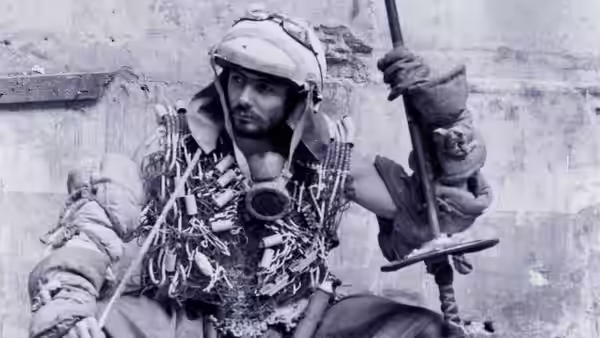
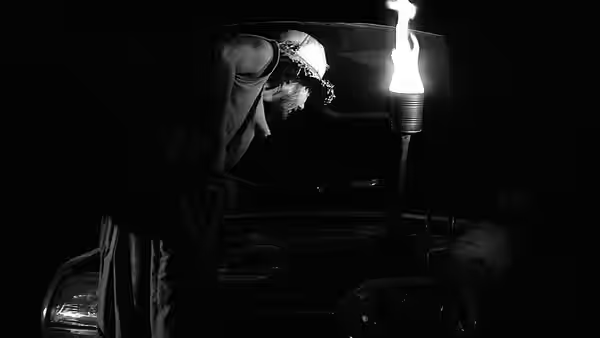
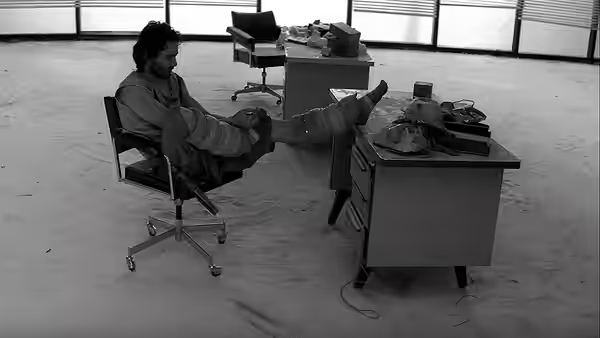
Carlo Varini shoots it in black and white, and the choice earns its keep. The desert is a flat white sheet and the ruins are hard grey blocks against it, and when the Man’s home-made aeroplane lifts off it looks like a small machine over a great deal of emptiness. Thierry Flamand and Christian Grosrichard fill an abandoned office with sand up to the desk drawers and turn the Doctor’s hospital into a fortress of welded doors and stacked furniture, all of it looking found rather than built. Marie Beau and Martine Rapin dress the men in what a man might actually dig out of the rubble: scarves, mismatched boots, the Brute in what appears to be bits of a car.
Éric Serra’s score is the one element that dates. It is early-eighties synthesiser through and through, thin and insistent, and it fills a silence the film had been managing well on its own. In the quieter passages it settles into a low hum under the wind. Sophie Schmit cuts without hurry, letting a scene of a man eating, or waiting, run to the length it needs.
Jolivet plays the Man as a dogged, unremarkable person who keeps going, and that ordinariness is the right choice; a hero would have been a bore. Jean Bouise is the film’s heart. His Doctor is courteous in a world that has no use for courtesy, and there is a passage in the middle where he shares his food, his shelter and his one remaining pleasure with a stranger, and we were moved by it more than we had any reason to expect. It is a scene about manners, which is what is left once everything else has gone. Jean Reno is the Brute, and he is mostly a body: enormous, patient, hammering at a door day after day. He is funnier than the part has any right to be, and a little frightening.
We laughed, too, and early. The opening minutes, which involve the Man and an inflatable companion in the wreckage, set the tone at once, and there is a later shower of fish we still cannot quite account for. The humour is deadpan and a little student-ish, and now and then a gag is held a beat past its life. The bigger fault is shape. A man, a doctor and a monster is about enough story for an hour; the last third repeats itself, the Brute batters the door again, and we caught ourselves waiting. The film’s women, one kept as a concubine and one locked in a cell, are treated as prizes by its men and not much argued with by its makers, which sat less easily with us than it seems to have with the film.
Set against Mad Max, which it will inevitably be, this is the opposite approach: no petrol, no speed, no leather, just three people and a lot of dust. Set against Besson’s later career it is the quietest thing he made and arguably the most disciplined. Watch it at night, with the lights off and nobody talking, which for once will not be a problem for the subtitles. There are none to read.