Paul Greengrass makes the wildfire evacuation frightening enough to forgive some familiar writing. Matthew McConaughey and America Ferrera give the bus scenes weight, though the family drama works too hard to secure sympathy the danger has already earned.
The Lost Bus is worth an evening if disaster thrillers are your sort of discomfort. Paul Greengrass makes the evacuation frightening, and the adults’ effort to keep children safe gives the action a purpose beyond displaying fire. The difficulty is how often the screenplay, written by Paul Greengrass and Brad Ingelsby, insists on supplying extra reasons to care. With a bus carrying frightened children, the case is already fairly strong.
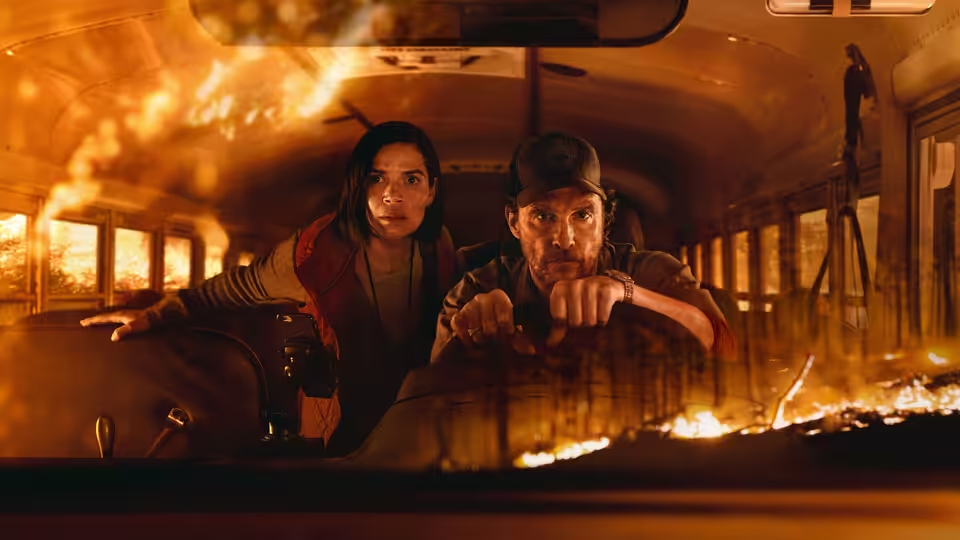
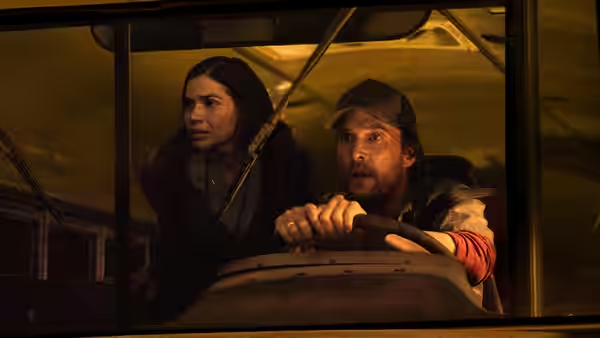
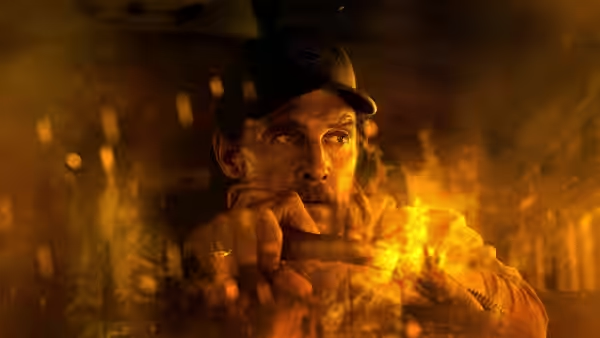
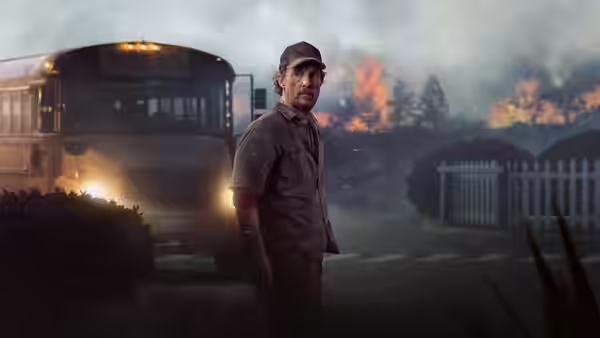
Matthew McConaughey plays Kevin McKay with an understatement that helps keep the danger credible. There is enough strain in his performance to make responsibility feel like work, without turning every moment into an announcement of heroism. America Ferrera gives Mary Ludwig a warmth that matters more than the script’s efforts to make the family troubles count. Her reassurance is persuasive because the children seem afraid, rather than conveniently ready for the next piece of action. Together, the leads make the bus sequences involving even before the fire effects do their work.
Pål Ulvik Rokseth’s cinematography is most effective when smoke and flames surround the bus and restrict our sense of what lies beyond it. We were frightened by those images, particularly with the children’s nervousness continuing inside the vehicle. Looking for a safe way through becomes an anxious activity in itself. David Crank’s production design serves the action well: the bus remains a recognisable, confined space within a disaster whose full scale is harder to grasp.
The sound is oppressive, and deserves much of the credit for the physical unease. Wind and fire seem to leave scarcely any space for relief; the effect is exhausting in a way that suits the material. James Newton Howard’s music has less to add, because the threat already feels sufficiently close without further encouragement. The score is serviceable, but the surrounding noise does the more effective work of making us worry.
The family drama causes more trouble. Paul Greengrass and Brad Ingelsby lean on familiar personal difficulties to give the rescue added significance, but the characters do not become much more particular for it. The writing sometimes makes a real emergency feel arranged around a conventional hero’s progress. That matters because the performances have already supplied the necessary decency and fear, and each extra appeal for sympathy takes attention away from what the adults are doing for the children.
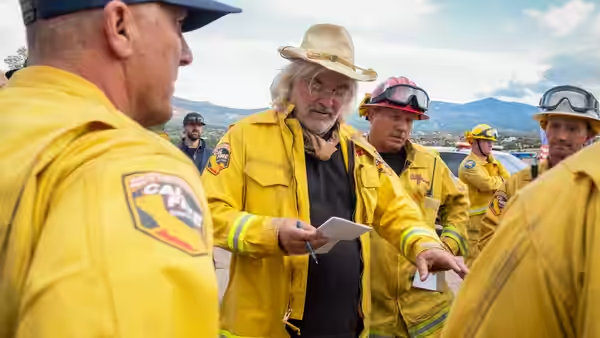
Peter Dudgeon, William Goldenberg and Paul Rubell keep the evacuation urgent, although the repeated danger begins to make successive sequences feel too similar. At 130 minutes, the film needs more variation than another increase in peril can provide. The wider firefighting effort offers a useful sense of the catastrophe beyond the bus, even if the narrow focus limits what the film can tell us about it. Those passages give welcome attention to the work happening elsewhere.
Within the disaster genre, this earns its place through the convincing pressure it puts on people trying to do something useful. The children’s fear and the adults’ steadiness sustain attention even when the storytelling feels familiar. We would have preferred less preparation and fewer reminders of the personal stakes. Choose it for the close, uncomfortable suspense, provided a conventional family drama is a price worth paying.