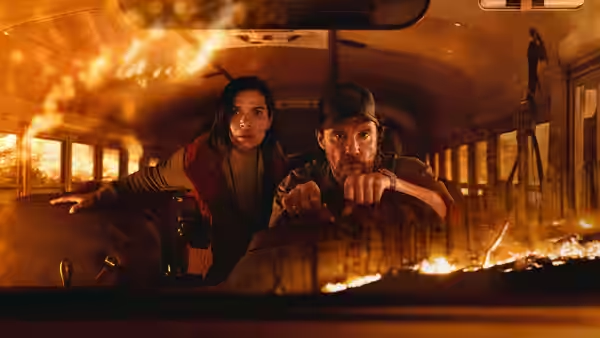
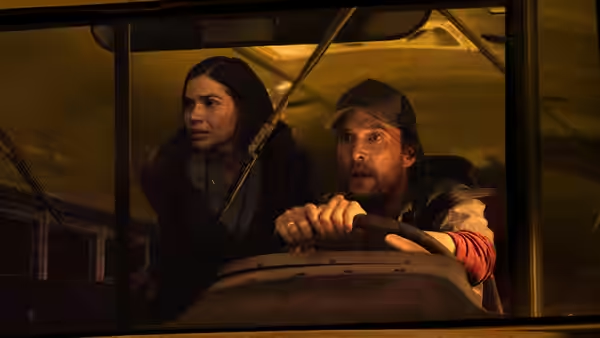
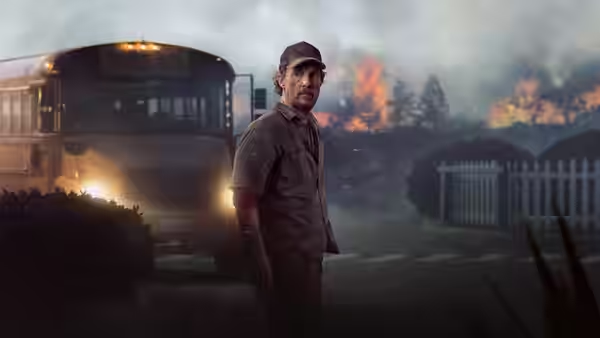
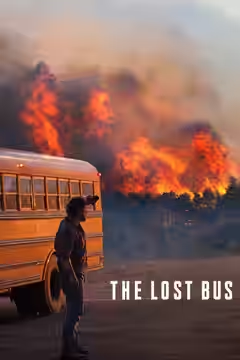
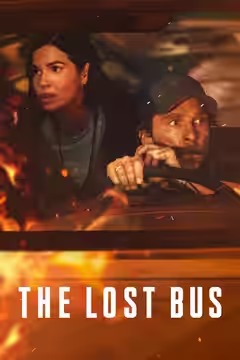
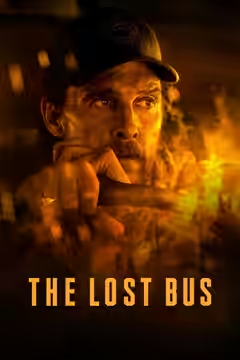
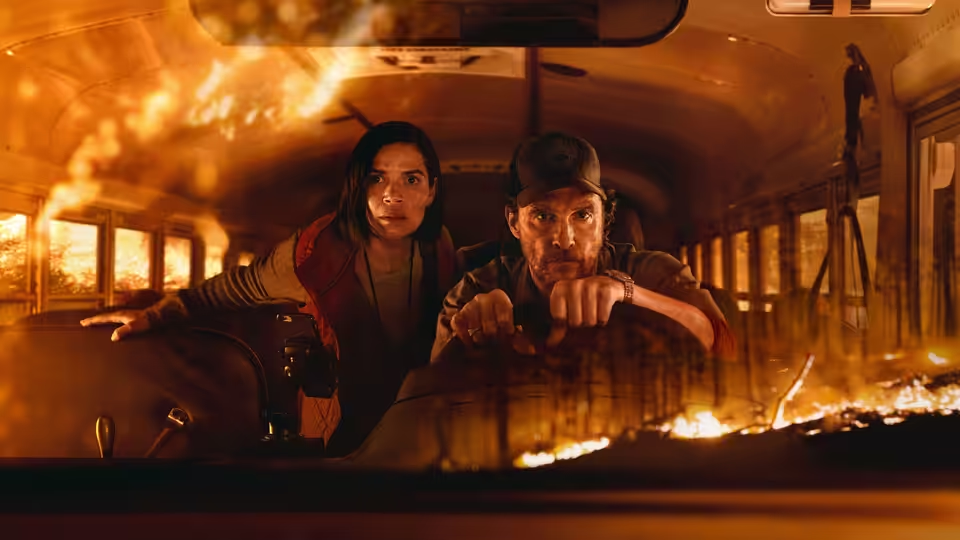
Kevin McKay (Matthew McConaughey) steers a school bus as Mary Ludwig (America Ferrera) sits beside him
Film review

The Lost Bus

2025 · Directed by Paul Greengrass · 2h 10m

In a sentenceFire outside, frightened children inside, and a script that still thinks the stakes need explaining

During California’s Camp Fire, Kevin McKay (Matthew McConaughey) and Mary Ludwig (America Ferrera) are caught in an evacuation with children aboard a bus. Kevin needs to get them clear of the wildfire, while Mary helps the frightened children stay calm. Smoke and flames threaten the vehicle, and a wider firefighting effort confronts the scale of the emergency. Chief Martinez (Yul Vazquez) is among the people facing the disaster. The adults must contend with the danger outside the bus while trying to keep fear from taking over inside it.

Plays from YouTube when you press play; nothing loads from them until then.

Fi1m review

Paul Greengrass makes the wildfire evacuation frightening enough to forgive some familiar writing. Matthew McConaughey and America Ferrera give the bus scenes weight, though the family drama works too hard to secure sympathy the danger has already earned.

The Lost Bus is worth an evening if disaster thrillers are your sort of discomfort. Paul Greengrass makes the evacuation frightening, and the adults’ effort to keep children safe gives the action a purpose beyond displaying fire. The difficulty is how often the screenplay, written by Paul Greengrass and Brad Ingelsby, insists on supplying extra reasons to care. With a bus carrying frightened children, the case is already fairly strong.

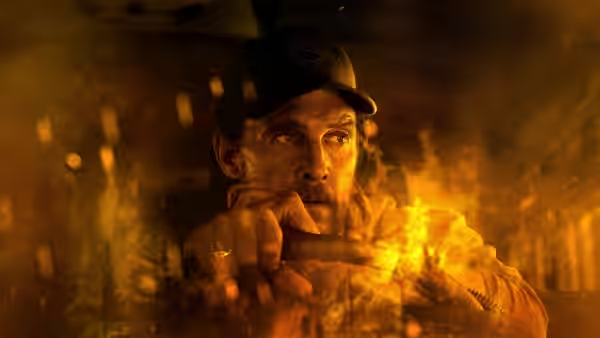
Matthew McConaughey plays Kevin McKay with an understatement that helps keep the danger credible. There is enough strain in his performance to make responsibility feel like work, without turning every moment into an announcement of heroism. America Ferrera gives Mary Ludwig a warmth that matters more than the script’s efforts to make the family troubles count. Her reassurance is persuasive because the children seem afraid, rather than conveniently ready for the next piece of action. Together, the leads make the bus sequences involving even before the fire effects do their work.

Pål Ulvik Rokseth’s cinematography is most effective when smoke and flames surround the bus and restrict our sense of what lies beyond it. We were frightened by those images, particularly with the children’s nervousness continuing inside the vehicle. Looking for a safe way through becomes an anxious activity in itself. David Crank’s production design serves the action well: the bus remains a recognisable, confined space within a disaster whose full scale is harder to grasp.

The sound is oppressive, and deserves much of the credit for the physical unease. Wind and fire seem to leave scarcely any space for relief; the effect is exhausting in a way that suits the material. James Newton Howard’s music has less to add, because the threat already feels sufficiently close without further encouragement. The score is serviceable, but the surrounding noise does the more effective work of making us worry.

The family drama causes more trouble. Paul Greengrass and Brad Ingelsby lean on familiar personal difficulties to give the rescue added significance, but the characters do not become much more particular for it. The writing sometimes makes a real emergency feel arranged around a conventional hero’s progress. That matters because the performances have already supplied the necessary decency and fear, and each extra appeal for sympathy takes attention away from what the adults are doing for the children.

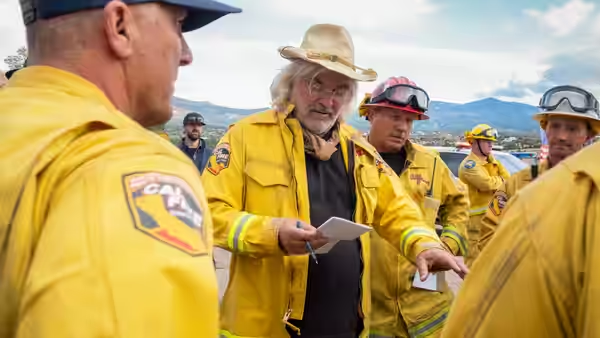
Peter Dudgeon, William Goldenberg and Paul Rubell keep the evacuation urgent, although the repeated danger begins to make successive sequences feel too similar. At 130 minutes, the film needs more variation than another increase in peril can provide. The wider firefighting effort offers a useful sense of the catastrophe beyond the bus, even if the narrow focus limits what the film can tell us about it. Those passages give welcome attention to the work happening elsewhere.

Within the disaster genre, this earns its place through the convincing pressure it puts on people trying to do something useful. The children’s fear and the adults’ steadiness sustain attention even when the storytelling feels familiar. We would have preferred less preparation and fewer reminders of the personal stakes. Choose it for the close, uncomfortable suspense, provided a conventional family drama is a price worth paying.

Critical consensus AI synthesised

65
Positive
8
Mixed
9
Negative
0

The reviews lean towards qualified approval, with praise concentrated on Paul Greengrass’s tense, immersive wildfire sequences. Critics repeatedly single out the force of the fire, smoke and sound, finding the evacuation frightening even when the surrounding drama is less convincing. Matthew McConaughey’s grounded performance and America Ferrera’s warmth and resolve also draw praise, giving the bus sequences a human focus amid the danger.

Reservations centre on formulaic family drama, underdeveloped characters and a story some critics find too narrow for the scale of the catastrophe. The spread runs from enthusiastic to mixed, with no outright negative verdicts: Vulture particularly values the realism and attention to the firefighting effort, while Slant Magazine objects to real tragedy becoming the backdrop for a conventional hero’s journey. Most critics agree that the fire sequences work; they differ over how much the script’s familiar devices weaken their impact.

Vulture
6 September 2025 · Bilge Ebiri
90*

Ebiri calls the film a great disaster movie and says its realism lingers after the thrill ride ends. He especially praises Greengrass’s vérité-style portrayal of the firefighting effort and the disaster’s scale.

Read the full review →
Time Out
17 September 2025 · ★★★★ · Phil de Semlyen
80

The review presents the film as a thrilling survival story, with Matthew McConaughey portrayed as an understated hero. It singles out the visceral wildfire action as a strength.

Read the full review →
IndieWire
6 September 2025 · B · Kate Erbland
77

Erbland finds the film’s portrayal of the Camp Fire terrifying and highly effective, but says its focus on the bus story feels too narrow for the disaster’s scale. She particularly praises the wind and fire effects for making the catastrophe feel visceral and real.

Read the full review →
The AV Club
18 September 2025 · B- · Matt Donato
70

Donato finds the film an effective, rousing disaster thriller despite its heavy-handed, manipulative family drama. He praises Greengrass’s immersive depiction of the wildfire’s peril and the children’s convincing nervousness.

Read the full review →
The Hollywood Reporter
6 September 2025 · festival review · David Rooney
70*

Rooney finds the film most effective as an immersive, tense account of the wildfire evacuation, despite personal drama that sometimes feels like padding. He praises the fire’s terrifying visual force and the urgent bus sequences, while singling out America Ferrera’s warmth and resolve.

Read the full review →
The Guardian
6 September 2025 · festival review · Benjamin Lee
65*

Lee finds the film technically accomplished and frightening, though its excess and soapy script weaken it. He particularly praises Greengrass’s tense, immersive direction and Matthew McConaughey’s performance.

Read the full review →

Straight answers AI written, from our review

Is The Lost Bus worth watching?
The Lost Bus is worth watching if disaster thrillers are your sort of discomfort; we score it 71 out of 100. Matthew McConaughey and America Ferrera make the evacuation involving, while smoke, flames and oppressive sound supply close, frightening suspense. The familiar family drama works too hard to secure sympathy, and the repeated danger grows wearing across 130 minutes.
How long is The Lost Bus, and what is it rated?
The Lost Bus runs 2h 10m. It is a drama and thriller film.
Where can I watch The Lost Bus in Serbia?
The Lost Bus is not on any streaming or rental service in Serbia at the moment. It is available in 46 other countries; change your country at the top of the page to see where. Availability is checked daily.
How violent or frightening is The Lost Bus, and is it suitable for children?
The Lost Bus has a UK 15 certificate and is not suitable for younger children, with frightened children trapped aboard a bus threatened by smoke and flames. We find the confined setting and oppressive sounds of wind and fire frightening; the sustained peril may also be too much for sensitive older teenagers or anyone distressed by children in danger.
How does The Lost Bus compare to The Wages of Fear?
The Lost Bus offers more immediate disaster suspense than The Wages of Fear, but we give the earlier film the edge for patient tension built around a dangerous road journey. Both make vehicles and faces compelling under pressure. Choose The Lost Bus for a frightening evacuation with sympathetic leads, or The Wages of Fear for agonising delays, accepting its long opening wait in town.
What should I watch after The Lost Bus?
After The Lost Bus, try The Wages of Fear (1953, Fi1m 90): A dangerous road journey made tense through vehicles, faces and agonising delays. Then The Towering Inferno (1974, Fi1m 68): Fire, failing infrastructure and practical courage, with more room for disaster spectacle; and The Rescue (2021, Fi1m 78): A documentary rescue account where preparation and teamwork carry the suspense.

Cast

If you liked this, try…

  1. The Wages of Fear (1953, Fi1m 90)A dangerous road journey made tense through vehicles, faces and agonising delays.

  2. The Towering Inferno (1974, Fi1m 68)Fire, failing infrastructure and practical courage, with more room for disaster spectacle.

  3. Unstoppable (2010) · not on Fi1m yetOrdinary workers confront a runaway emergency with skill, nerves and little patience.

  4. The Tunnel (2019) · not on Fi1m yetA Norwegian road disaster about trapped motorists and the difficult work of rescue.

  5. The Rescue (2021, Fi1m 78)A documentary rescue account where preparation and teamwork carry the suspense.

The Lost Bus (2025) review: Tense rescue, held back by the writing (Serbia) | Fi1m